
Bitcoin vs Ethereum
They are both crypto. They are both blockchain. But they were built for completely different purposes — and understanding that difference means understanding how the entire digital financial system actually works.
If you have ever heard about cryptocurrencies, you know two names: Bitcoin and Ethereum. Most people assume the only difference is the price. That assumption is as wrong as saying the only difference between a gold bar and a laptop is what they cost. Bitcoin and Ethereum were built to solve completely different problems. And understanding that difference means understanding how the entire new digital financial architecture actually works.
This is the complete comparison — updated with live May 2026 data, real-world use cases, and a practical guide for anyone deciding where to start.
The Core Difference at a Glance
Before anything else — here is the single most important thing to understand:

Bitcoin: Digital Gold
In January 2009, an anonymous programmer — or group — using the name Satoshi Nakamoto launched Bitcoin with one purpose: create money that nobody controls. No central bank. No government. No middleman. The total supply was fixed at 21 million coins permanently. No one can create more — not governments, not developers, not even Satoshi himself.
Bitcoin is often called “digital gold” — and this is not a metaphor. Like gold, it is finite in supply. Like gold, it is resistant to inflation — you cannot simply print more of it. Like gold, it is primarily held as a store of value rather than spent in daily transactions. And like gold, its value comes precisely from its scarcity and the trust of those who hold it.
“Bitcoin development is like rocket science — slow, deliberate, security-first. Ethereum’s development is like a Silicon Valley startup — fast, experimental, innovation-first.”Messari Research, 2026 — on the contrasting development philosophies
By 2026, Bitcoin has become something larger than a cryptocurrency. It is held as a strategic reserve asset by corporations (MicroStrategy, Tesla), pension funds, and now sovereign nations. The U.S. Trump administration established a Strategic Bitcoin Reserve. Bitcoin ETFs in the U.S. have attracted over $128 billion in institutional capital. Bitcoin is no longer just a coin — it is a macro financial asset.
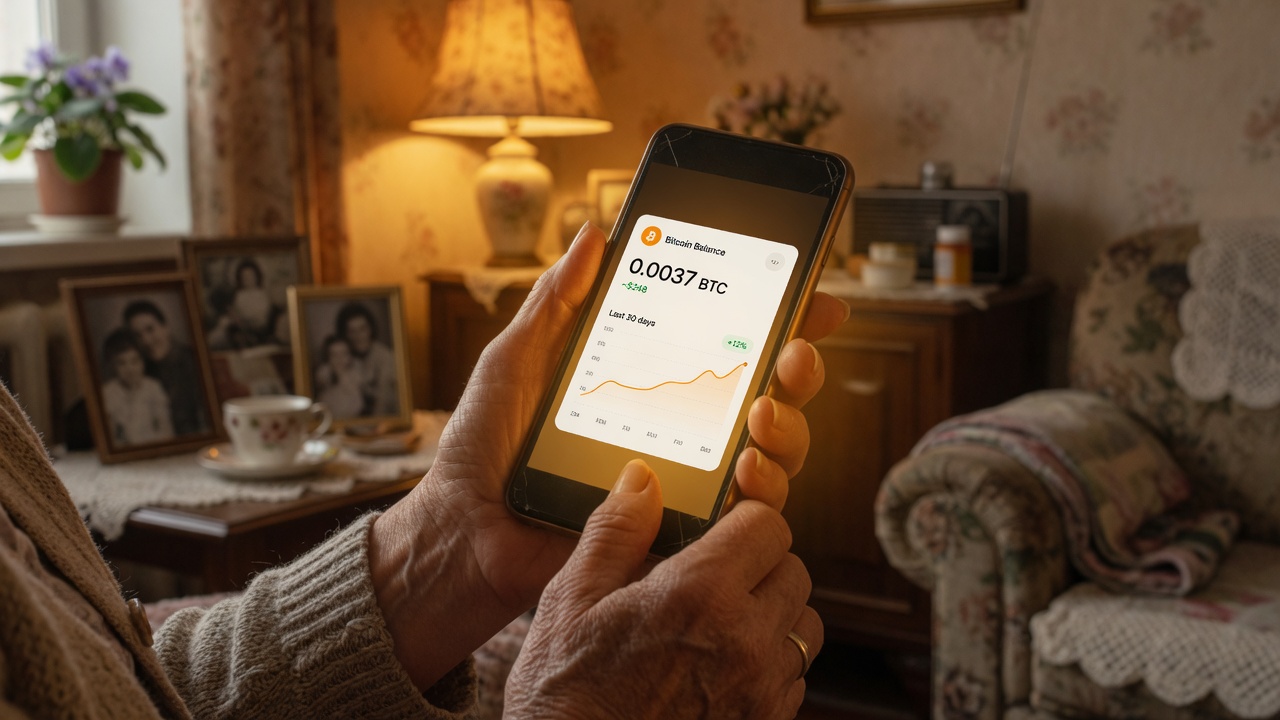
Real Case: How a Grandmother Preserved Her Savings in Bitcoin
Fatima lived in Turkey. Banks restricted international transfers. The Turkish lira was losing value rapidly — at times 80% per year. Her son advised her to convert $500 into Bitcoin. She agreed skeptically.
Five years later, Bitcoin trades at $82,000. Those same $500 had become approximately $38,000 — without a bank account, without a passport, without government permission.
For accuracy: this is a representative scenario reflecting what thousands of people in high-inflation countries have experienced. It is not a guarantee of returns. But it illustrates precisely why Bitcoin was created — and who it was created for.

Ethereum: The Digital Computer
Ethereum launched in 2015. Its creator, Vitalik Buterin, asked a different question: what if the blockchain could do more than move money? What if it could execute any agreement automatically, without human intermediaries? What if you could program trust itself?
The answer was smart contracts — self-executing code that runs exactly as written, automatically, when conditions are met. No lawyer. No notary. No bank. No delay. Just code and mathematics.
You rent an apartment in Dubai. The agreement on Ethereum says: monthly payment of ETH to the landlord. If you don’t pay by the 5th — the deposit automatically returns to your wallet. No court. No agency. No waiting. The code executes itself. Platforms doing this today: Propy, Rentberry.
Real-World Examples: What You Can Do with Ethereum Today
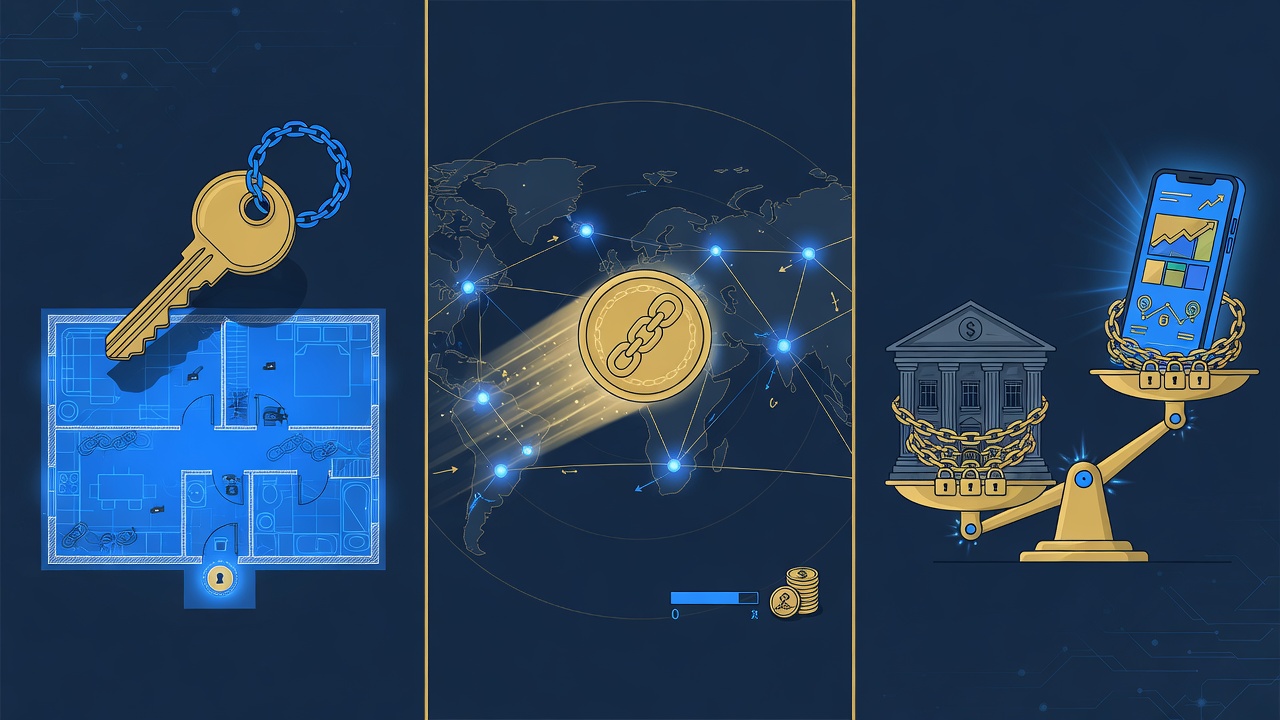
In September 2022, Ethereum made one of the most ambitious technical transitions in blockchain history: The Merge. It switched from energy-intensive Proof-of-Work mining to Proof-of-Stake validation. Energy consumption dropped 99.9%. Validators now earn 3.5–5% annually just for holding and staking ETH. The Glamsterdam upgrade, expected in June 2026, will bring 10,000 transactions per second to Layer 1 and reduce fees by 78%.
Full Comparison Table
Data sourced from Fortune, CoinDesk, VanEck — May 6, 2026:
| Parameter | ₿ Bitcoin (BTC) | ◆ Ethereum (ETH) |
|---|---|---|
| Founded | 2009 | 2015 |
| Creator | Satoshi Nakamoto (anon.) | Vitalik Buterin |
| Primary Goal | Store of value · Reserve asset | Platform for apps · Smart contracts |
| Max Supply | 21,000,000 (hard cap) | No cap + burn (EIP-1559) |
| Consensus | Proof-of-Work (mining) | Proof-of-Stake (since Sept 2022) |
| Speed | ~7 tx/sec | ~30 TPS (Layer 2: 15,000+) |
| Price (06.05.26) | $82,320 | $2,412 |
| Market Cap | $1.33 trillion | $233 billion |
| Market Dominance | ~58% | ~10.5% |
| Staking Income | None | 3.5–5% annually |
| Smart Contracts | No (limited via Ordinals) | Yes — the entire ecosystem |
| Key Use Cases | Reserve, inflation hedge | DeFi, NFT, Web3, payments |
| 2026 Major Upgrade | Bitcoin Core v29.3 | Glamsterdam (expected June 2026) |
Key Technical Differences Explained Simply
Deflationary design — two different approaches
Bitcoin is deflationary by design: every four years the reward for miners is halved (halving). Today 20 million of the 21 million maximum coins are already in circulation. The fewer coins remain to be mined, the higher the supply-side pressure.
Ethereum chose a different path. The EIP-1559 mechanism burns a portion of ETH with every transaction. The more active the network, the more ETH is destroyed — sometimes faster than it is created. In theory, ETH can become more deflationary than Bitcoin during periods of high usage.
Speed: why Bitcoin is slow — and why that’s intentional
Bitcoin processes ~7 transactions per second. This is not a bug. It is a deliberate trade-off: security and decentralization over speed. Bitcoin has never been successfully attacked in 17 years. For a store of value — that matters more than throughput.
Ethereum processes ~30 tx/sec on the base layer — but Layer 2 networks (Arbitrum, Optimism, Polygon) reach 15,000 tx/sec at fees under one cent. The Glamsterdam upgrade expected in June 2026 targets 10,000 TPS on Layer 1 itself.

What to Choose: A Beginner’s Guide by Life Situation
There is no universally correct answer. There is only: what is your goal?
Bitcoin 50–60%: value preservation, inflation hedge, institutional allocation. Ethereum 30–40%: ecosystem participation, staking income, DeFi exposure. Altcoins 10%: high risk, high potential return on specific narratives. This is not investment advice — it is a data point from serious institutional research.
“Bitcoin remains #1. Ethereum closes the gap but does not overtake. The smartest play: hold both.”VanEck Digital Assets Research, 2026

They Are Not Competitors. They Are Partners.
Bitcoin and Ethereum are often framed as a competition — as if you must choose one and dismiss the other. This framing is wrong. Asking “which is better — Bitcoin or Ethereum?” is like asking “which is better — gold or the internet?” Both are necessary. Both serve fundamentally different purposes. And the digital financial system needs both.
Bitcoin is digital gold. Reliable, scarce, proven. Store value there that no institution can freeze or inflate away. Ethereum is digital infrastructure. Finance applications, automatic agreements, global payments — the entire emerging economy of decentralized services runs on it or because of it.
By 2026, both are “blue-chip” assets — the closest thing crypto has to large-cap, relatively established investments with multi-year track records of surviving crashes, regulatory attacks, and exchange collapses.
Understanding the difference means understanding how the new financial world is actually built. That knowledge is not optional anymore — it is financial literacy for the digital age.
— DAY Solis, May 2026
If this investigation was useful to you — support independent journalism
☕ Buy me a coffee