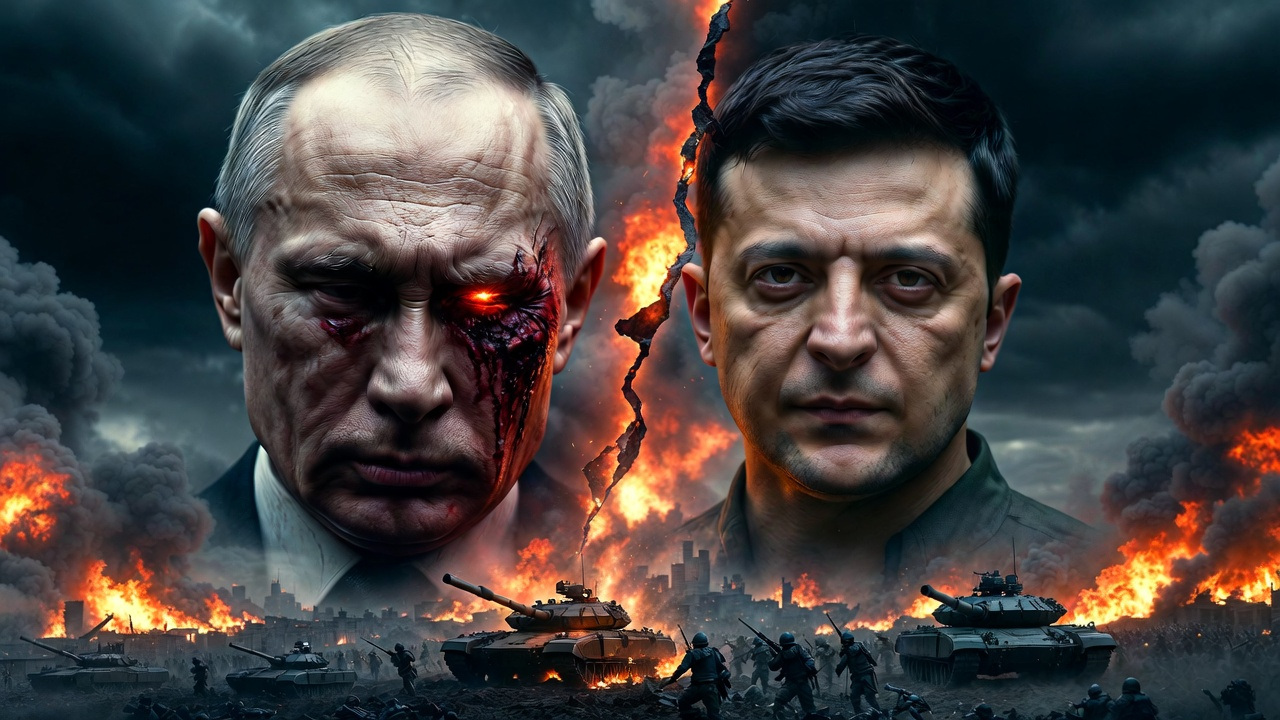
A WAR BORN FROM
WOUNDED PRIDE
How Putin's personal contempt for Zelensky became one of the hidden engines of the largest war in 21st-century Europe
When historians look back at Russia's February 2022 invasion of Ukraine, they will face a paradox. Vladimir Putin — the leader of a nuclear superpower with a million-man army and one of the world's most sophisticated intelligence services — made a decision that brought his country to the edge of catastrophe. Strategically, it made no sense. Economically, it was suicide. Militarily, it became a disaster. So what drove this decision?
The Kremlin's official answer is familiar: NATO expansion, "de-Nazification," protecting Russian speakers. But there is a dimension that rarely gets serious attention — the psychological one. Beneath the geopolitics lies something rawer: wounded ego. Accumulated contempt. The personal grievance of a man whose entire identity is built on a hierarchy of power — and who could not accept that a comedian, a Jewish actor from a provincial Ukrainian city, had become his equal.
HISTORY HAS SEEN THIS BEFORE
Wars Born From Personal Grievance
Before we examine Putin and Zelensky, it is worth understanding that personal psychology reshaping the course of history is not an exception. It is a recurring pattern.
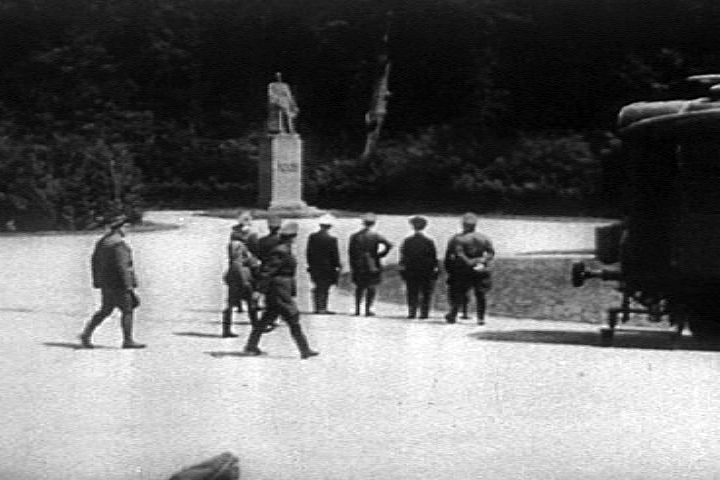
Compiègne, June 1940 — Hitler ordered the surrender signed in the exact same railway carriage as Germany's 1918 capitulation. Personal score-settling as state policy.
Historians have debated for decades whether World War II was structurally inevitable — or whether its catalyst was Hitler's personal obsession with Germany's 1918 humiliation. In Mein Kampf, he described it as a personal wound. When France surrendered in June 1940, Hitler ordered the signing ceremony held in the exact same railway carriage where Germany had capitulated in 1918 — deliberately, symbolically, as an act of personal score-settling. Millions died so that one man could feel vindicated.
After the Gulf War of 1991, Saddam publicly named George H.W. Bush his personal enemy. In 1993, Iraqi intelligence attempted to assassinate the former president during his visit to Kuwait. When George W. Bush launched the Iraq War in 2003, many analysts noted an informal motive running alongside the official rationale: a son's score to settle for the attempt on his father's life. Personal. Irrational. And yet it determined the fate of millions of Iraqis.
In 1904, Russia's Interior Minister Plehve convinced the Tsar that Russia needed "a little victorious war" to distract from domestic unrest. Nicholas II, stung by the sense that Russia was not being taken seriously as a great power, went along. The Russo-Japanese War turned into catastrophe. The Tsar's personal vanity triggered a chain of events that ultimately led to the collapse of the entire empire.
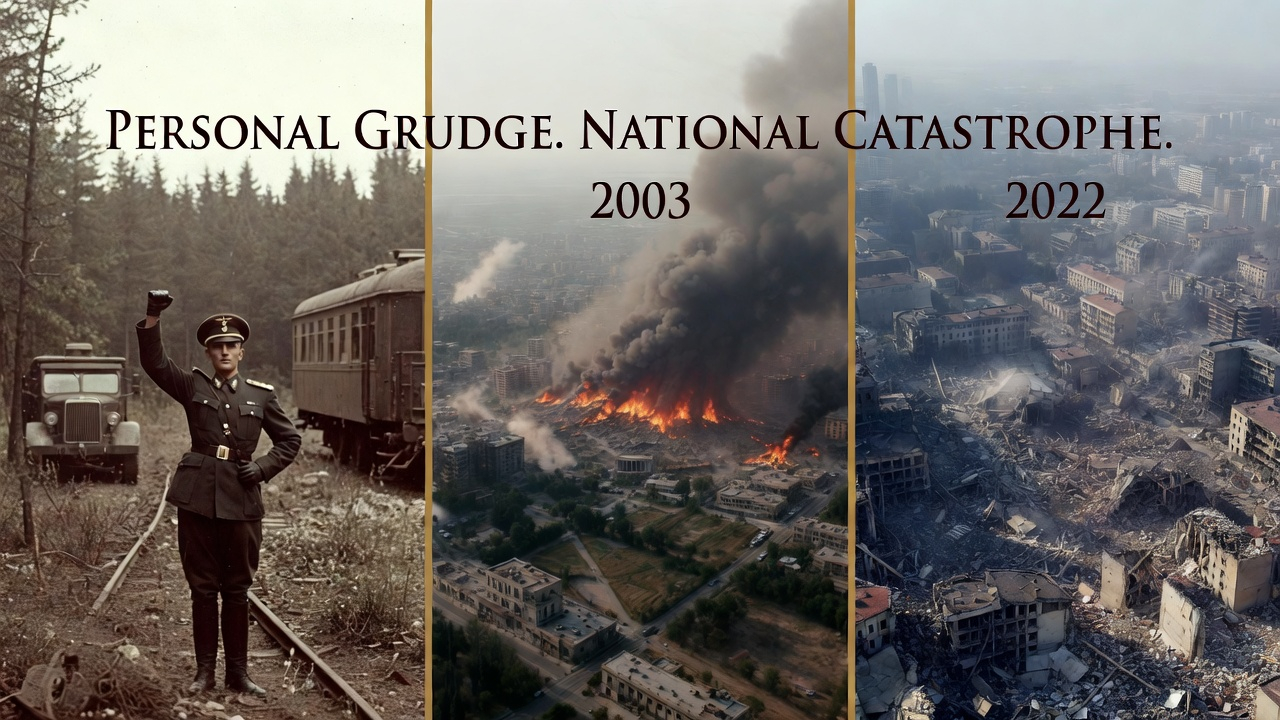
The pattern repeats: personal grievance becomes state policy. Three wars. Three men. Three catastrophes.
THE ANATOMY OF CONTEMPT
Who Zelensky Was in Putin's World
To understand the depth of Putin's hostility, you have to understand his coordinate system. For Putin, power is ritual. Hierarchy. Historical legitimacy. Force. It is something earned through the KGB, through institutional violence, through a lifetime of navigating the Soviet and post-Soviet security apparatus.
Volodymyr Zelensky violated every single one of those rules simultaneously. He was a comedian. He had never served in the military. He was Jewish — in a country whose president was pushing a "de-Nazification" narrative. He won the presidency with 73% of the vote — a genuine landslide that Putin, with his stage-managed 77%, had never actually known. And perhaps most galling of all: Zelensky won by playing himself — an ordinary person pretending to be president.
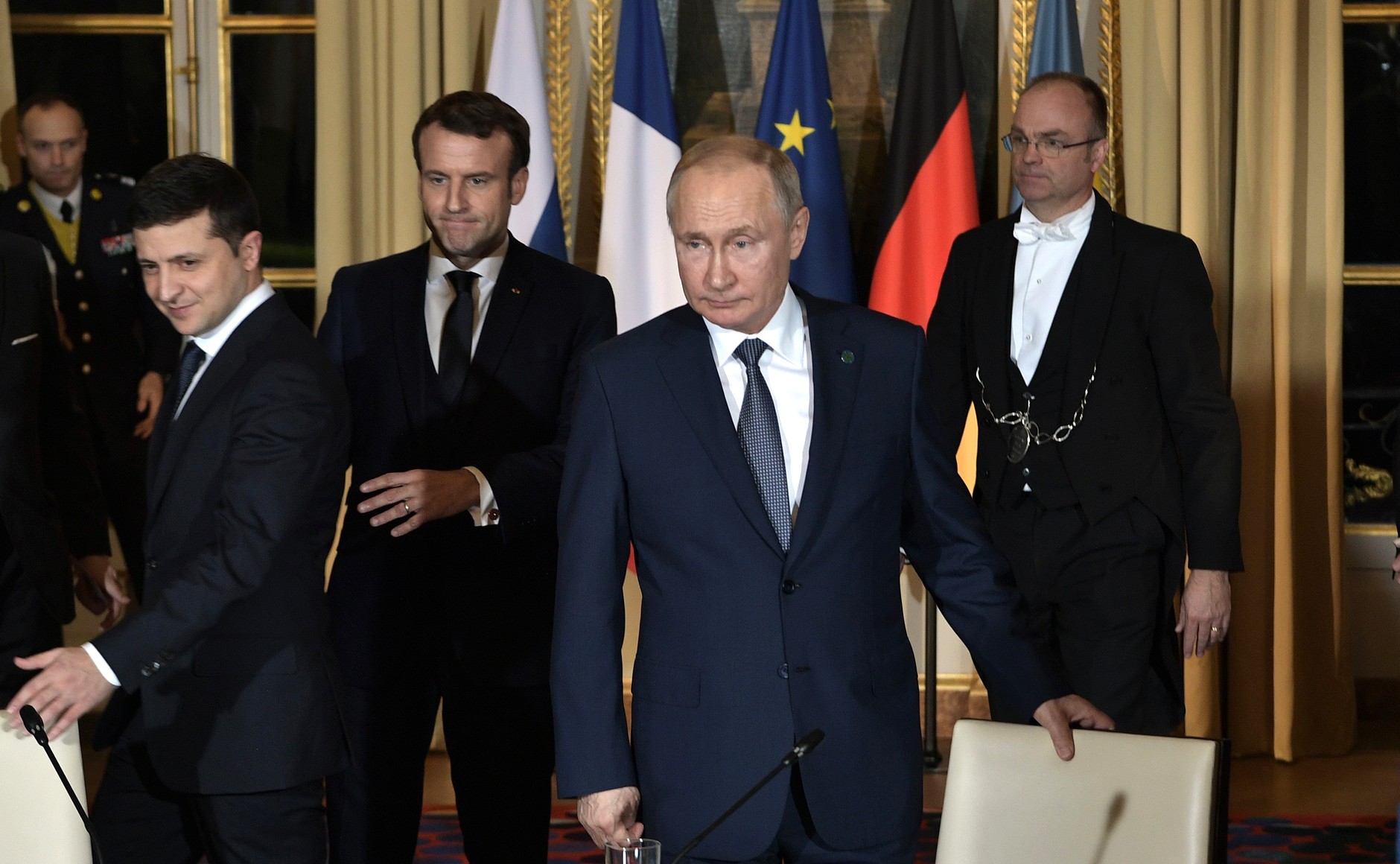
Normandy Format summit, Paris, December 2019 — Zelensky, Macron, Putin. The body language tells the story Putin never spoke aloud.
For a KGB officer raised on the Soviet cult of the security state, a man like Zelensky in power was not just a political opponent. He was a symbolic insult to the very idea of what power means. Zelensky was also, literally, the fictional president from a TV series — Servant of the People — in which he played a schoolteacher who accidentally becomes president and tries to fight corruption. For Putin, where power is an inheritance rite of the security elite, a "clown in the office" was not merely unpleasant. It was conceptually impossible.
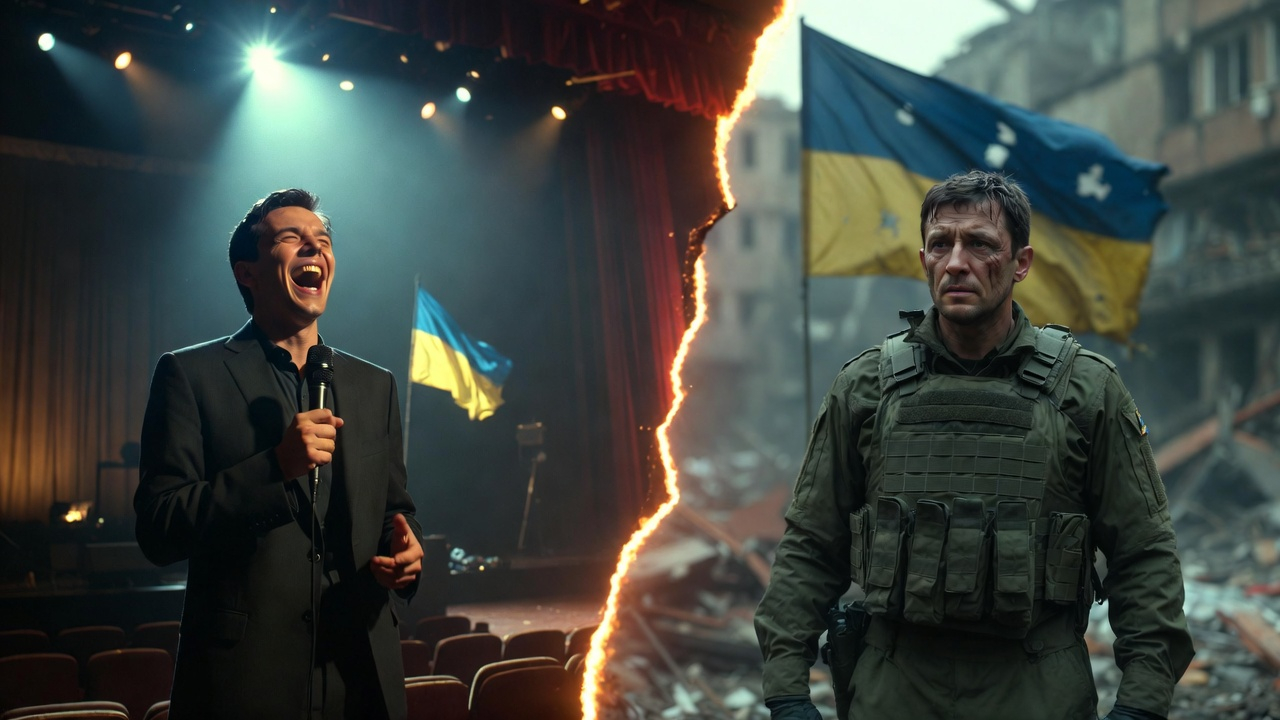
The man Putin called a clown. The man who did not run.
SIX DOCUMENTED LAYERS OF PERSONAL GRIEVANCE
Ranked by Evidentiary Strength
Several specific moments and patterns have been documented — by leaked transcripts, intelligence assessments, and credible first-hand accounts — that illuminate how the contempt accumulated.
As a comedian with his Kvartal 95 troupe, Zelensky publicly mocked Alina Kabaeva — Putin's alleged long-term mistress and the reported mother of his children. In the post-Soviet cultural space, publicly ridiculing the intimate life of a sitting president is not mere daring. It is a challenge. For a man whose public persona is inseparable from his authority, such mockery registers not as satire but as an offense that does not expire.
On February 19, 2022 — five days before the invasion — Zelensky addressed the Munich Security Conference and delivered what Moscow read as an existential threat. He announced that Ukraine had four times, without success, attempted to invoke consultations under the 1994 Budapest Memorandum. Then he added: if those guarantees were not forthcoming, Ukraine had every right to consider the entire 1994 package "in doubt."
"Ukraine now has neither weapons nor security. We have neither one nor the other." — Zelensky, Munich Security Conference, February 19, 2022
Moscow read this as a nuclear threat. The very next day, Defense Minister Shoigu called Zelensky's words "extremely dangerous." Putin himself, in a phone call with Macron, asked with evident irritation: "Did you hear his statement yesterday about nuclear weapons?" The point of no return appears to have already been crossed.
Munich Security Conference, February 19, 2022 — five days before the invasion, Zelensky's speech crossed a line Moscow would not forgive
The leaked transcript of the Putin–Macron phone call from February 20, 2022 is an extraordinarily rare document: Putin's unfiltered voice, four days before the war began.
"This is not a democratically elected government. They came to power as a result of a coup. People were burned alive there. It was a bloodbath. And Zelensky was one of those responsible." — Vladimir Putin, phone call with Emmanuel Macron, February 20, 2022
Notice the construction. Putin does not say "the Ukrainian government is illegitimate." He says "Zelensky was responsible." Personal accusation. Personalization of a political grievance. This is not geopolitical analysis. This is a grudge.
On the eve of the invasion, when diplomacy was still technically possible, Putin refused to take a phone call from Zelensky. For Putin, where every contact is an exercise in power and every refusal is a demonstration of dominance, this was a deliberate signal: you do not exist as a negotiating subject. To speak with Zelensky would have been to acknowledge him as an equal. Putin was not prepared to do that.
On February 8, 2022 — two weeks before the invasion — Putin made a crude remark about Zelensky at a joint press conference with Macron in Moscow. CNN reported it and noted how it circulated widely in Russian media. This was not an accident. It was demonstrative personal hostility, performed in front of the world's cameras at one of the highest-stakes diplomatic moments in years.
CIA Director William Burns flew to Moscow in November 2021 to meet Putin personally. Afterward, he reported back to President Biden: "My level of concern has gone up, not down. Putin's views on Ukraine have hardened, his appetite for risk has grown, and he believes his window of opportunity will soon close."
What was that "window of opportunity"? Almost certainly: the conviction that Zelensky — whom Putin considered a weak politician and a clown — would never mount serious resistance. The personal contempt structured the strategic calculus.
THE INTELLIGENCE FAILURE AS A MIRROR OF PSYCHOLOGY
When the Grudge Becomes the Analytical Filter
The intelligence apparatus Putin built around himself was structurally incapable of telling him the truth about Ukraine
One of the most thoroughly documented aspects of this war is the catastrophic failure of Russian intelligence. Putin was convinced: the army would reach Kyiv in three days. Zelensky would flee. The people would welcome Russian troops with flowers. Every single one of those assessments proved false. Why?
A peer-reviewed analysis published in Intelligence and National Security offers the answer: the intelligence apparatus Putin had built around himself — as an increasingly authoritarian consumer of intelligence — was structurally incapable of telling him the truth. The FSB told him what he wanted to hear.
"Russia was surprised in several ways: by the determined Ukrainian military resistance that blocked its march on Kyiv, by the resolute leadership of President Zelensky, and by the scale of Western outrage."
— Dylan, Gioe, Grossfeld — "The Autocrat's Intelligence Paradox", Intelligence and National Security, 2023
In other words: Putin's conviction that Zelensky was a "clown" who would immediately capitulate or run was not merely a personal opinion. It structured the entire intelligence apparatus. No one dared report otherwise. Personal contempt directly distorted strategic military planning. The grudge became the analytical filter through which all intelligence passed.
VOICES FROM THE INSIDE
People Who Knew Putin — and Left
Pugachev, who spent years in Putin's innermost circle before a dramatic falling-out and exile to France, described Putin as a man with a deeply ingrained inability to tolerate any display of independence. On the question of Zelensky, Pugachev described a Russian president who processed the Ukrainian leader's election entirely through the lens of illegitimacy: "He came to power through a coup. People died." Pugachev himself described Zelensky as "a completely unifying president" — the man on whom "everything rests."
Fiona Hill, who served as the top Russia advisor on the National Security Council under three administrations, has repeatedly described Putin's operating psychology. Putin saw Zelensky as "temporary," "illegitimate," a man not deserving of serious engagement. For Putin, legitimate power derives from institutional security pedigree. By that metric, Zelensky registered as zero — and zeros, in Putin's world, do not get to lead sovereign nations.
THE KVN MYTH — AND THE REAL FACTS
What Is True, What Is Fabricated, and Why It Doesn't Matter
A video widely circulated after February 2022 purported to show a young Zelensky performing a comedy sketch while Putin sat in the audience, laughing. The clip became part of the "personal insult" narrative. Independent fact-checkers dismantled it:
"The Zelensky performance clip is from a 2002 KVN broadcast. The Putin-in-the-audience clip is from an entirely unrelated 2006 show. Putin was not present when Zelensky performed. The videos were edited together."
— Full Fact, Logically Facts, Check Your Fact — independent fact-checking organizations, 2022
However, debunking this specific fabrication does not erase the documented reality. Zelensky's Kvartal 95 troupe genuinely did mock Putin in their routines. They genuinely did parody Alina Kabaeva. That is on the record. The in-person confrontation in a KVN arena? No. The accumulated sting of years of public mockery by a man who later became president? That is entirely real.
THE COST OF ONE MAN'S PRIDE
The Ledger, April 2026
By April 2026, the war continues. Estimates of combined casualties on both sides exceed half a million killed and wounded. More than six million Ukrainians have become refugees across Europe. Dozens of cities are partially or entirely destroyed. Russia has become an international pariah and absorbed a sanctions blow that will be felt for generations.
Not one of Putin's stated strategic objectives has been achieved. Zelensky did not flee. Ukraine did not fall. NATO, instead of weakening, expanded — adding Finland and Sweden. Ukraine is negotiating EU membership. The comedian is still in Kyiv.
Ukraine, 2026 — the price of one man's wounded pride, paid in cities
And yet the war continues. Because exiting it requires acknowledging failure. And for a man whose entire psychological architecture is built on the impossibility of admitting defeat — that is worse than death.
The geopolitical causes of this war are real. NATO expansion, spheres of influence, the post-Soviet space — none of that is fiction. But geopolitics does not explain the timing. It does not explain the irrational military planning. It does not explain why intelligence painted a demonstrably false picture — and why Putin believed it.
The psychological dimension explains those things. A man who had decided, at some deep level, that Zelensky was a clown, an illegitimate pretender, a comedian who would fold at the first shot — made decisions based on that image. Not based on reality.
This is the lesson for every democracy that must deal with authoritarian leaders: when a man in power builds his decision-making around personal pride and a hierarchy of grudges, his entire country becomes a hostage to his psychology. The longer it remains a hostage, the higher the price for everyone around it.
- Putin–Macron phone transcript, February 20, 2022Babel.ua / AFP / Le Temps
- Zelensky's Munich Security Conference speech, February 19, 2022Kyiv Independent — full text
- Washington Post — "Road to War"Full intelligence reconstruction, 2022
- Dylan, Gioe, Grossfeld — "The Autocrat's Intelligence Paradox"Intelligence and National Security, SAGE Journals, 2023
- Brookings Institution — "How the war in Ukraine changed Russia's global standing"brookings.edu, 2025
- Pugachev interview series — Dmytro Gordongordon.ua, 2021–2024
- Full Fact — KVN video fact-checkfullfact.org
- PBS — "U.S. intelligence agencies review what they got wrong"PBS NewsHour, 2022
- Zelensky interview with Lex FridmanKyiv Independent coverage, January 2025
© 2026 DAY · All rights reserved · daysolis.com