Iran’s 40-Year Lie

0000
XDAY FILES  ·  Investigative Series

IRAN'S
40-YEAR LIE

How a Terrorist Regime Deceived the World, Armed Its Proxies, and Nearly Went Nuclear — And Why the Reckoning Was Inevitable

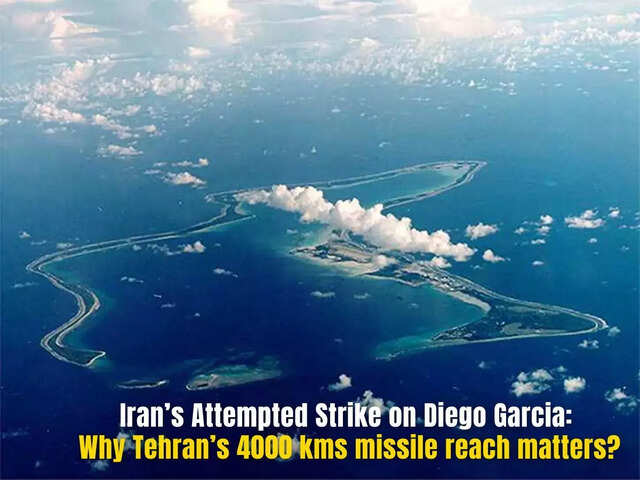
Diego Garcia military base aerial view

Diego Garcia — the US-UK joint military base targeted by Iranian missiles on March 21, 2026

On March 21, 2026, two ballistic missiles launched from Iranian soil streaked across the Indian Ocean toward Diego Garcia — a joint US-UK military base located nearly 4,000 kilometers from Iran's coastline. Neither missile struck its target: one failed mid-flight, the other was intercepted by a US Navy warship. But the launch itself was a confession.

For years — for decades — the Iranian government had officially, repeatedly, and emphatically told the world that it had no missiles capable of traveling beyond 2,000 kilometers. As recently as March 8, 2026, Foreign Minister Abbas Araghchi stated on NBC: "We have intentionally limited ourselves to below 2,000km of range because we don't want to be felt as a threat by anybody else in the world."

Thirteen days later, Iranian missiles flew twice that distance.

This is not a new story. It is the same story, told again — the story of a regime whose fundamental operating principle, both domestically and internationally, is deception. The Diego Garcia launch is just the latest chapter in a forty-year documented record of systematic lies, broken agreements, state-sponsored terrorism, and nuclear brinkmanship that the international community chose, time and again, to ignore.

This article is a factual accounting of that record. Because the events of 2026 did not emerge from nowhere. They were the inevitable consequence of decades of willful blindness.
Part I

THE NUCLEAR LIE

A Timeline of Deception

Iran signed the Nuclear Non-Proliferation Treaty in 1974 and concluded a comprehensive safeguards agreement with the IAEA the same year. The agreement was straightforward: Iran would not pursue nuclear weapons, and in exchange, it would be permitted to develop civilian nuclear energy under international supervision.

What followed over the next three decades was a masterclass in diplomatic deception.

2002
The National Council of Resistance of Iran revealed that Iran had been secretly constructing nuclear-related facilities never disclosed to inspectors. The IAEA began investigating.
2003
IAEA's November report documented that Iran had engaged in "a policy of concealment" from international inspectors. Under intense pressure, Iran signed the Paris Agreement — promising to suspend uranium enrichment and allow rigorous inspections.
2004
Iran removed IAEA seals from its uranium centrifuges at Natanz and resumed their construction.
2005
Iran restarted uranium conversion at Isfahan. For the first time in the agency's history with any country, the IAEA Board of Governors formally found Iran in noncompliance with its safeguards agreement.
2006
The IAEA voted 27-3 to refer Iran to the UN Security Council. Iran's response: end voluntary cooperation with the IAEA and resume uranium enrichment.
2015
IAEA's final assessment concluded that "a range of activities relevant to the development of a nuclear explosive device were conducted in Iran prior to the end of 2003 as a coordinated effort, and some activities took place after 2003." The JCPOA nuclear deal was signed. The world exhaled.
2021
Iran announced uranium enrichment to 60 percent purity — a level with no legitimate civilian use. Britain, France, and Germany called this a "serious violation" of the JCPOA.
2023
The IAEA discovered uranium particles at Fordow enriched to 83.7 percent purity — barely six percentage points from weapons-grade. Iran's response: denial, political accusations, and refusal to provide explanations.
IAEA Official Finding

The Institute for Science and International Security assessed Iran as "an Iranian regime that incessantly cheats on its safeguards obligations and consistently lies about its nuclear weapons efforts, even in the face of overwhelming evidence to the contrary."

This is the nuclear record. Not allegations. Not geopolitical speculation. Documented findings by the UN's own nuclear watchdog, referenced in US Congressional Research Service reports, confirmed across six US administrations spanning both parties.

📎 Congress.gov — Iran Nuclear Program & IAEA Compliance 📎 Arms Control Association — IAEA Investigations of Iran
Part II

THE MISSILE LIE

"We Pose No Threat to Europe"

The nuclear deception had a twin: the missile deception.

Iran's Supreme Leader Ali Khamenei had imposed a formal 2,000-kilometer range limit on Iranian ballistic missiles in 2017. Jeffrey Lewis of the Middlebury Institute told CNN this was a political decision — Iran was already developing capabilities far beyond that limit, but Khamenei chose not to publicly demonstrate them. Iran's Foreign Minister Araghchi repeated this claim as recently as days before the Diego Garcia launch: "We don't want to be felt as a threat by anybody else in the world."

This statement — made on American television, to an international audience — was a lie. And the lie had a specific purpose: to reassure European governments that they were outside Iran's reach and therefore had no reason to take a harder line against Tehran.

Iranian Khorramshahr ballistic missile launch

Iranian Khorramshahr-4 ballistic missile — range capabilities concealed from the international community for years

Map showing distance from Iran to Diego Garcia — 2400 miles

Iran to Diego Garcia: 2,400 miles — twice the range Iran publicly claimed to possess

The Diego Garcia attack revealed a range of at least 4,000 kilometers. From Iran, that puts Paris, Rome, Berlin, Warsaw, Bucharest, and most major European capitals within potential striking distance. Military analysts at CSIS noted that Iran had been "testing big, solid missiles for years" and had simply not "shown their cards."

Map showing Iranian missile range of 4500km covering all of Europe

Iranian missile range of 4,500 km — the entire European continent is now within reach

European governments had taken Iran's 2,000-kilometer assurance at face value for years. That comfort was always built on a deliberate Iranian lie.
XDAY FILES Analysis

Analysis by the Royal United Services Institute suggests the launch may have involved improvised use of Iran's Simorgh space launch rocket — meaning Iran had found ways to weaponize its civilian space program to achieve intercontinental reach. One analyst noted that the intercepted missile could be "a candidate for the longest-range missile" the United States has ever shot down.

📎 CNN — Iran launched missiles at Diego Garcia 📎 Bloomberg — Iran's Strike Attempt: Show of Missile Capability
Part III

THE TERROR NETWORK

Four Decades of State-Sponsored Violence

The nuclear and missile programs were not Iran's only deceptions. For forty years, Iran has maintained a sprawling network of terrorist proxies across the Middle East while publicly denying direct involvement in their attacks.

The United States first designated Iran a State Sponsor of Terrorism in 1984 — a designation it has held continuously ever since. The Reagan administration made the designation based on Iran's role in directing the 1983 Beirut Barracks bombing, which killed 241 American servicemembers. That attack was funded and directed by Iran through Hezbollah.

Destroyed building with rescue workers at night after missile strike

Rescue workers at the site of an Iranian proxy missile strike — the human cost of four decades of state-sponsored terror

Proxy Network
Hezbollah

Founded in 1982 with Iranian IRGC assistance. In 2016, Hezbollah's leader Hassan Nasrallah publicly declared: "As long as Iran has money, we have money." The State Department estimated Iran provided Hezbollah $700 million per year as of 2020. Hezbollah has a seat in the Lebanese parliament, a full military wing, and an arsenal estimated at over 150,000 rockets and missiles. It has conducted operations in Europe, South America, and Africa.

Proxy Network
Hamas

Iran's relationship with Hamas deepened after Hamas took control of Gaza in 2007, despite the fact that Hamas is a Sunni organization and Iran is a Shia theocracy. Ideology is secondary to strategy. The US State Department assesses that Iran provides "up to $100 million annually in combined support to Palestinian terrorist groups, including Hamas." The October 7, 2023 massacre — which killed over 1,200 Israelis — would not have been possible without years of Iranian funding, weapons, and training.

Proxy Network
The Houthis

Iran has backed the Houthi movement in Yemen since at least 2011. After the Saudi-led coalition intervened in 2015, Iran dramatically expanded training, arms shipments, and technical assistance — including drone and ballistic missile technology. The Houthis used this Iranian-supplied capability to attack Saudi oil infrastructure, international shipping lanes in the Red Sea, and Israeli territory.

Proxy Network
Iraq & Syria

Iran-backed militias in Iraq have conducted hundreds of attacks against US forces since 2017. In Syria, Iran used financial incentives to recruit fighters from Afghanistan and Pakistan to prop up the Assad regime. The US State Department documented Iranian forces directly backing militia operations in Syria "with artillery, rockets, drones, and armored vehicles."

Iran's Own Admission

An Iranian official admitted in October 2020: "All these transactions and financial transfers are being carried out in a hidden manner." Iran's own parliament acknowledged that not joining the FATF financial transparency framework would make funding Hamas and Hezbollah more difficult. They chose terrorism over international integration.

The method is always the same: Iran provides funding, weapons, training, and strategic direction — then denies involvement when those groups commit atrocities. This is not a regime that lied occasionally under pressure. It is a regime that organized its entire financial and foreign policy architecture around the ability to lie.

📎 Wilson Center — Iran's Islamist Proxies 📎 US State Department — Country Reports on Terrorism 2021
Part IV

EUROPE'S COMFORTABLE SLEEP

The Price of Willful Blindness

Here is the question that European leaders must answer — not to Washington, not to Tel Aviv, but to their own citizens:

You had the evidence. All of it. It was public, documented, and available in IAEA reports, Congressional Research Service assessments, and State Department terrorism designations going back to 1984. You knew. And you chose to believe the assurances anyway.
The question Europe cannot answer

The EU-3 — France, Germany, United Kingdom — invested years of diplomatic capital in negotiations with Iran. The JCPOA was their crowning achievement. European leaders celebrated it as proof that diplomacy could work, that engagement was more effective than confrontation.

But the JCPOA did not end Iran's nuclear ambitions. It paused some activities while leaving others untouched. It released over $100 billion in frozen Iranian assets — funds that flowed, by Iran's own internal admissions, into the IRGC and its proxy terror networks. It asked the IAEA to formally close its investigation into the military dimensions of Iran's program as a condition of implementation — an extraordinary concession that effectively rewarded deception with diplomatic closure.

And when Iran began systematically violating the JCPOA — exceeding uranium enrichment limits, blocking IAEA access, producing uranium metal with no civilian justification — European governments issued joint statements of concern and called for restraint.

The Scale of the Failure

Statements of concern. While Iran was accumulating enough 60-percent-enriched uranium for ten nuclear warheads.

The Diego Garcia launch changed something. For the first time, the threat was not theoretical, not confined to the Middle East, not someone else's problem. European capitals are now within the demonstrated range of Iranian ballistic missiles. That is a fact European governments can no longer negotiate away with statements of concern.

The tragedy is that this moment was entirely predictable. Every arms control analyst, every IAEA report, every State Department terrorism assessment pointed toward exactly this outcome. The Iranian regime does not moderate when given incentives. It does not honor commitments when the pressure is removed. It uses diplomatic processes as cover for continued development and as a mechanism to divide the international coalition against it.

Recognizing this is not hawkishness. It is reading the documented historical record.

Part V

TRUMP'S ASSESSMENT

And Why the Timeline Mattered

This brings us to the most contested question of 2026: was the US-Israel military action against Iran's nuclear and missile infrastructure the right decision?

Set aside political preferences. Set aside personalities. Look only at the strategic facts on the ground at the time the decision was made.

By early 2026, Iran had accumulated enough near-weapons-grade uranium for approximately ten nuclear warheads if further enriched. It had demonstrated ballistic missiles capable of reaching European capitals. It had a satellite program that analysts believed could be repurposed for intercontinental ballistic missile delivery. It had refused IAEA access to multiple declared sites. And it had shown, in the words of IAEA Director General Rafael Grossi, "rapid accumulation of highly-enriched uranium" that represented "a serious concern."

Trump — Iran War Hormuz Strait Ultimatum

Trump issues the Hormuz ultimatum — March 2026

Trump Truth Social post — 48-hour Hormuz ultimatum to Iran

Trump's Truth Social post, March 22, 2026 — "within 48 HOURS"

The strategic question was not whether Iran posed a threat. The documented evidence was unambiguous. The question was: at what point does inaction become more dangerous than action?

The case for acting in early 2026 rests on a straightforward logic: a country with nuclear weapons and missiles capable of reaching Europe is orders of magnitude more difficult to deter, contain, or stop than one that does not yet have them. The cost of miscalculation after Iran achieves nuclear capability is not a regional conflict and elevated oil prices — it is permanent, existential leverage over every country within missile range.

Iranian ballistic missile launch with Iranian flag

Iranian ballistic missile test — the capabilities they denied having

Vice President JD Vance articulated this calculation directly, citing the IAEA's own findings: Iran had been "found in violation of their non-proliferation obligations by the International Atomic Energy Agency, which is hardly a right-wing organization."

The costs of the military action are real: elevated oil prices, regional instability, military casualties, economic disruption. These deserve honest acknowledgment. But these costs must be weighed against what they prevented. A nuclear-armed Iran with missiles that can reach Paris and London is not a problem that can be solved with sanctions and joint statements after the fact. It is a permanent condition — one that fundamentally restructures the security architecture of the entire northern hemisphere.

History will judge whether the action was conducted optimally. But the underlying strategic assessment — that the window for decisive action was closing, and that a nuclear Iran would represent a qualitatively different and far more dangerous world — reflects a clear-eyed reading of the documented evidence that European governments had available and chose not to act on.

Part VI

THE STEINMEIER MOMENT

When Comfort Becomes Foreign Policy

On March 24, 2026, German President Frank-Walter Steinmeier addressed the 75th anniversary of Germany's restored Foreign Ministry in Berlin. He called the military campaign against Iran "a fatal political mistake," a violation of international law, and said it "could have been avoided." He added: "Trust in American power politics has been lost — not only among our allies, but across the world."

German President Steinmeier at 75th anniversary of German Foreign Ministry

German President Steinmeier at the 75-year anniversary of Germany's Foreign Ministry, March 24, 2026

Let's place that statement next to the documented record.

1974
Iran signs the Nuclear Non-Proliferation Treaty. Commits to full transparency. Commits to no weapons development.
2002
Secret nuclear facilities discovered — hidden from the IAEA for years. A "policy of concealment," in the IAEA's own words.
2003
Iran signs the Paris Agreement. Promises to suspend enrichment.
2004
Iran removes IAEA seals at Natanz. Resumes construction.
2006
Iran ends voluntary IAEA cooperation. Resumes enrichment.
2015
JCPOA signed. Iran commits again. The world exhales.
2019–21
Iran systematically exceeds every limit — enrichment levels, centrifuge counts, stockpile quantities. The IAEA documents it all.
Mar 8, 2026
Iranian FM Araghchi tells NBC: "We have intentionally limited ourselves to below 2,000km of range because we don't want to be felt as a threat."
Mar 21, 2026
Iran fires ballistic missiles across 4,000 kilometers of ocean.

Mr. Steinmeier, with respect: international law only functions when all parties treat it as binding. Iran treated it as a negotiating costume — worn at the table, discarded in the laboratory. The IAEA found Iran in formal noncompliance in 2005. That was the first time in the agency's history. Not Russia. Not North Korea. Iran — while Europe was still holding diplomatic meetings in Vienna.

You ask for "pragmatism." But pragmatism without clarity is appeasement with better vocabulary. Comfort is not a foreign policy.
XDAY FILES Analysis
Conclusion

There is a deeper truth beneath all of this that applies far beyond Iran. Authoritarian regimes — whether in Tehran, Pyongyang, Moscow, or anywhere else — share a structural dependency on deception. Not because their leaders happen to be dishonest individuals, but because deception is the operational foundation of their power.

The lesson of Iran's forty-year nuclear program is not that diplomacy failed. It is that diplomacy with a regime whose survival depends on deception produces deception-shaped outcomes. You can negotiate the terms of the lie. You cannot negotiate away the structural necessity of the lie.

European leaders who accused the United States and Israel of destabilizing the region by confronting Iran's nuclear program owe their citizens an honest accounting. The question is not whether confronting Iran carries risks. Of course it does. The question is whether the alternative — a nuclear-armed Iran with missiles that demonstrably reach European capitals — carries greater risks.

The March 21 launch answered that question for anyone still uncertain.
P.S. — The Real Cost of Weakness

The temporary blockade of the Strait of Hormuz by a weakened, cornered terrorist regime is exactly that — temporary. It is also entirely predictable. Threats, blackmail, economic hostage-taking — this is the standard playbook of terrorism: make everyone suffer so that everyone submits.

Ships near Strait of Hormuz Feb 23 vs March 2 — dramatic decline

Ships near the Strait of Hormuz — Feb. 23 vs. March 2, 2026. The blockade effect in real time.

Live ship tracking map Strait of Hormuz February 28 2026

Live vessel tracking at the Strait of Hormuz, February 28, 2026 — one-fifth of global oil supply at a chokepoint

Energy price spike chart during Iran crisis 2026

European energy prices — the spike that followed Iran's Hormuz blockade

The Strait disruption will pass. Oil prices will normalize. But a nuclear-armed Iran with missiles reaching Paris and Berlin is not temporary. It is permanent. And in a few years, as delivery technology matures, it becomes America's problem too.

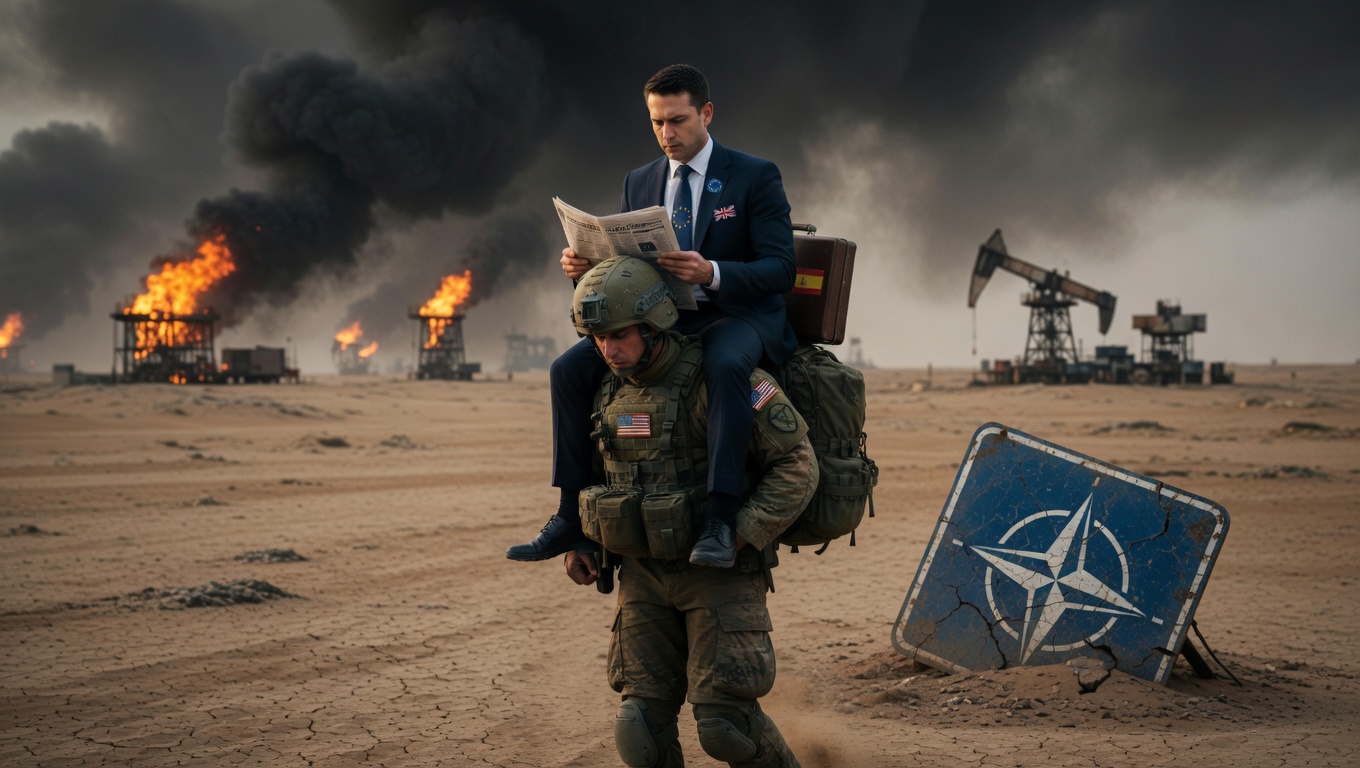
This is why the leaders of the European Union and NATO nations needed to do something they have consistently failed to do: unite, stand firm, and demonstrate to the world the full combined strength — military, economic, and moral — of civilized democracies. Not statements of concern. Not calls for restraint directed at the side defending itself. A clear, unified, unmistakable signal that the democratic world has limits, and crossing them carries consequences.

That signal matters far beyond Iran. Every authoritarian regime on the planet watches how the West responds to provocation. Every terrorist state calibrates its next move based on how much disunity, hesitation, and moral confusion it observes in democratic capitals. Unity and strength do not provoke conflict — they prevent it.

Vladimir Putin understood this perfectly. NATO's years of hesitation, its reluctance to draw hard lines, its endless debates about escalation — these did not prevent the war in Ukraine. They enabled it. They told Putin what he needed to know: that the democratic world was divided, uncertain, and ultimately unwilling to pay the price of confrontation. He acted on that information. The Iranian regime read the same signals. So did others who are watching now.

Weakness does not buy peace. It puts it on sale.
XDAY FILES
Primary Sources
Follow XDAY for more investigations Geopolitics · Power · Intelligence · Science
@XDAYSolis
XDAY FILES  ·  Investigative Series  ·  @XDAYSolis
© 2026 DAY · All rights reserved  ·  daysolis.com

Leave a Comment

Your email address will not be published. Required fields are marked *

Scroll to Top