
Centuries of Deception
The complete history of the Democratic and Republican parties — who created them, why, how they governed America, and why voters still lack the tools to make a truly informed choice.
They tell you that you have a choice. Every four years, the screens light up red and blue. Anchors speak of “two Americas.” Social media splits into mutual contempt. One party is called fascists. The other, socialists. And somewhere between these two screaming narratives — 330 million people are invited to make “the most important choice in history.”
But what if both stories are just masks? This investigation examines both parties with the same cold distance a prosecutor applies to a criminal case: facts, chronology, evidence, consequences. And the first thing that distance reveals is this — both parties have been heroes and villains simultaneously. Both have undergone ideological reversals, betrayed their voters, committed crimes, and achieved genuine greatness. Neither is what it claims to be.
Introduction: An Elegant Machine
Before you accuse, you must understand. Before you understand, you must see the system as a whole.
For nearly two centuries, the United States has operated under a two-party political system. Two large camps — and no one else with any realistic chance at power. To many outside observers, this looks like a limitation on democracy. In reality, it is one of the most elegant solutions to the problem of governing a large, diverse society in the history of political thought.
Consider how political space functions in countries with many parties. Dozens of organizations, each with its own ideology, its own base, its own leaders. Coalitions that fall apart after elections. Governments that collapse within a year. A society split not into two camps but into a dozen — each at war with all the others. In such a system, the state finds it far more difficult to read public sentiment, predict voter behavior, or build long-term policy.
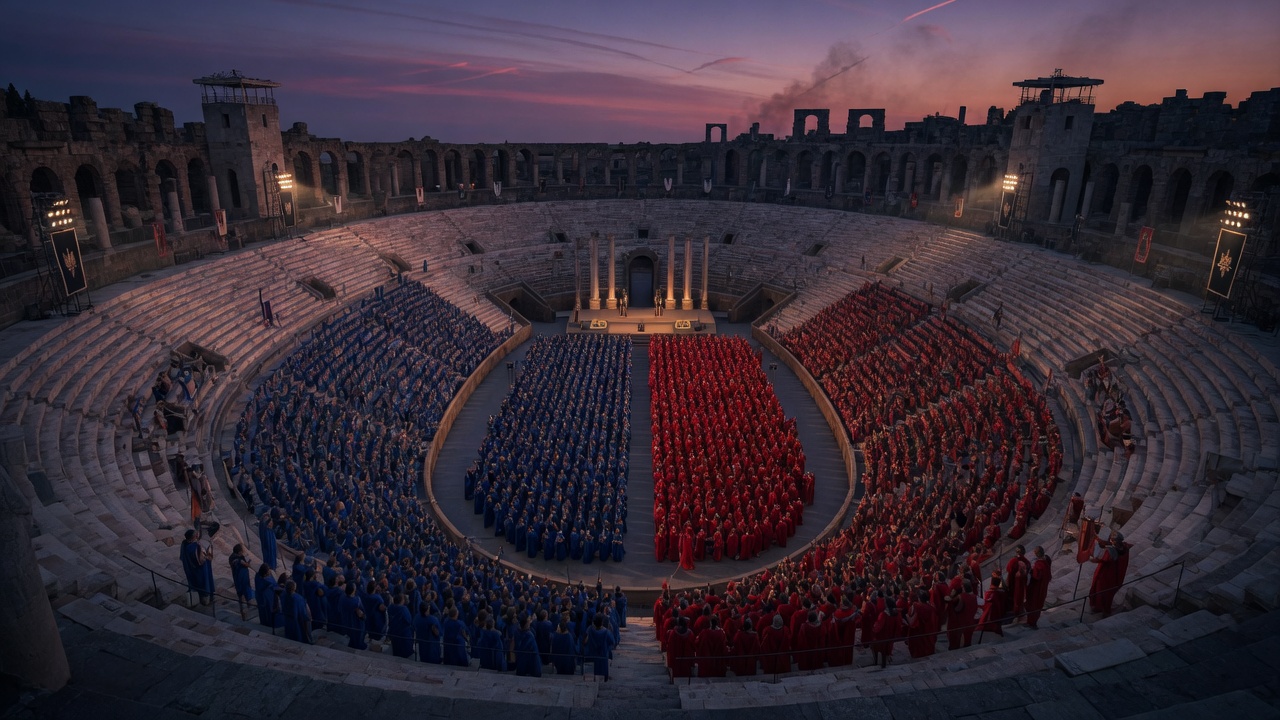
The two-party system solves this differently. It creates two large reservoirs that absorb nearly all of the country’s political diversity. Conservatives and liberals, the religious and the secular, farmers and city dwellers, the wealthy and the working poor — everyone finds a place in one of two camps. The political energy of society does not scatter across dozens of minor channels. It concentrates into two manageable streams.
Whether this was designed intentionally or simply evolved over time is an open question. Most likely, no one drew up this blueprint deliberately. But once established, government structures did not resist it — quite the opposite. Campaign finance law, ballot access rules, and media culture have reinforced this order for generations. Third parties exist in America. They always lose.
The result: society is governable, public sentiment is readable, dissent is institutionalized. This is not a conspiracy. This is a working system. But every system has an underside. And it is that underside this investigation examines.
Part I — Origins: Who Built This and Why
The First Fracture: Hamilton vs. Jefferson
1787. Fifty-five delegates gather in Philadelphia to write a Constitution. The country has just won its war for independence — and immediately faces a question with no obvious answer: how much power should the central government have?
Alexander Hamilton, the first Secretary of the Treasury, answers: enough. A national bank, a unified currency, a standing army, protective tariffs. Without these, the country will not survive as a single state. Around him form the Federalists — the party of northern merchants, bankers, and industrialists.
Thomas Jefferson, the first Secretary of State, answers the opposite: as little as possible. Power must belong to the states and to the people. A national bank is a tool of the elite. A strong central government is a step toward tyranny. Around him form the Democratic-Republicans — the party of southern planters and small farmers.
Here it is necessary to pause on a detail that is routinely overlooked.

“We hold these truths to be self-evident, that all men are created equal.”Thomas Jefferson — Declaration of Independence, 1776. He owned 600+ slaves when he wrote it.
Jefferson proclaimed himself the defender of common people against bankers and elites. He wrote beautiful words about liberty and equality. And yet — he owned more than six hundred slaves over the course of his lifetime. He never freed them, not in life and not in his will, with rare exceptions. The economic prosperity of his estate, Monticello, rested entirely on enslaved labor.
The man who built a party “to protect the people” was himself exploiting human beings as property. This is not a biographical footnote — it is a political fact of the first order. Populism as a cover for protecting one’s own interests was built into the foundation of American politics from the very beginning.
The Birth of the Democratic Party: A Populist on the Throne
Jefferson’s party dominated American politics for the first two decades of the nineteenth century, then collapsed under the weight of its own internal contradictions. From its wreckage, in 1828, emerged the modern Democratic Party — under the leadership of Andrew Jackson.
Jackson presented himself as the voice of the common man against corrupt elites and bankers. He dismantled the Second Bank of the United States, calling it an instrument of the wealthy. He was the first great populist in American history. Who was Jackson in reality? A wealthy plantation owner who enslaved hundreds of people. A military general celebrated for his brutality in wars against Native Americans. The president who signed the Indian Removal Act of 1830 — which condemned tens of thousands of Native Americans to the forced Trail of Tears, during which between four and six thousand Cherokee people alone perished.
This was the founder of the modern Democratic Party. The party that today calls itself the defender of minorities and the oppressed.
The Branding Coup: How the Democrats Stole a Word
Both parties in American history are committed to democratic principles. Both recognize the Constitution, elections, and the rights of citizens. But one of them named itself the “Democratic Party” — and in doing so, executed one of the most effective branding maneuvers in political history. In the mind of an ordinary voter, especially one with limited political education, the word “democracy” became synonymous with the Democratic Party. “Republicans” — that is something else. Something less intuitive.
Add to this the colors. The Democratic Party is represented by calm, reassuring blue — serious, trustworthy, stable. The Republican Party is represented by red — the same color associated throughout the world with communism and left-wing movements. The paradox is striking: the party that opposes government intervention in the economy carries a red flag. The party that advocates expanding government programs carries blue.
The color division became firmly established only in 2000, during the presidential election and its famous television maps. But the result is real: millions of voters make decisions based on an image built from a name and a color — long before they ever learn what the party actually stands for.
The Birth of the Republican Party: The Anti-Slavery Party
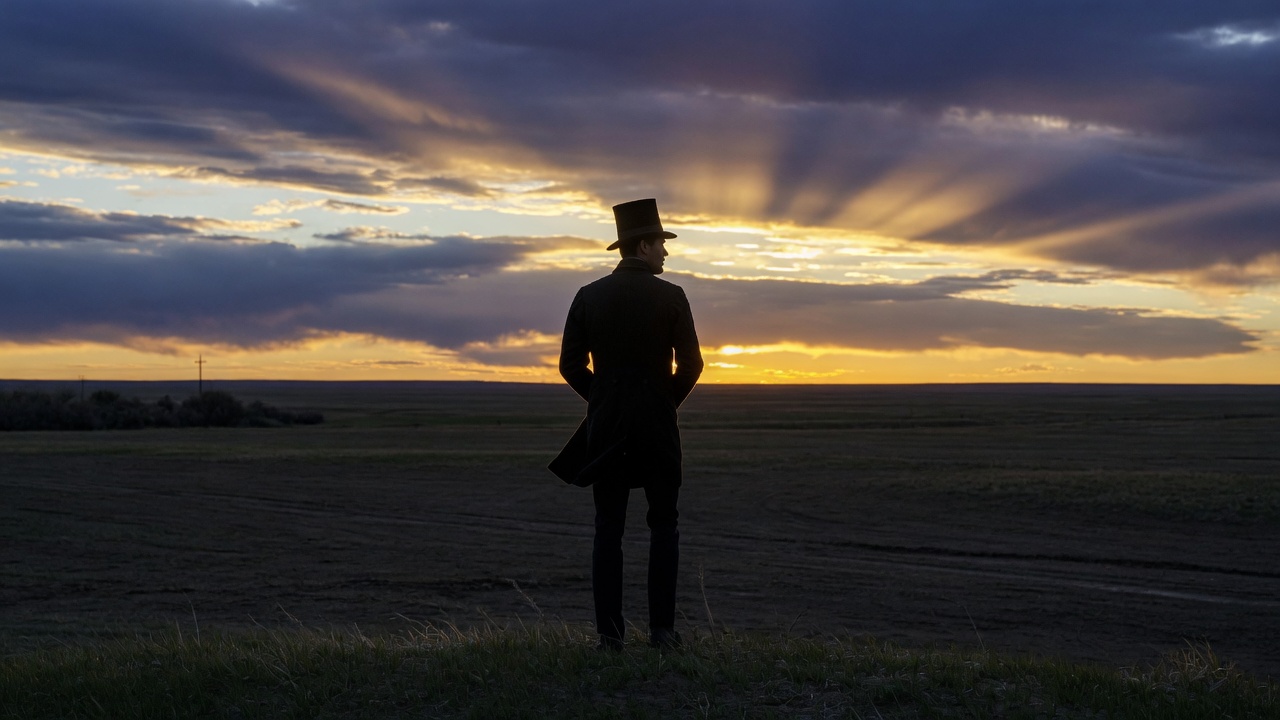
March 20, 1854. A small town called Ripon, Wisconsin. Several dozen political activists — former Whigs, former Democrats, members of the Free Soil Party — agree to form a new party. The immediate cause: the Kansas-Nebraska Act, which opened new territories to the potential expansion of slavery.
The new party calls itself Republicans and is built on one central principle: slavery must not be allowed to expand, and in the long term must be abolished entirely. Just six years later, in 1860, Republican Abraham Lincoln becomes President. Six weeks after his election, South Carolina announces its secession from the Union.
Context matters. Republicans did not found their party from pure altruism — some among them simply did not want to compete with cheap slave labor in new territories. But the result was unambiguous: the party founded in 1854 abolished slavery in the United States within its first ten years of existence. The Thirteenth, Fourteenth, and Fifteenth Amendments to the Constitution were all initiated and passed by Republicans, against fierce resistance from Southern Democrats.
Part II — Great Achievements of Both Parties
Republicans: Abolition and Reconstruction
passed by Republicans against Democratic opposition
every Black congressman before 1935 was Republican
the same Nixon who later disgraced the presidency
Reagan’s strategy of sustained pressure is vindicated
Abraham Lincoln signed the Emancipation Proclamation in 1863. The Thirteenth Amendment in 1865 permanently banned slavery. The Fourteenth Amendment in 1868 guaranteed citizenship to all born in the United States. The Fifteenth Amendment in 1870 gave Black men the right to vote. Every African American elected to Congress before 1935 was a Republican. Frederick Douglass and Booker T. Washington were Republicans.
During Reconstruction, Republicans sent federal troops to the South to protect the rights of formerly enslaved people. It was the first — and for a long time the only — real experience of political integration for Black Americans in the life of their country. Nineteenth-century Republicans also built the country’s economic infrastructure: the transcontinental railroad, land-grant universities, the Homestead Act that gave millions of Americans their own land. Theodore Roosevelt broke up the monopolies of the Gilded Age and laid the foundations of antitrust law.
Republicans and the Cold War
Ronald Reagan, elected in 1980, carried out the largest peacetime military buildup in American history and built a strategy of sustained pressure on the Soviet Union that its economy could not withstand. The Berlin Wall fell in 1989. The Soviet Union dissolved in 1991. It was a strategic triumph whose benefits were shared by the entire Western world.
One notable detail: Trump became the first president in many decades to refuse his presidential salary of $400,000 per year, directing it to federal agencies. Herbert Hoover and John F. Kennedy did the same before him. The gesture is symbolic — but in politics, symbols carry weight.
Democrats: The New Deal and Civil Rights
When Wall Street collapsed in October 1929 and a quarter of American workers found themselves unemployed, Franklin Roosevelt proposed the New Deal — a program of government intervention that rewrote the relationship between the state and the economy. Roosevelt was not building socialism — he was saving capitalism by giving the poor just enough that revolution became unnecessary. To be fair: unemployment remained high well into World War II — around 15% in 1940. Full economic recovery came through the war, not the reforms alone. But the social infrastructure created — Social Security, labor rights, banking regulation — reshaped American life permanently.
Lyndon Johnson in 1964–1965 signed the Civil Rights Act and the Voting Rights Act — documents that officially ended the era of legal segregation. Medicare and Medicaid provided health insurance to tens of millions of elderly and low-income Americans. In 2008, Democrats brought the first African American president in United States history to power.
Part III — The Dark Pages
Democrats and a Century on the Wrong Side
The Democratic Party today presents itself as the party of minorities and social justice. It is therefore necessary to state a historical fact plainly: for roughly one hundred years — from the party’s founding in 1828 through the mid-twentieth century — the Democratic Party was the primary institutional defender of slavery and racial segregation in the United States.
After the Civil War, Democratic Redeemer governments of the South systematically drove Republicans from state legislatures and enacted Jim Crow laws: segregation in schools, transportation, restaurants, and hospitals; poll taxes and literacy tests specifically designed to strip Black citizens of voting rights. By 1908, white Democrats in the South had effectively eliminated African American political participation.
President Woodrow Wilson, a Democrat, introduced racial segregation into the federal civil service in 1913, firing Black officials and dividing government positions along racial lines. He also organized the first film screening in White House history — a showing of Birth of a Nation, a film that openly glorified the Ku Klux Klan.
Republicans and the Southern Strategy
After Lyndon Johnson signed the Civil Rights Act in 1964, millions of white Southerners left the Democratic Party. Republicans seized on this rupture. The so-called Southern Strategy — using coded signals through slogans like “states’ rights” and “law and order” to appeal to white voters hostile to racial integration — became a real political instrument.
An important qualification: Republicans did not win the South through racial signals alone. Economic conservatism, evangelical Christianity, gun rights, and opposition to federal overreach all played a significant role. But the fact remains: the party founded on the abolition of slavery used racial resentment as an electoral tool. This is not an accusation — it is documented history.
Part IV — A Catalog of Lies: Both Sides

An investigator works with facts. What follows is a record of documented cases of government deception from both parties — confirmed by official investigations, declassified documents, or the admissions of the participants themselves.
When Both Parties Lie Together
Some of the most consequential acts of government deception carry no party label — because both participated simultaneously. The 2008 bailout: both parties voted to rescue Wall Street at taxpayer expense — neither rescued the millions of homeowners who lost everything. The national debt: under every administration for the past forty years, Republican and Democrat alike, it has grown without interruption. Both parties have promised to reduce it. Neither has.
“A party is a tool. The question is always whose hands are holding it.”DAY Solis — XDAY Files, May 2026
Pattern or People?
The list could continue. But the pattern is already clear. Deception in American politics is not an exception or an accident. It is a tool of governance, used by both parties, under every administration, across two centuries. The names change, the pretexts change — the mechanism stays the same.
But an important qualification must be made. Perhaps the problem lies not in the parties as such. The Democratic and Republican parties are not monoliths with a single will — they are large coalitions of people with different interests, convictions, and moral standards. The deception did not come from “the party” — it came from specific individuals who found themselves in power at specific moments. Nixon lied — not all Republicans. Clinton lied — not all Democrats. Johnson launched a war on a fabricated pretext — but it was that same Johnson who signed the Civil Rights Act.
A party is a tool. The question is always whose hands are holding it.
Part V — The Great Switch
When you explain to someone that the Democratic Party was once the party of slavery and segregation, and the Republican Party the party that abolished slavery, you often hear: “Yes, but they switched.” And that is true — with important qualifications.
The great switch happened in the 1960s. Johnson signed the Civil Rights Act — and segregationists left the Democratic Party for the Republicans. Ideologically, the parties did genuinely shift a number of positions. Nineteenth-century Republicans actively used federal power to build transcontinental railroads and found land-grant universities. Today’s Republicans declare limited government their core value. Nineteenth-century Democrats opposed federal authority. Today’s Democrats see the federal government as the primary instrument of social justice.
But the switch was incomplete. Many principles stayed in place. The Southern Strategy did not change white Southern conservatives — it simply moved them from one partisan home to another. Economic positions shifted slowly and inconsistently. “They switched” is a simplification that both sides deploy when it suits them. The truth, as always, is more complex.
Part VI — The 21st Century: New Faces, Old Patterns

Barack Obama came to power in 2008 under the banner of “Change We Can Believe In.” He became the first African American president — a moment whose significance is difficult to overstate. His administration passed health care reform and pulled the economy out of the Great Recession. But it also expanded government surveillance programs, pursued deportations at a record pace, and prosecuted whistleblowers more aggressively than any previous administration.
Donald Trump in 2016 shattered every model of political forecasting and won the presidency as an outsider against his own party establishment. His presidency polarized the country to its limits. The 2017 tax reform cut corporate taxes. A trade war with China challenged free-trade orthodoxy that had gone unquestioned for decades. Two impeachments. Criminal indictments. And a refusal to accept defeat in 2020 — unprecedented in American democratic history. One notable gesture: Trump refused his presidential salary of $400,000 per year, donating it to federal agencies. Hoover and Kennedy did the same. In politics, symbols carry weight.
Joe Biden arrived as a symbol of return to normalcy. His administration passed sweeping infrastructure investment and industrial policy legislation. But it concealed the president’s true cognitive condition from the electorate until the June 2024 debate made denial impossible. Biden withdrew from the race. The country learned the truth too late.
Three presidents. Three different styles. One unchanging pattern: the gap between what is said and what is done.
Part VII — The System, the Voter, and the Truth
After more than two centuries of studying these two parties, one uncomfortable question remains — one that is rarely asked aloud.
If these two parties truly represented diametrically opposed values — why do American corporations systematically fund both? Why have the fortunes of billionaires grown under every president of the past forty years, Republican and Democrat alike? Why has the gap between rich and poor in the United States widened regardless of which party controlled Congress?
Political scientists at Princeton University published a study in 2014 analyzing 1,779 policy decisions in the United States over a twenty-year period. Their conclusion: the preferences of the average American citizen had almost no influence on the decisions that were made. The preferences of economic elites did.
This does not mean the parties are identical. The differences are real — and they matter to real people. Environmental standards, minority rights, tax policy, access to health care — all of these genuinely change depending on who holds power. Elections have consequences.
But the systemic constraints within which both parties operate remain the same. Both exist in a system where winning requires enormous funding. That funding does not come from ordinary voters. And the policies of both parties consistently find ways to avoid touching the interests of their largest donors — even when they publicly promise to do exactly that.
The central problem today is not that the parties are bad. The central problem is that millions of voters make their choices without understanding the real history of the institutions they are trusting. They vote for blue without knowing that the blue party defended segregation for a century. They vote against “Republicans” without knowing that Republicans abolished slavery. They believe the words — without knowing the record.
Informed choice is impossible without informed knowledge. This investigation is an attempt to give the reader precisely that.
Timeline of Key Events
| Year | Event |
|---|---|
| 1791–1792 | First parties formed: Federalists (Hamilton) vs. Democratic-Republicans (Jefferson). |
| 1828 | Modern Democratic Party founded by Andrew Jackson. |
| 1830 | Indian Removal Act: beginning of the Trail of Tears. |
| 1854 | Republican Party founded in Ripon, Wisconsin. |
| 1860 | Abraham Lincoln elected as the first Republican president. |
| 1863 | Emancipation Proclamation. |
| 1865 | Thirteenth Amendment: slavery abolished. |
| 1877 | End of Reconstruction. Democrats reclaim control of the South. |
| 1896 | Plessy v. Ferguson: Supreme Court legalizes segregation. |
| 1913 | President Wilson introduces racial segregation in the federal civil service. |
| 1932 | Roosevelt and the New Deal. |
| 1961 | Bay of Pigs: first documented government lie broadcast live. |
| 1964 | Gulf of Tonkin incident. Civil Rights Act signed. |
| 1968 | Nixon’s Southern Strategy. The South begins its shift to Republicans. |
| 1972–1974 | Watergate. The only presidential resignation in American history. |
| 1980 | Reagan. Beginning of the conservative revolution. |
| 1986 | Iran-Contra. |
| 1991 | Collapse of the Soviet Union. |
| 1994 | NAFTA and Clinton’s crime bill. |
| 1998 | Clinton impeached for lying under oath. |
| 2001 | September 11. The Patriot Act. War in Afghanistan begins. |
| 2003 | Invasion of Iraq based on false WMD claims. |
| 2008 | Financial crisis. Bank bailout. Obama elected. |
| 2013 | Snowden reveals scope of NSA mass surveillance. |
| 2016 | Trump elected. |
| 2020 | Pandemic. Election. Refusal to concede defeat. |
| 2024 | Biden withdraws from the presidential race following years of concealed cognitive decline. |

America Deserves an Honest Reckoning
As an American, I feel a personal responsibility for what I write. American public institutions — political parties, elections, the system of checks and balances — deserve honest, unbiased analysis. Not propaganda, not attack, not defense. Analysis.
I have no interest in division. Quite the opposite — I believe that an honest understanding of the history of our institutions helps people with different political views find the common ground that unites them. Great America was not built by one party or one ideology. It was built by people who knew how to argue — and still remain fellow citizens.
I am open to dialogue. If you disagree with my conclusions, I welcome the discussion. If you have questions, or would like to suggest a topic for the next investigation — write to me. Criticism is welcome. It is what makes journalism more accurate.
This analysis is not finished. XDAY FILES will continue — future installments will go deeper into specific individuals, specific decisions, and their consequences for American society. Because the history of these two parties is not a textbook. It is a living process — unfolding right now.
— DAY Solis, May 2026
If this investigation was useful to you — support independent journalism
☕ Buy me a coffee