FREE RIDERS

grok image d175f83d 42e6 4cc7 9841 f7cc7a3fd485
XDAY FILES  ·  Investigative Series

FREE
RIDERS

Europe burns its own money heating homes it refuses to defend. America pays the bill — in blood, treasure, and strategy.

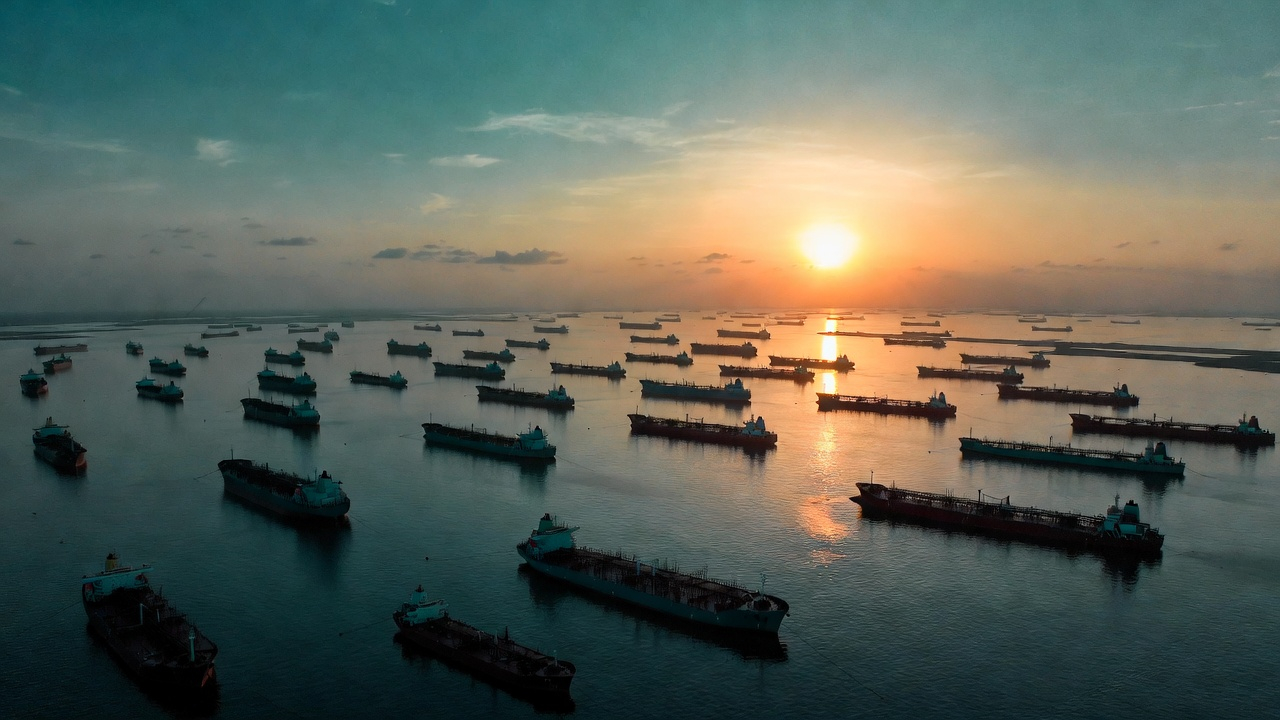
Aerial shot — Strait of Hormuz frozen tanker fleet at sunset

Strait of Hormuz — the corridor through which a fifth of the world's oil supply flows every day, now a geopolitical chokepoint

On March 16, 2026, Donald Trump issued a warning that should have been heard as a scream. If Europe does not help the United States reopen the Strait of Hormuz, he said, it will be "very bad for the future of NATO." The response from the European capitals was essentially silence — diplomatic murmuring, working groups, procedural delays. Germany expressed doubts. Romania said it had other priorities. France counseled diplomacy. The EU foreign affairs meeting that followed produced no coalition and no commitment.

Meanwhile, European gas prices had already doubled. Brent crude had surged past $119 a barrel. The Dutch TTF gas benchmark had climbed above €60 per megawatt-hour, nearly twice its level from February. Across the continent, households and factories were about to pay significantly more for everything that requires energy to produce, which is to say: everything.

The strait that Europe's politicians declined to help defend is the very corridor through which a fifth of the world's oil supply flows every single day. The same waterway that powers the lights in Berlin and warms apartments in Warsaw. This is not someone else's problem. This is Europe's economic oxygen pipe — and Europe asked America to guard it alone.

Part I

THE ANATOMY OF THE AXIS

Iran, Russia, China, North Korea — How the Architecture Was Built

To understand what is happening in the Strait of Hormuz today, you need to understand the architecture of the threat that produced it. This did not begin on February 28, 2026, when the United States and Israel launched coordinated strikes under Operation Epic Fury. This began decades ago, with the patient construction of what analysts now call the Axis of Upheaval: Iran, Russia, China, and North Korea — four authoritarian regimes whose strategic cooperation is built not on ideology alone, but on mutual resource flows, weapons transfers, and coordinated obstruction in international institutions.
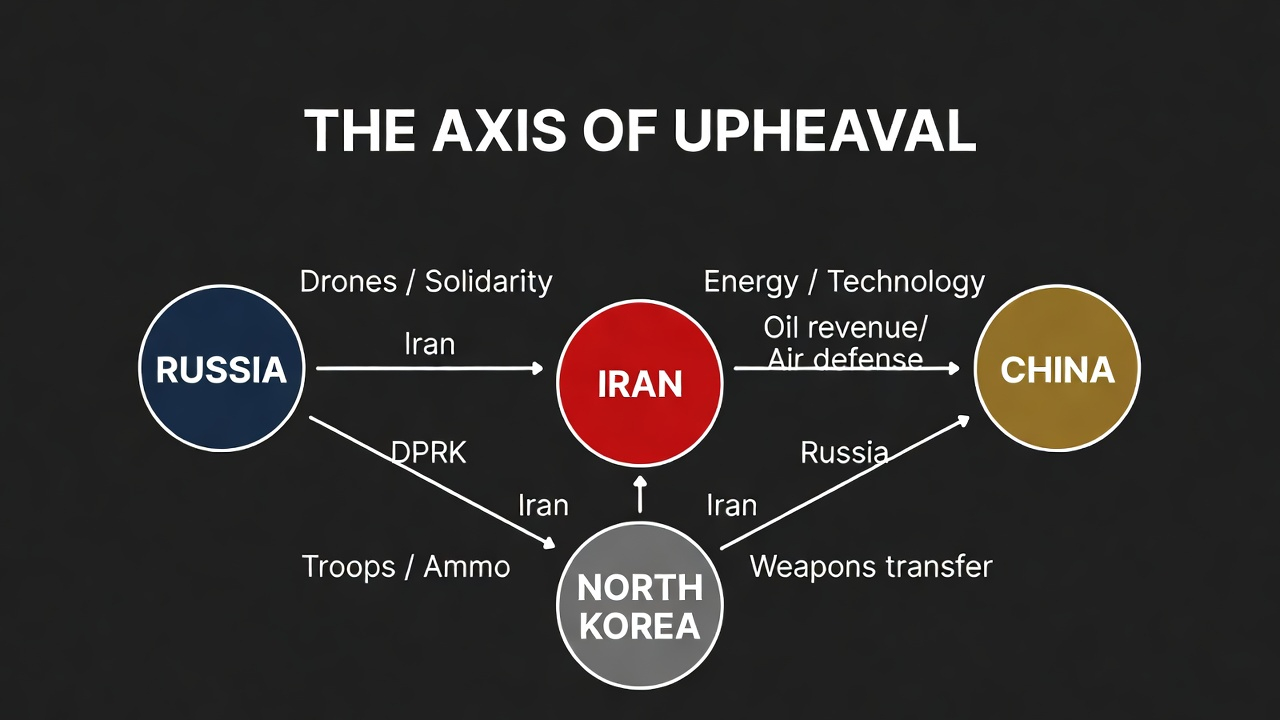
The Axis of Upheaval diagram — Iran Russia China North Korea connections

The Axis of Upheaval — resource flows, weapons transfers, and mutual survival between four authoritarian regimes

The logic of the axis is simple and brutal. Iran provides proxy militias — Hamas, Hezbollah, the Houthis — capable of destabilizing entire regions and disrupting global shipping. Russia provides military technology, advanced air defense systems, and diplomatic cover in the UN Security Council. China provides the financial oxygen: heavily discounted sanctioned crude purchased from Tehran and Moscow, keeping both regimes financially solvent despite Western sanctions. North Korea provides soldiers and ammunition — demonstrated concretely when Pyongyang sent troops to fight in Ukraine. The four members pay each other not in cash but in survival.

📊 Key Figure

Approximately one-third of China's crude oil imports in 2025 came from sanctioned sources — Russia, Iran, and Venezuela — saving Beijing billions and keeping the axis financially alive. (Foundation for Defense of Democracies, 2026)

This is not a conspiracy theory. It is documented economics. China's manufacturing competitiveness has been partly subsidized by deeply discounted sanctioned oil — oil that flows only because Russia and Iran remain in business. Remove Iran from that equation, and you tighten the economic screws on Beijing's industrial base. This is the strategic logic behind what analysts at the Lowy Institute have described as Trump "methodically stripping China and Russia of their partners."

Part II

OPERATION MIDNIGHT HAMMER

The Signal, Not Just the Strike
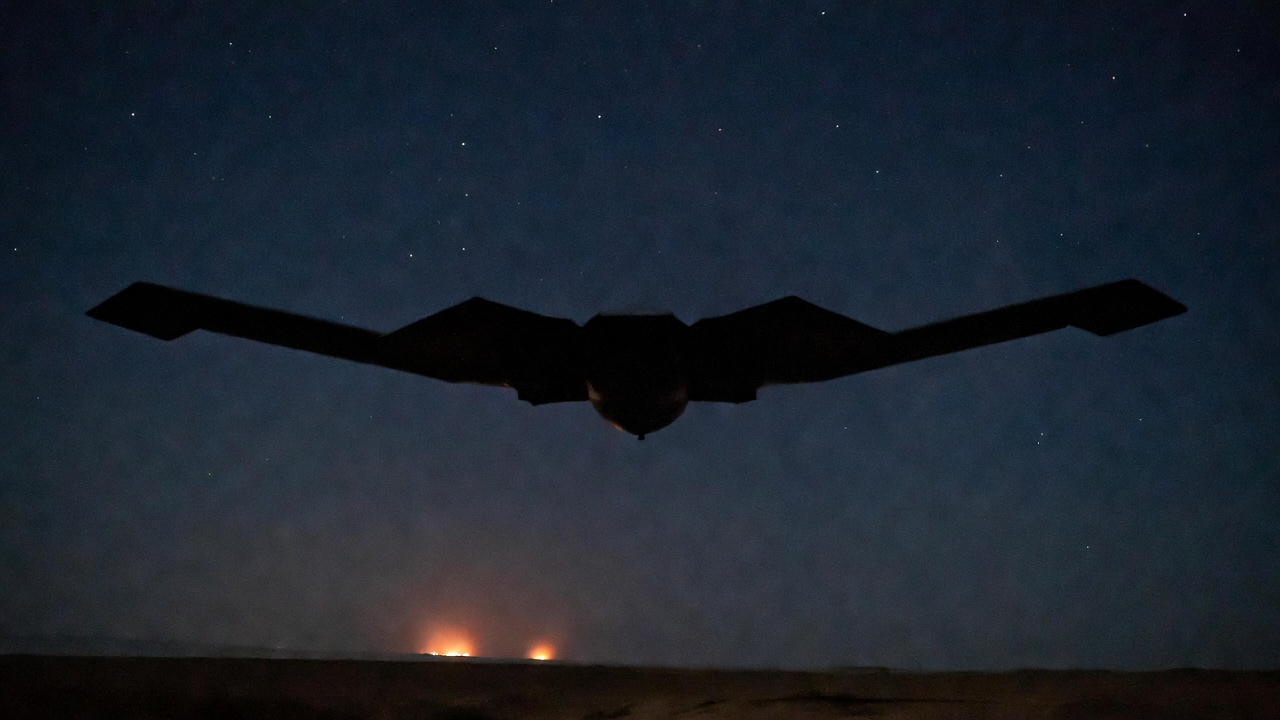
B-2 stealth bomber flying at night over burning targets

Operation Midnight Hammer — US B-2 stealth bombers struck Iranian nuclear sites at Fordow, Natanz, and Isfahan simultaneously on February 28, 2026

On February 28, 2026, US B-2 stealth bombers and Israeli aircraft struck Iranian nuclear sites at Fordow, Natanz, and Isfahan simultaneously. Senior commanders of the Islamic Revolutionary Guard Corps were eliminated. Missile and drone production hubs were destroyed. Iran's command networks were severed. The operation was not improvised. It was the culmination of a strategic sequence building for over a year.

That sequence began with Israel: the systematic dismantling of Hezbollah's combat capability in Lebanon, the elimination of Hamas political leadership, sustained strikes on Houthi infrastructure in Yemen — the same Houthis whose attacks on Red Sea shipping had already cut Suez Canal traffic roughly in half between 2023 and 2024, forcing shipping companies to reroute around Africa at enormous cost.

Iran was not merely a regional actor. Iran was the connective tissue of the entire proxy network — the logistics hub, the weapons pipeline, the ideological center that held the whole architecture together. By striking Iran's nuclear infrastructure, the United States and Israel did not simply set back a weapons program. They broke the myth of Iranian invulnerability that had served as the ideological glue of the axis.

"Trump never announces his strategy publicly. He demonstrates it — on the bodies of those who underestimated it."
XDAY FILES Analysis

The reaction from Moscow was revealing. In the 50-minute call that followed the strikes, Vladimir Putin condemned the operation and called for de-escalation. That is not the language of confidence. That is the language of a man watching a partner collapse and calculating what it costs him. Iran had supplied Russia with drones throughout the Ukraine war. Now that partner was on fire — and Russia could do nothing but issue statements.

Part III

THE BRICS ILLUSION COLLAPSES

An Economic Forum Wearing the Clothes of a Geopolitical Alliance

For years, Western analysts worried about BRICS as the nucleus of an alternative world order — a bloc that could coordinate against Western pressure in multilateral institutions and challenge US dominance. The Iran strikes exposed the reality: BRICS is an economic forum wearing the clothes of a geopolitical alliance.

When the strikes landed, BRICS failed to produce a unified response. Russia issued rhetoric. China warned the conflict "should never have happened." India — serving as BRICS chair this year — avoided criticizing the United States and Israel entirely. South Africa urged caution without naming any party. Iran, which had joined BRICS in 2024, was being bombed. Its fellow BRICS members issued press releases.

The Structural Weakness

Iranian missiles struck the United Arab Emirates — also a BRICS member. The organization cannot even protect its own members from each other, let alone coordinate a response to the world's most powerful military.

BRICS has no collective defense pact. No joint military command. No shared foreign policy. It was designed as an emerging-markets economic forum — and that is exactly what it remains.

Part IV

THE STRAIT NO ONE WANTED TO DEFEND

The Number That Defines Europe's Dilemma

The numbers that define Europe's dilemma — Strait of Hormuz data

Key Figures — Strait of Hormuz
🔴
20%of global daily oil consumption transits the Strait of Hormuz
🔴
20%of global LNG trade passes through the same chokepoint
🔴
2%of Hormuz oil goes to the United States — the country currently reopening it
🔴
€13Bextra fossil fuel import bill already hitting the EU from this crisis
Ships near Strait of Hormuz — Feb 23 vs March 2 dramatic decline

Ships near the Strait of Hormuz — February 23 vs. March 2, 2026. The blockade effect in real time.

The United States imports approximately 2% of its crude through the Strait of Hormuz. It is the world's largest oil producer, pumping 13.58 million barrels per day. It is energy self-sufficient by any reasonable measure. And yet it is the United States that sent carrier groups, that launched military operations to reopen the strait, and that is paying the operational and diplomatic costs of doing so.

Europe, meanwhile, entered this crisis with gas storage at just 30% capacity — the lowest in years, following a harsh winter. It is structurally dependent on Qatari LNG, of which Qatar has declared force majeure on all contracts. It imports diesel and jet fuel from the Gulf. And it said no to Trump's request for naval support.

The deeper truth is institutional and psychological. European political culture has spent three decades offloading hard security decisions to the United States. In a moment that requires a carrier group, it produces working groups.
XDAY FILES Analysis
Part V

WHAT TRUMP IS ACTUALLY DOING

The Strategy Behind the Noise

American commentators have characterized Trump's foreign policy as chaotic or incoherent. This misses something important. Beneath the noise, a coherent strategic logic has been operating: systematically dismantling the resource and diplomatic connections between authoritarian axis members, while maintaining personal channels with their leaders.

Trump has never threatened Putin publicly in the manner of a traditional Cold War adversary. Instead, he has maintained lines of communication — regular phone calls, expressed willingness for economic engagement — while demonstrating on Iran, Venezuela, and Cuba what America is capable of when it decides to act. The demonstration is the message. Putin watching Khamenei's government collapse understands something that no diplomatic note could communicate: the era of American hesitation has ended.

The same logic applies to China. Beijing spent years cultivating Iran as a strategic partner outside the US alliance system — a source of discounted oil, a customer for military technology, a fellow traveler in anti-Western institutional politics. That investment is now severely damaged. Chinese financial institutions processing payments for sanctioned Iranian crude face potential US Treasury sanctions designations. The cost of the axis just went up dramatically for Beijing.

Trump also successfully removed Venezuela as a source of illicit oil flows to China, cutting off another arterial supply line. The shadow shipping networks that allow sanctioned states to evade Western restrictions are under sustained interdiction. The architecture of mutual support that made the axis functional is being taken apart piece by piece.

Part VI

THE ASYMMETRY THAT DEFINES THE MOMENT

Europe Receives a Bill It Has Always Owed

Split image — Paris at sunset left, US aircraft carrier in combat right

Europe and America — two different realities in the same crisis

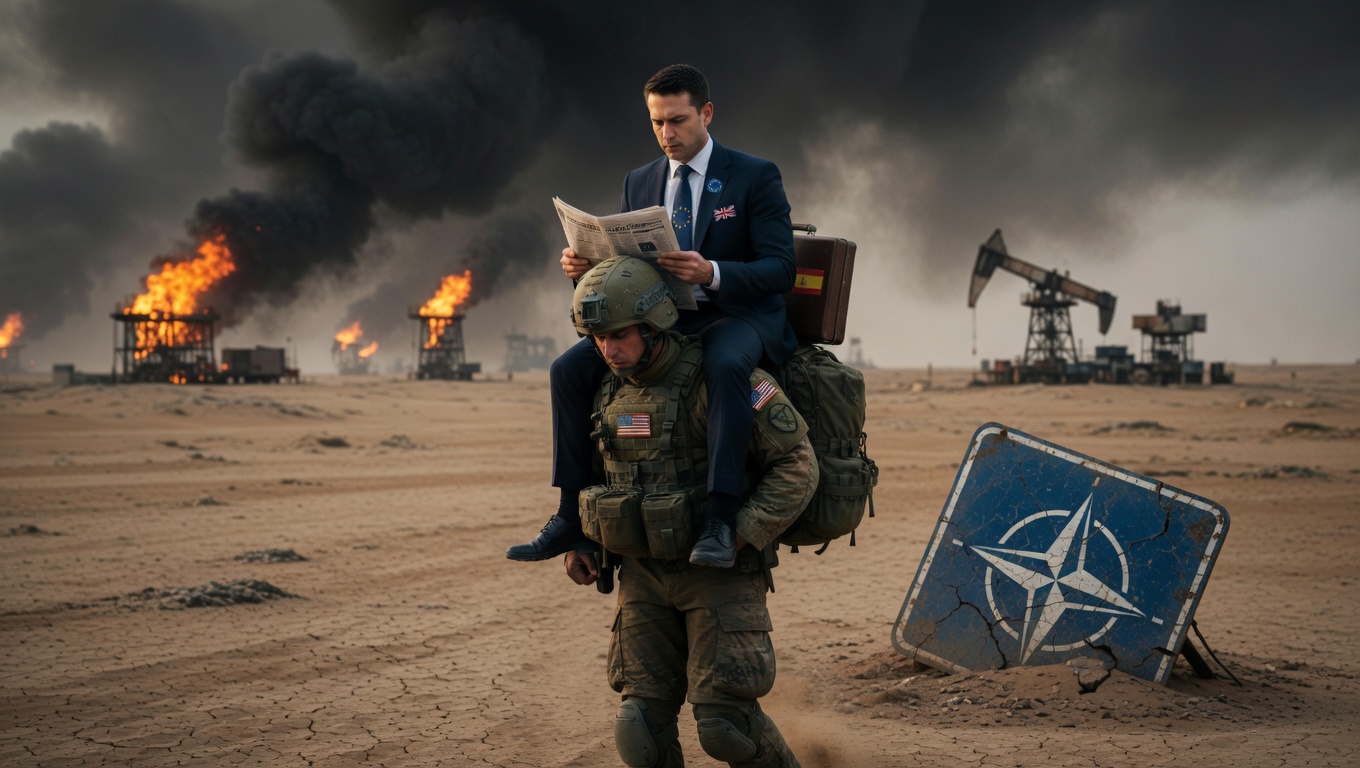
There is a profound asymmetry at the center of the current transatlantic crisis that European leaders have not confronted with honesty. The United States is paying — in military deployment, in operational risk, in political capital — for the defense of a global energy system and a rules-based international order that benefits the European Union far more than it benefits America today.

America is energy-independent. America is not in Iran's missile range. America does not have gas storage at 30% capacity heading into spring. America does not face diesel shortages or €2-per-liter fuel prices rippling through its transport sector. Europe does. And yet Europe's contribution to the coalition trying to resolve this crisis is to hold meetings and express doubts.

"Europe is receiving a bill for services rendered. The bill has always existed. Trump simply stopped pretending it doesn't."
XDAY FILES Analysis

This is not a new phenomenon. European defense spending has historically been possible only because the United States absorbed the fixed costs of Western security architecture — the intelligence infrastructure, the naval presence, the nuclear umbrella, the credible deterrence that makes European territory safe enough to build welfare states and argue about carbon credits. The Iran crisis has simply made the subsidy visible in a way that cannot be ignored.

Part VII

THE COST OF WATCHING FROM THE SIDELINES

The Bill Is Already Compounding

European city burning with euro banknotes flying through the air

The cost of strategic paralysis — Europe's energy dependence becomes economic devastation

The consequences of Europe's posture are already compounding. The European Central Bank has postponed planned rate reductions, raising its inflation forecast and cutting GDP growth projections. UK inflation is expected to breach 5% in 2026. Chemical and steel manufacturers are imposing surcharges of up to 30% on their products. Spain has rushed together a $5.8 billion emergency package — 80 separate measures — to shield consumers from energy costs. France, with public debt at 117% of GDP, is scrambling for targeted aid with almost no fiscal room to maneuver.

European energy price spike chart 2026

European energy prices — the spike that followed Iran's Hormuz blockade

This economic damage is not the result of American aggression. It is the result of Iran's decision — enabled by decades of Western appeasement and the support of the Russia-China-Iran-North Korea axis — to hold the world's most critical energy chokepoint hostage. Every European household paying double for heating this spring is paying, in part, the price of the diplomatic paralysis that allowed Iran to build its capabilities for 40 years while European governments negotiated endlessly and signed agreements that Tehran had no intention of honoring.

Europe's reluctance to act now is, in a very direct sense, the continuation of the same policy failure that created the crisis in the first place.

Part VIII

THE STRATEGIC CALCULUS EUROPE REFUSES TO MAKE

The Argument No One Is Making to Their Own People

There is a straightforward argument that European policymakers should be making to their own populations — and are not. Every dollar spent supporting the American effort to dismantle the Axis of Upheaval is a dollar invested in the structural security conditions that make European prosperity possible.

The alternative is not peace achieved through diplomacy. The alternative is an axis of authoritarian states with demonstrated willingness to use energy as a weapon, proxy forces as a tool of regional destabilization, and UN vetoes as a shield for impunity — permanently embedded in the architecture of the global economy.

Europe cannot be strategically autonomous if it depends on energy infrastructure it is unwilling to defend. It cannot claim the moral high ground of a rules-based international order while declining to enforce those rules when enforcement requires risk. It cannot demand American protection while treating American strategic priorities as someone else's problem.

The Core Contradiction

The Strait of Hormuz is not closing to punish America. America barely needs it. It is closing to punish everyone else. And the country that is bleeding to reopen it is asking for help from the people who need it most.

They are still saying no.

Conclusion

Vladimir Putin understood the logic of Western hesitation perfectly. NATO's years of delay, its reluctance to draw hard lines, its endless debates about escalation — these did not prevent the war in Ukraine. They enabled it. They told Putin what he needed to know: that the democratic world was divided, uncertain, and ultimately unwilling to pay the price of confrontation.

The Iranian regime read the same signals. So did others who are watching now. Every authoritarian regime on the planet calibrates its next move based on how much disunity, hesitation, and moral confusion it observes in democratic capitals. Unity and strength do not provoke conflict — they prevent it.

It is precisely the spectacle of European indecision, internal disagreement, and strategic paralysis that emboldens these regimes to push further. The free ride is over. The question is whether Europe understands that before the next crisis — or after.

Weakness does not buy peace. It puts it on sale.
Sources
  • IEA — Strait of Hormuz data, 2026iea.org
  • U.S. EIA — Hormuz oil flowseia.gov
  • Newsweek — 5 Ways Trump Split Russia and China's Global Axisnewsweek.com
  • Hudson Institute — How the US Attack on Iran Hurts Russia and Chinahudson.org
  • JINSA — The Axis Behind Iranjinsa.org
  • FDD — Iran War and China leveragefdd.org
  • Euronews — Hormuz shutdown implications for Europeeuronews.com
  • Bloomberg — Iran War Oil Price Shockbloomberg.com
  • Lowy Institute — Trump's international strategylowyinstitute.org
  • CSIS — Transatlantic Relations Under Trumpcsis.org
  • Bruegel — European energy markets and Iran conflictbruegel.org
  • Wikipedia — 2026 Strait of Hormuz Crisiswikipedia.org
Follow XDAY for more investigations Geopolitics · Power · Intelligence · Science
@XDAYSolis
XDAY FILES  ·  Investigative Series  ·  @XDAYSolis
© 2026 DAY · All rights reserved  ·  daysolis.com

Leave a Comment

Your email address will not be published. Required fields are marked *

Scroll to Top