
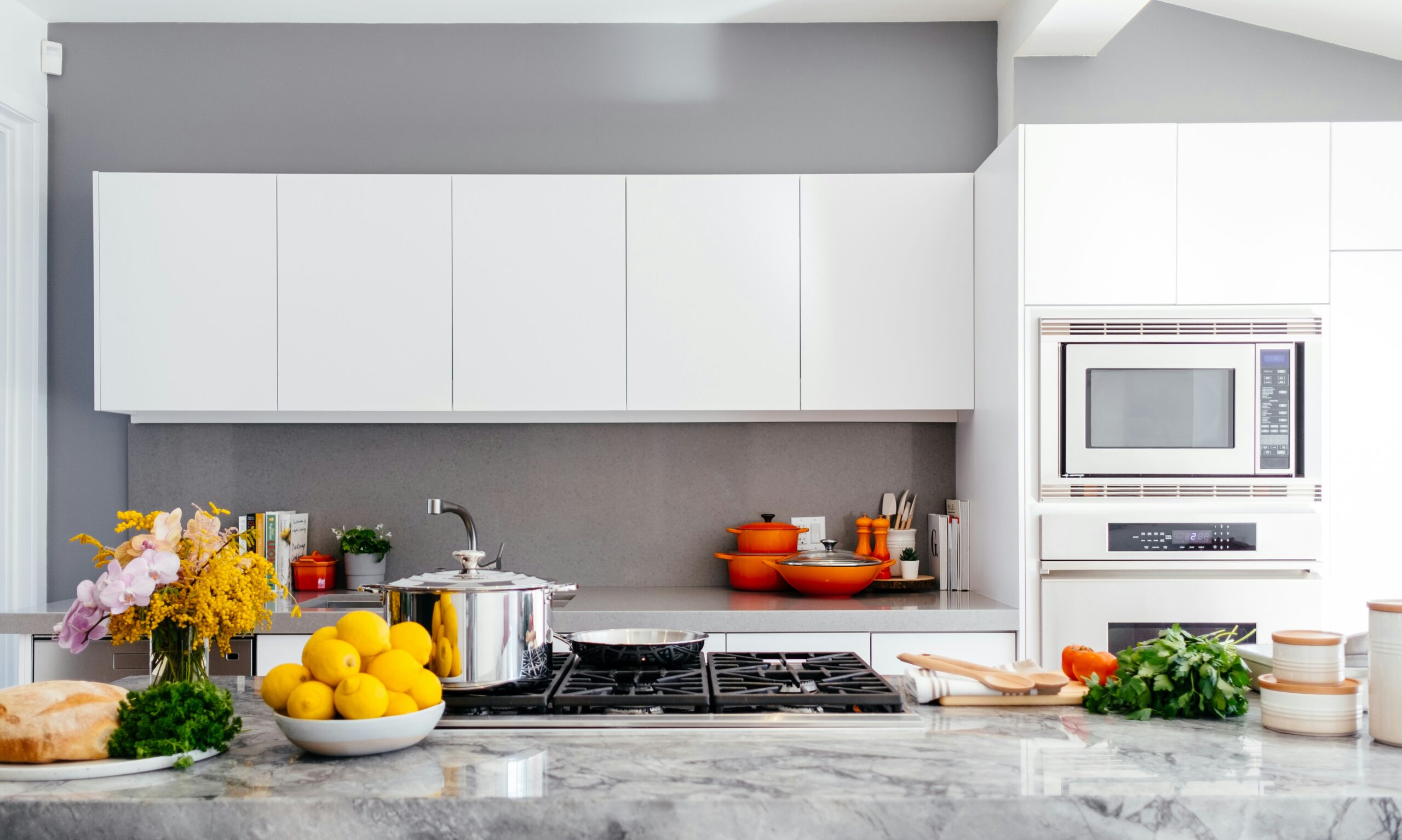
Stop Fearing Your Microwave
Microwaves preserve more vitamins than boiling or frying — yet the myth persists. Here is why the data flips the script on everyday kitchen convenience.
The fear is everywhere: pop something in the microwave and watch its vitamins vanish. Parents skip it for children’s meals. Health influencers warn against it. Even some chefs treat the appliance like a nutritional black box. But the numbers tell a different story — and they have for years. Short cooking times and minimal water make microwaving one of the gentlest methods on heat-sensitive nutrients. In an era of rushed lives and precision health tracking, clinging to this myth wastes both time and nutrition.
The belief that microwaves “nuke” nutrients traces back to the 1970s and 1980s, when the technology was new and poorly understood. Early models heated unevenly. Sensational headlines claimed radiation broke down vitamins in ways boiling never could. Social media amplified it — posts insisting microwaves destroy 90 percent of antioxidants or turn food into “dead” calories. The fear taps into something primal: invisible waves altering our food.
Viral graphics and wellness accounts stripped away the context. By the 2010s, “never microwave” had become kitchen gospel. People believe it because it sounds cautious — responsible, even. In reality it is the opposite: avoiding the microwave usually means longer stovetop sessions that leach more water-soluble vitamins into water you then pour down the drain.
Myth
Microwaves “nuke” nutrients — destroying up to 90% of antioxidants and leaving “dead” calories behind.
Verdict
Nutrient loss is driven by heat, time, and water volume — not electromagnetic waves. Microwaving’s short cycles and low water make it one of the gentlest methods on vitamin C, B vitamins, and polyphenols.
Microwaving retains more nutrients than most conventional methods. The driver of nutrient loss is heat exposure, cooking duration, and water volume — not the microwave’s electromagnetic waves. Short cycles and steam-in-bag techniques minimize the degradation of vitamin C, B vitamins, and polyphenols.
Harvard Health Publishing puts it plainly: because microwave cooking times are shorter, it does a better job of preserving vitamin C and other heat-sensitive nutrients, and using a little water essentially steams food from the inside out — keeping in more vitamins and minerals than almost any other method. Boiling does the opposite: water-soluble vitamins leach out into the cooking water, which most people discard.
A peer-reviewed analysis of cooking methods found microwaving preserved more than 90 percent of a vegetable’s vitamin C, while boiling caused the steepest losses — and the heaviest destruction of polyphenols and flavonoids. A 2022 review in Frontiers in Nutrition reaches the same conclusion: the key mechanism is lower overall thermal load — less time, less water, less damage.
— while boiling causes the steepest losses
Even the safety question is settled. The FDA, which has regulated microwave ovens since 1971, classifies their non-ionizing radiation as fundamentally different from x-rays: it cannot make food radioactive or alter its atomic structure. The USDA’s Food Safety and Inspection Service says the same. Microwaving does not create harmful compounds or destroy macronutrients beyond what any cooking method does.
The science points to three things — even heat, minimal water, and inert containers. These get all three right.
Inverter Oven
Panasonic NN-SN966S
Inverter technology delivers steady, even power instead of cycling full-blast on and off — so edges don’t scorch while the center stays cold. Sensor cooking auto-adjusts time and power.
View on Amazon →Glass Containers
Pyrex TrueSeal
Non-porous, microwave-safe, chemically inert — no coatings or microplastics. Leak-proof lids create the ideal steam environment, cutting cook time and nutrient loss.
View on Amazon →Glass Storage
Anchor Hocking TrueSeal
Tempered glass that shrugs off rapid temperature changes without leaching. Vented lids make a micro-steam chamber that retains more antioxidants than open boiling.
View on Amazon →In the singularity era, AI sifts millions of peer-reviewed datasets in seconds, dissolving once-intuitive myths like microwave nutrient destruction. Real-time metabolic modeling will soon tell you exactly how long to cook spinach for maximal folate retention — calibrated to your genetics and the vegetable’s exact water content. Everyday health decisions move from folklore to data streams; cooking becomes an optimized, personalized algorithm rather than a ritual handed down through generations.
As sensors in smart kitchens feed live nutrient scans into AI, the line between appliance and advisor blurs. The singularity does not eliminate the microwave — it elevates it, turning a 1970s box into a 2030s nutrient guardian. We move from fearing invisible waves to harnessing them with near-perfect knowledge.
The microwave is not the enemy of nutrition — it is one of its quiet allies. The next time you reach for it, you are not cutting corners. You are choosing the method that keeps the most of what matters in your food.
For deeper dives into health myths rewritten by data — this is what Singularity Health Journal is here for.
- Harvard Health Publishing — “Microwave cooking and nutrition”
- Harvard Health — “Ask the doctor: Microwave’s impact on food” (A. Komaroff, MD)
- “Effect of cooking methods on the nutritional quality of selected vegetables” — peer-reviewed analysis
- Frontiers in Nutrition (2022) — effects of microwave heating on nutrients
- U.S. Food & Drug Administration — “Microwave Ovens”
- USDA Food Safety and Inspection Service — “Cooking with Microwave Ovens”
© 2026 DAY · All rights reserved · daysolis.com
If this investigation was useful to you — support independent journalism
☕ Buy me a coffee
Very useful information! Thank you! Now I’ll cook in the microwave with pleasure and without any guilt. It turns out it actually preserves vitamins even better. 👍