
Heart of the Beast
A film by David Ayer, 2026
The first name on the call sheet wasn’t Brad Pitt’s. The story of a German Shepherd, and of a film crew that followed him onto the ridges of New Zealand.
Before the lights go down
- Odin the dog is played by four German Shepherds from one family. The lead is Uber, a former police and search-and-rescue dog.
- Alaska was filmed on New Zealand’s South Island, some of it on ridges reachable only by helicopter.
- Pitt calls it the most physically demanding film of his career.
- For David Ayer, it has drawn the best reviews of his directing career.
I walked out of the theater feeling I had seen a film not about survival, but about loyalty. Almost no words, almost no people: a man and a dog against sixty miles of wild country. I wanted to know how it was made. The story behind the camera turned out to be every bit as good as the one in front of it.
A Dog Who Had Already Lived One Life
On a film’s daily call sheet, the first line belongs to the star. On this one, the first line didn’t belong to Brad Pitt. It belonged to Uber, a German Shepherd from New Zealand.
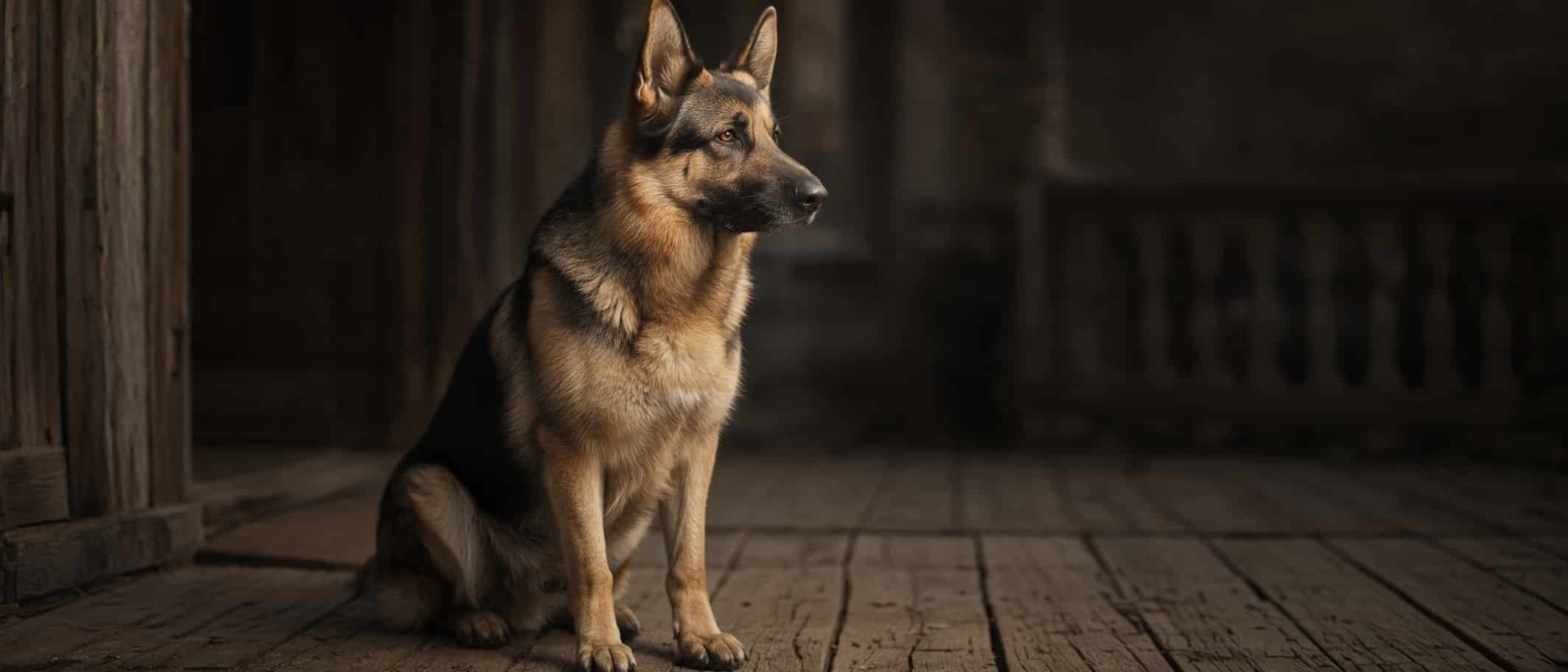
Uber was born in 2018 at a breeding kennel and trained as a police dog. He then spent five months alongside a paramedic who worked search and rescue: helicopters, boats, trucks, callouts to places you can’t reach on foot. When the paramedic died, the dog went back to the kennel and was put to stud. His working life, it seemed, was over.
He was found by Andrew Simpson, an animal trainer with more than 150 films to his name. The production ran a casting call across New Zealand, and Simpson worked the phones to police, military contacts and breeders. Uber stood out at once: calm, gentle, carrying experience no amount of training can give. Simpson said the dog seemed to look straight into your soul. He was the one they used for close-ups, and the trainer took to calling him the Brad Pitt of dogs.
“I knew he had another life in him.”
Uber’s trainer, on hearing he had been castOne dog is never enough for a film like this. Odin is played by four German Shepherds from the same family: Uber and three of his sons, Ryker, Zika and Hondo. Uber carried the quiet scenes and the close-ups; the others took on the physically demanding work. On screen you can’t tell them apart, which is exactly the point.
Pitt in the Kennel
Man and dog had only three weeks to get used to each other. Pitt’s solution was simple: he sat inside Uber’s kennel and did his emails and phone calls there. The dog learned his scent, his voice, his presence. Commands and rehearsals came later.
Pitt joked that on this film he was an actor and a dog trainer at the same time. Ayer put it more precisely: Pitt is holding the scene, fully in character, while his partner is trying to snap at a passing bee. According to the director, Pitt saw himself as the supporting actor to the dog.
A Script That Waited Its Turn
Cameron Alexander’s script made the 2017 Black List, Hollywood’s annual ranking of the best unproduced screenplays. It found its director only in March 2024. Pitt came aboard in January 2025, as star and producer.
He said yes after reading the ending. By his own account, he had tears in his eyes on the final pages. He had long wanted to make a survival film, and he names Jeremiah Johnson with Robert Redford and Leonardo DiCaprio’s The Revenant as touchstones.
This is Ayer’s second film with Pitt, after Fury in 2014. A Navy veteran himself, Ayer knew from the start what his hero would not be. “I didn’t want the sort of broken soldier version of this,” he told Military.com. His James Belmont is thoughtful, disciplined and capable, not a casualty of war.
The Alaska That Wasn’t
On screen, it’s Alaska. The film was shot on New Zealand’s South Island between March 3 and May 15, 2025: based in Queenstown, then out into Otago and Fiordland. Ayer insists you can’t tell the difference.
Some locations could be reached only by helicopter. At one of them, the crew was limited to three loads of equipment, and by the director’s account there was barely anywhere to stand. They flew Pitt and the dog in, set them down on a ridge, and simply filmed them walking along it.
Some of this land is under Māori guardianship. Ayer went out of his way to thank both the New Zealand government and the Māori for granting access: the crew worked, he says, in places no one had filmed before.
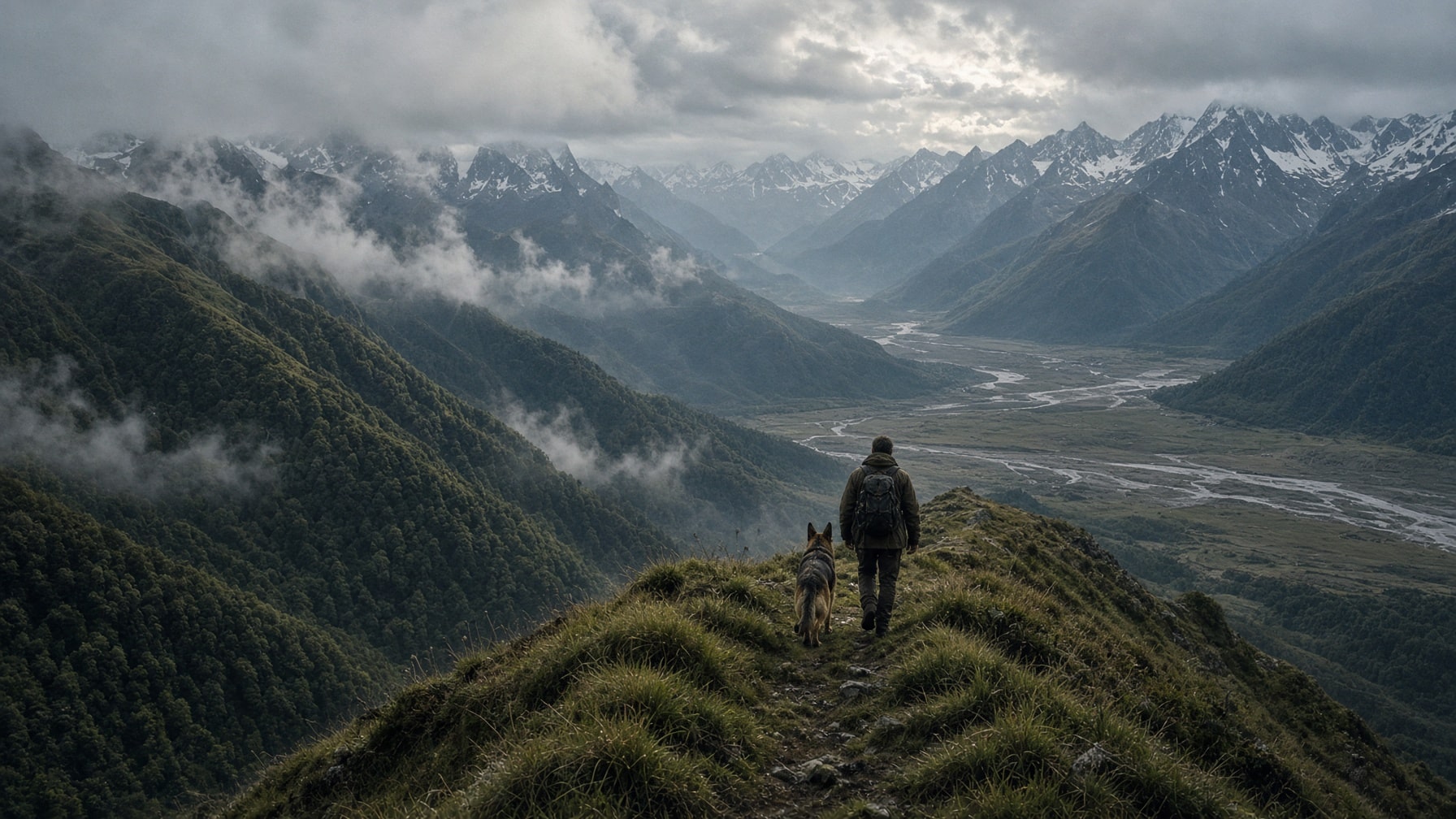
The cinematographer is Mauro Fiore, who won an Oscar for Avatar. His camera pulls back until man and dog are specks on a slope, then moves in close the moment the rock starts to give way underfoot. The film is shot in 2.39:1 widescreen, the same frame as the image at the top of this page.
Wet From Morning to Night
“Physically, I would absolutely say this is the hardest movie I’ve ever made.”
Brad Pitt, to ColliderNobody went back to the trailer to dry off, Pitt explained. You got wet in the morning and stayed wet until the end of the day. Ayer was blunter still: the point was not to keep warm in a trailer, but to be cold and miserable on set, every single day.
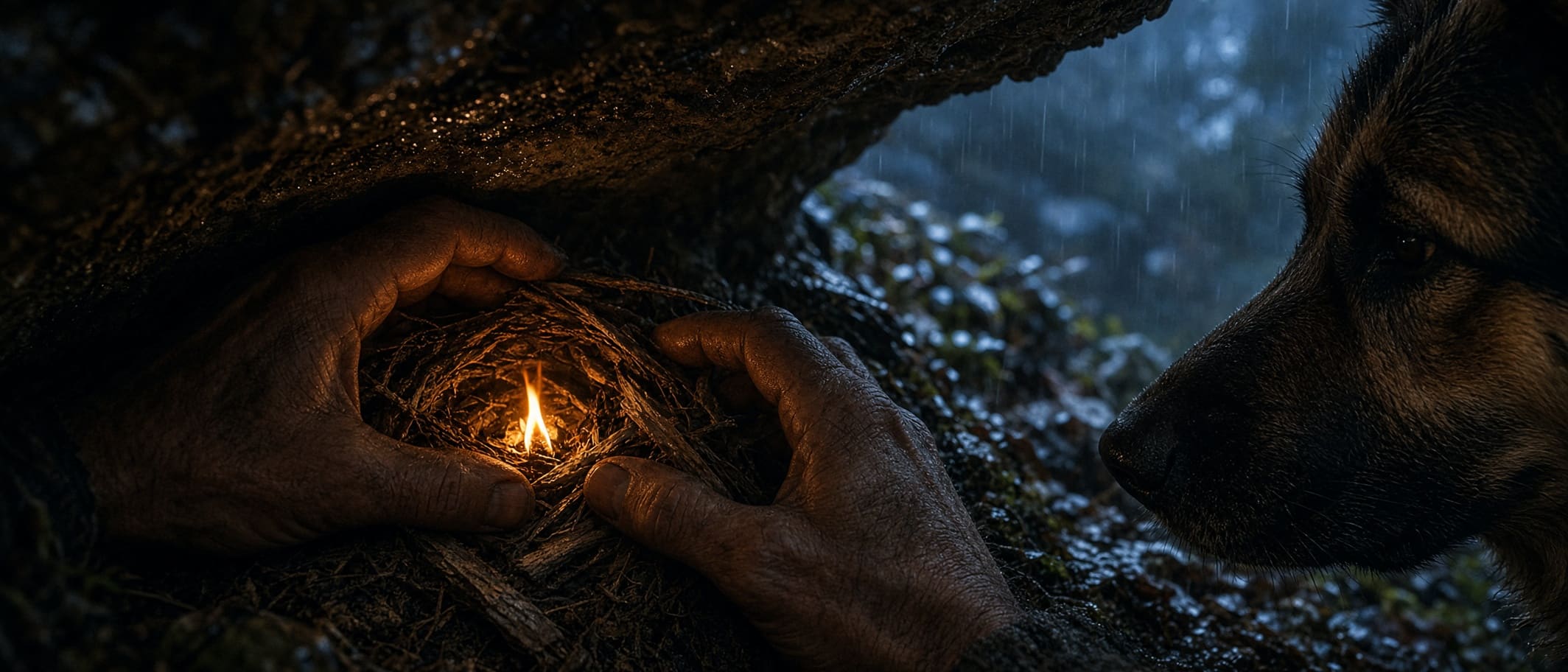
To keep the survival on screen from looking like set dressing, Ayer brought Lief Swenson to New Zealand, an instructor at the military’s SERE school, where pilots and service members learn to survive hostile ground. Swenson taught Pitt how to build a fire, where to find kindling dry enough to burn, and how to measure distance with his thumb.
The second adviser, Shaun Dezern, spent more than two decades as a medic with the Marine Corps and naval special operations units. He taught first aid and self-rescue and explained how an injured body slowly gives out in the field. He also told Pitt what it is like to come home from war. That proved as useful to the role as any skill.
A word about the picture
The mountains, the water and the dogs are real. The wolves and the bear are digital, and several critics single them out as the film’s weakest element. A little CGI was used on Odin himself too: his prosthetic leg, for instance, is added over the living dog.
Wounds You Can’t See
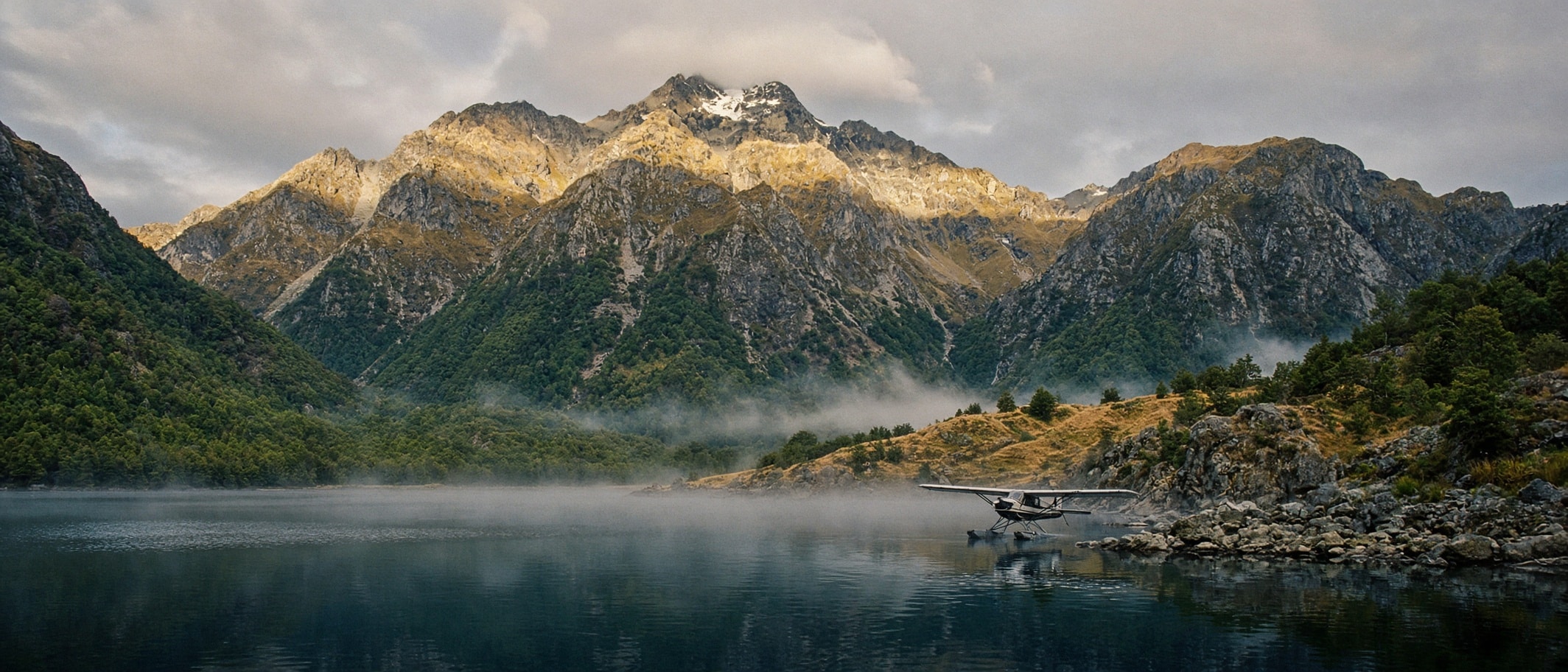
The film opens with Belmont flying Odin over Alaska in a small floatplane. The flight ends in a lake, fifty-eight miles from the nearest road, and from there the only way out is on foot.
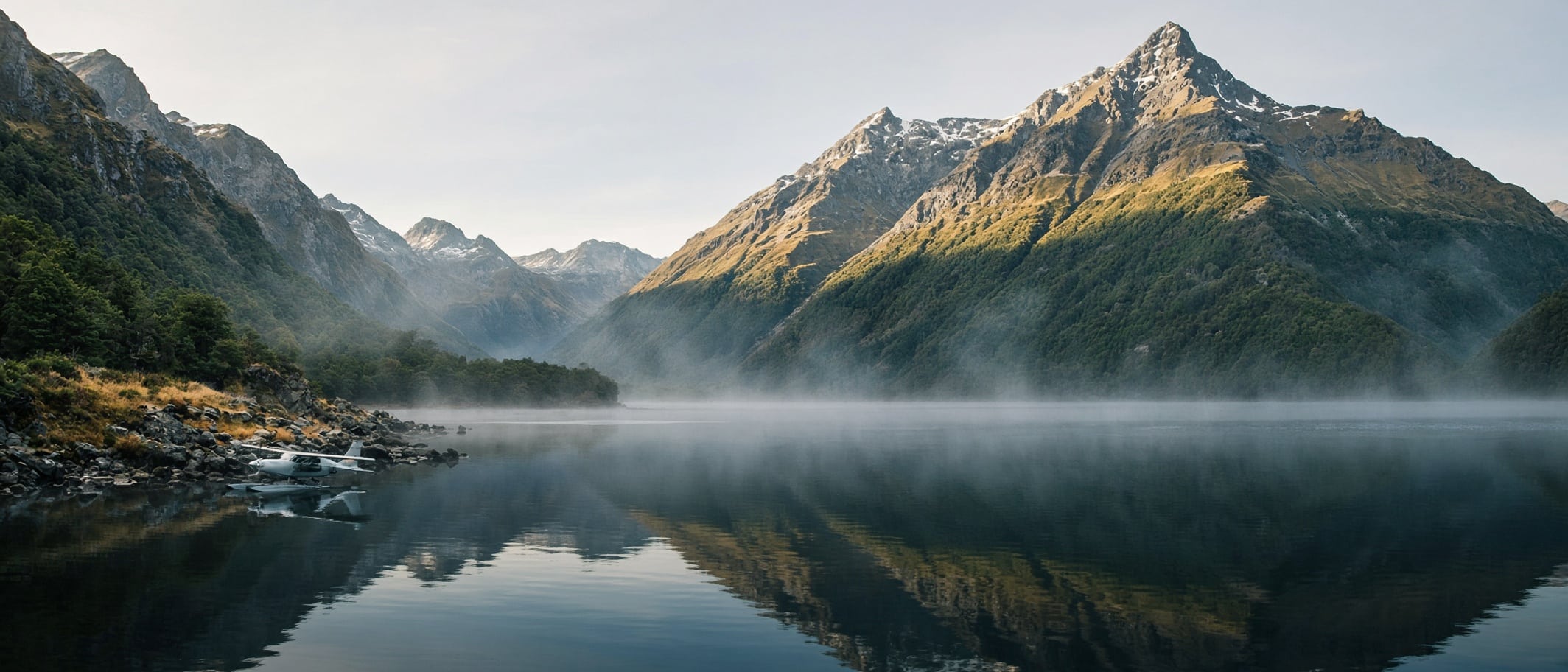
On screen, Odin is as much a veteran as his handler. He has a prosthetic leg, titanium teeth and nightmares that wake him howling. Belmont served in Iraq and Afghanistan, and Odin was there beside him. Now both are retired, and the war catches up with them at night.
Post-traumatic stress in military working dogs is officially recognized, and the film shows it without pressing. One of its quietest scenes: Pitt removes Odin’s prosthetic and silently massages the stump. There are no words, and none are needed.
A Premiere in an Old Quarry
The world premiere took place not in Los Angeles or New York, but in Tennessee. On September 16 the film screened at an open-air amphitheater in Franklin, built in a former stone quarry. Pitt wanted an outdoor venue in the heart of America. Asked why Tennessee, he kept it short: “That’s my jam.” The setting, he said, reminded him of the old drive-ins.
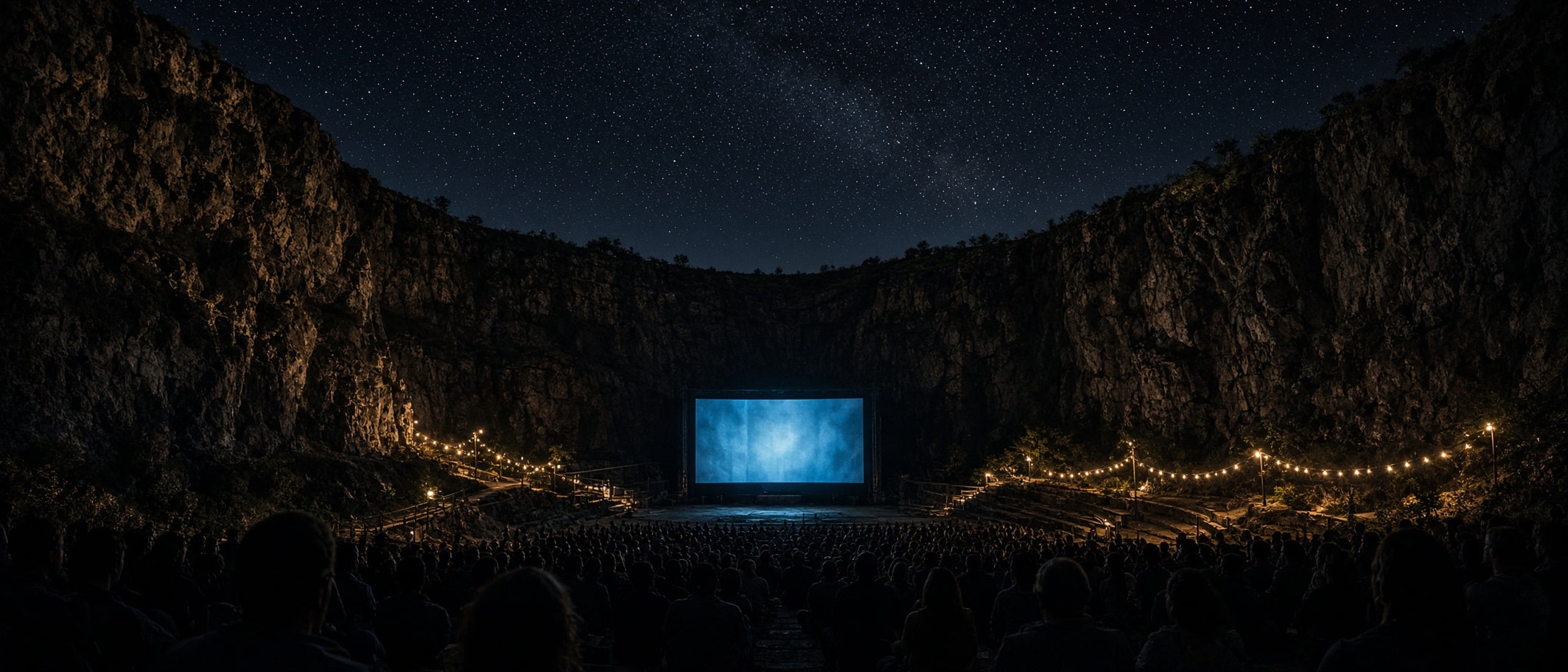
A screening out of competition at San Sebastián followed. On September 25, Heart of the Beast opened wide across the United States.
What the critics say
At the start of its run, the film stood at 69 out of 100 on Metacritic, the best score of Ayer’s directing career, ahead of End of Watch at 68 and Fury at 64. On Rotten Tomatoes, its first days brought 88% from critics and 96% from audiences.
The argument isn’t about the dog: nearly everyone agrees Uber carries the film alongside Pitt. The argument is about tone. Some see an honest love story between a man and his dog; others find it predictable and too sentimental.
Scores change. Figures are as of publication.
Trailers
Heart of the Beast
Paramount Pictures · 2026
- directed byDavid Ayer
- written byCameron Alexander
- starringBrad Pitt, J.K. Simmons, Anna Lambe
- odinUber, Ryker, Zika, Hondo
- cinematographyMauro Fiore
- editingDody Dorn
- musicJared Michael Fry
- animal trainerAndrew Simpson
- producersOlivia Hamilton, Marty Bowen, David Ayer, Brad Pitt
- filmedNew Zealand, March–May 2025
- format2.39:1, 101 minutes
- ratingPG-13
- budgetabout $82 million
- u.s. releaseSeptember 25, 2026
The film is not based on a true story. What is true in it are the mountains, the cold water, and a dog who really did have another life in him.
Sources
- Military.com — David Ayer interview: rejecting the broken-veteran template, SERE and medical advisers. military.com
- Collider — interview with Brad Pitt and David Ayer. collider.com
- RNZ — filming in Otago and Fiordland, the helicopter location (from GQ). rnz.co.nz
- Flicks — Ayer’s Entertainment Weekly remarks on Māori access and working with the dog. flicks.co.nz
- Yahoo News Canada — Andrew Simpson on finding Uber and his background. ca.news.yahoo.com
- The Hawk (IANS) — Uber at the top of the call sheet. thehawk.in
- AOL — three weeks to bond, Pitt in the kennel (from GQ). aol.com
- Panay News — Lief Swenson and Shaun Dezern. panaynews.net
- ComingSoon — featurette: Ayer on the cold on set. comingsoon.net
- Deadline — review; four dogs in the role of Odin. deadline.com
- WSMV — the Franklin premiere. wsmv.com
- Dark Horizons — opening Metacritic score compared with Ayer’s earlier films. darkhorizons.com
- Screen Rant — Rotten Tomatoes scores and box-office projections. screenrant.com
- Rotten Tomatoes — film details. rottentomatoes.com
© 2026 DAY · daysolis.com
If this investigation was useful to you — support independent journalism
☕ Buy me a coffee