THE PICTURE
Lied
Why Trump’s China Visit Was Stronger Than It Looked — And Why Putin’s Was Weaker Than the Cameras Suggested
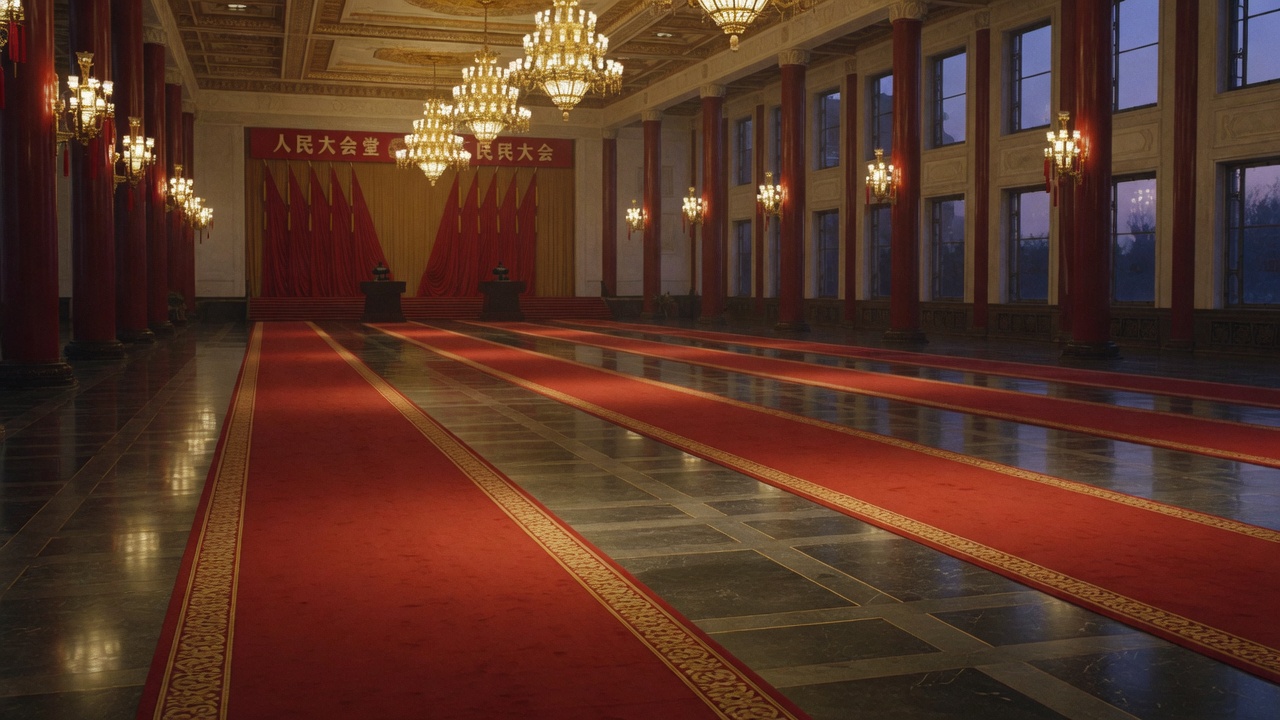
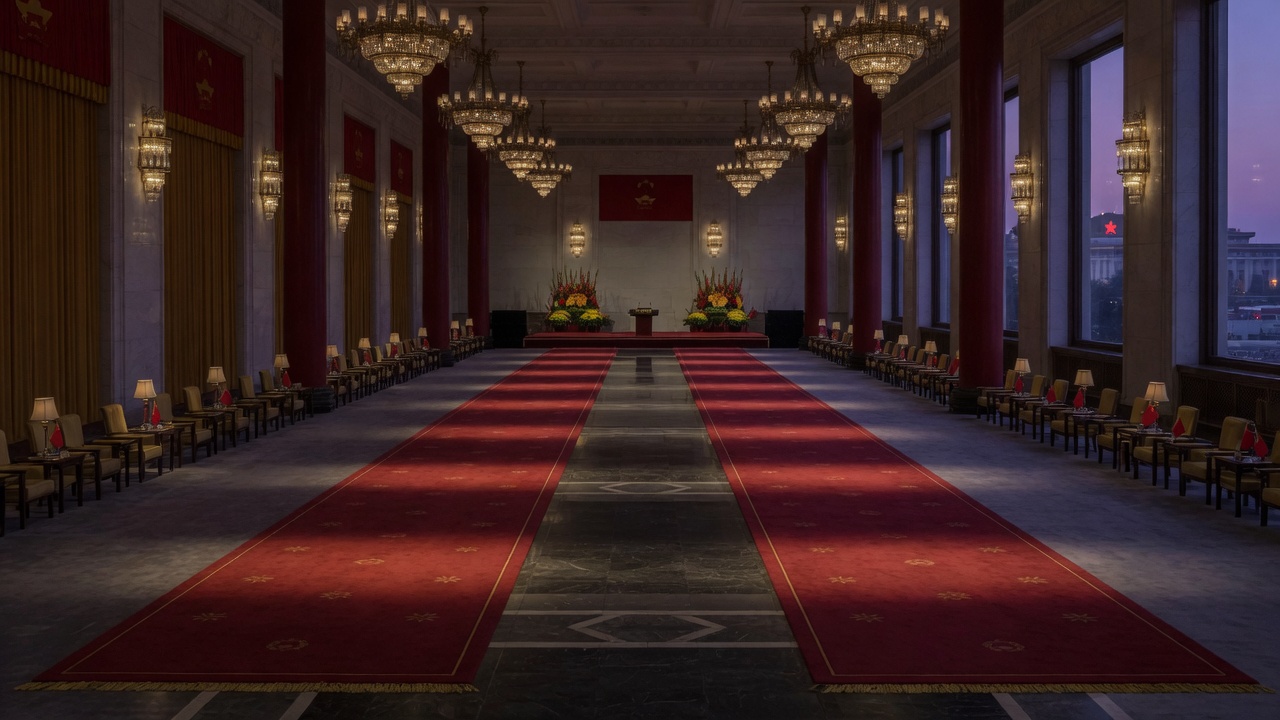
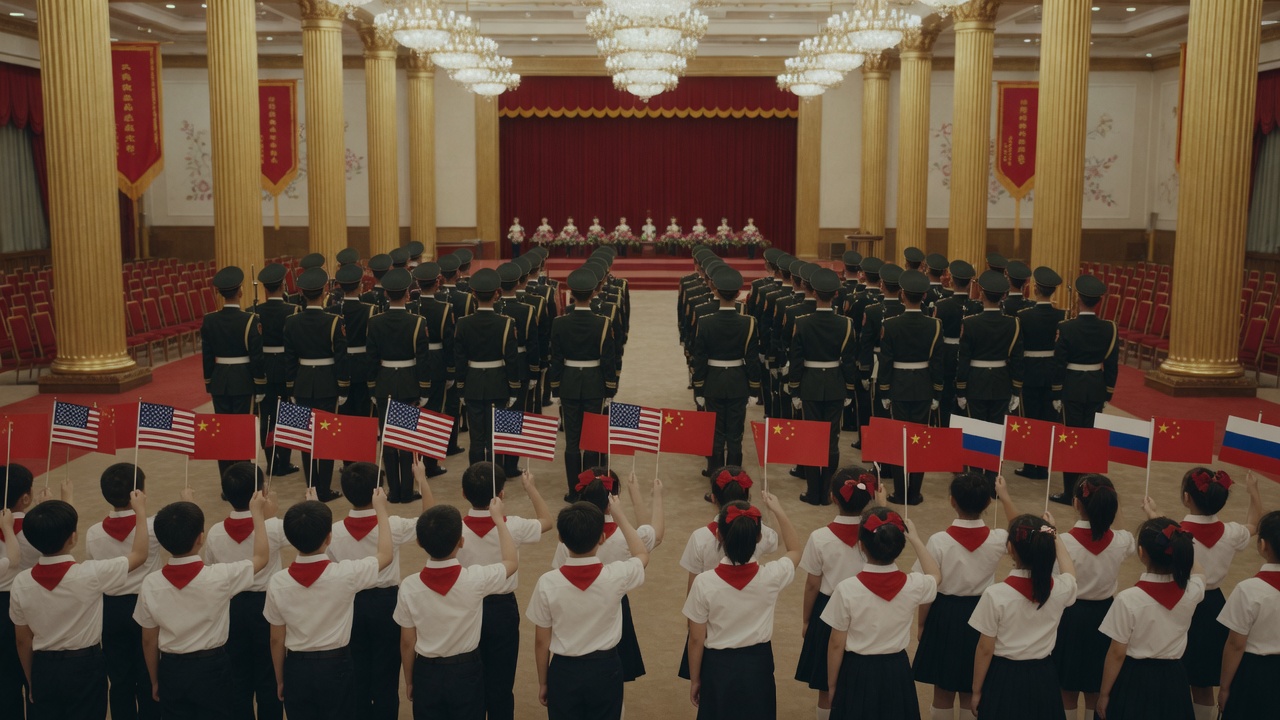
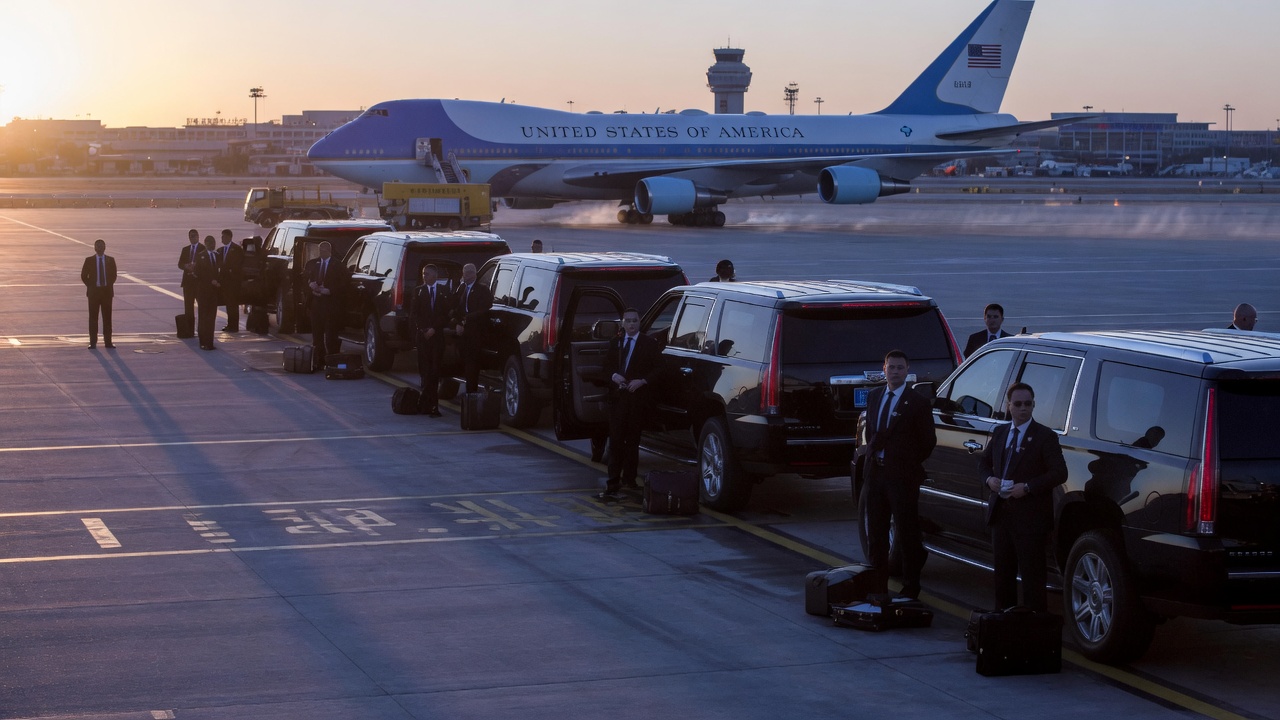
When the television cameras showed Donald Trump arriving in Beijing in mid-May 2026, and then, six days later, showed Vladimir Putin arriving in the same place, the imagery was almost identical. The same children with flags. The same honor guard. The same handshake with Xi Jinping on the same red carpet inside the same Great Hall of the People. Xi had built the staging to look symmetrical — and in that, he succeeded. Millions of viewers around the world walked away with the impression that both men had simply come to call on the Chinese leader.
That impression was false. And as an American, I cannot let it stand — because behind one identical picture lay two utterly different visits, two utterly different positions of power, and two utterly different outcomes.
Per Year, 2026–28
Ordered by China
Contracts Closed
This is a column of opinion, not breaking reporting. Every factual claim — every dollar figure, every operation, every quote from a Western analyst — has been independently verified against on-the-record sources: Time, The Washington Post, CNN, CNBC, Foreign Policy, the Brookings Institution, and CSIS. Citations are at the foot of the page.
The argument is mine. The facts are not.
THE WEIGHT THE PRESIDENT CARRIED
No American leader in a generation arrived in Beijing with this much momentum behind him
Start with what the cameras did not explain. To understand what Trump’s visit to Beijing actually was, you have to understand the geopolitical baggage he carried into the room — and any other president, in his place, would likely have postponed the trip.
In January 2026, U.S. Army Delta Force commandos extracted Venezuelan President Nicolás Maduro and his wife from their residence in central Caracas and flew them to New York to face federal narcotics charges. Operation Absolute Resolve, as it was named, was the first successful regime-change operation in the Western Hemisphere in decades. It was conducted fast and without American casualties. A transition government under Delcy Rodríguez was installed, and Venezuelan oil began flowing — through American companies — back into world markets.
At the same time, Trump was finishing what his administration had started a year earlier: squeezing China out of the Panama Canal. Under sustained pressure from Washington, the Hong Kong-based conglomerate CK Hutchison agreed in March 2025 to sell its portfolio of 43 ports — including the two strategic terminals flanking the canal — to a consortium led by BlackRock. Panama formally withdrew from China’s Belt and Road Initiative the same month. In January 2026, Panama’s Supreme Court annulled the Chinese operators’ concession. A canal built by Americans, drifting for years into Beijing’s orbit, had been pulled back into the American sphere — without a single shot fired.
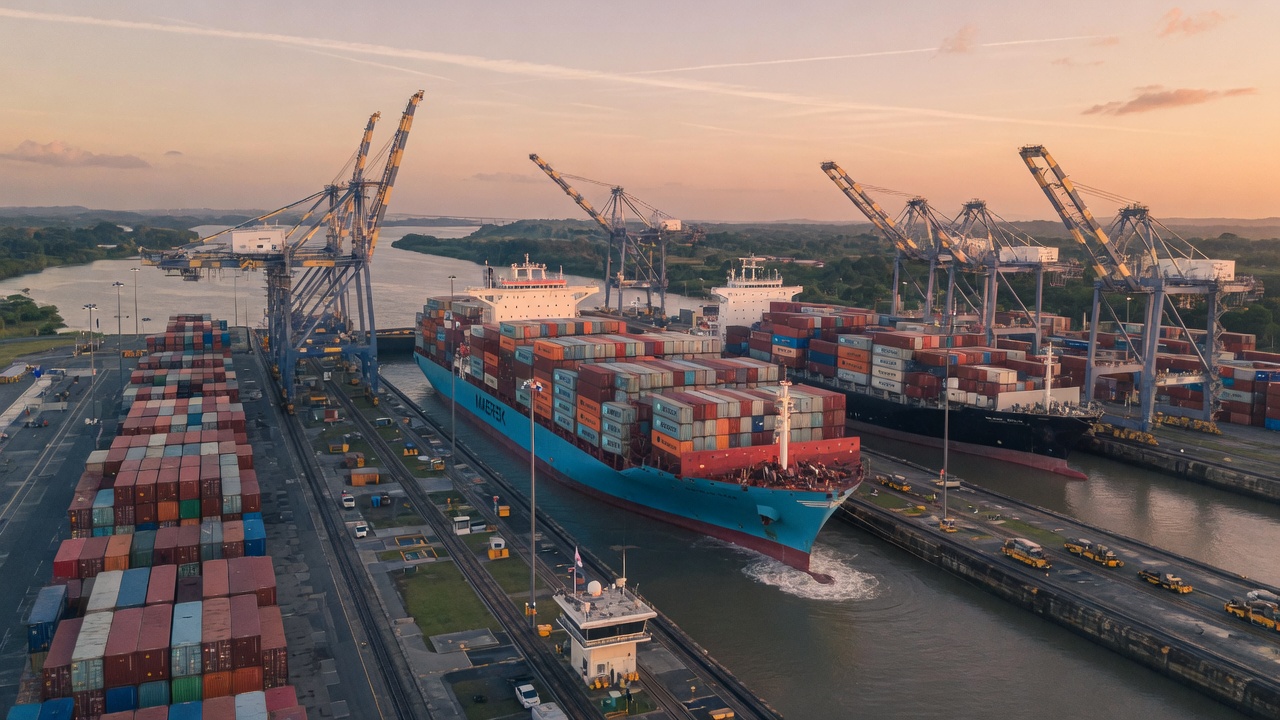
The fight over the canal is not over. Foreign Policy has reported that Beijing has used its regulatory leverage to slow and complicate the BlackRock transaction in retaliation. The strategic picture has shifted in America’s favor, but the contest for individual terminals continues.
Add to that the ongoing war with Iran, the continuing pressure on the regime in Havana, and the President’s reframing of the Western Hemisphere as a zone of restored American primacy — and you arrive at the actual context that television viewers were never given. Trump did not arrive in Beijing as a supplicant. He arrived as the leader of a power that had, in the preceding twelve months, conducted multiple successful operations across its traditional sphere of influence.
WHAT TRUMP CAME FOR — AND WHAT HE TOOK
A working visit, not a victory lap
I will not pretend Trump came home from Beijing with a triumph he did not have. Serious analysts at CSIS, the Brookings Institution, and CNN all wrote the same thing in the immediate aftermath: the visit was heavy on ceremony and thin on concrete deliverables. The agricultural commitments were described in CNN’s words as “nebulous.” The oil pledges were “tepid.” And Trump appears to have made one genuine tactical concession on Taiwan — declining to publicly commit to future arms sales, a posture that even American analysts read as a gesture toward Xi. This is true, and pretending otherwise would weaken the argument.
But here is the point most of the coverage missed: Trump was not in Beijing for a triumph. He was there to stabilize the most important bilateral relationship on Earth after a year of escalation — and, in the same trip, to plant flags where American and Chinese interests will continue to collide. Those are two different jobs. A triumph is when you come home with a signed peace treaty. Stabilization is when, after two days of conversation, you walk out with:
Exports Pledged
(Possibly More)
on Trade & Investment
Add to that a joint understanding that Iran shall not possess nuclear weapons, a Chinese acknowledgment of the principle of free passage through the Strait of Hormuz, and a formal invitation for Xi to visit Washington in the fall. This is not a victory. It is the construction of architecture — the kind of framework within which the next victory becomes possible.
This is also how Trump operates everywhere — with China, with Europe, with Putin, with Iran. Kindness in one hand, pressure in the other; whichever tool the moment calls for. He establishes contact first, then leverages it. The Beijing visit was the first move in a sequence, not the last move in a deal.
PUTIN, SIX DAYS LATER
The same red carpet, an entirely different errand
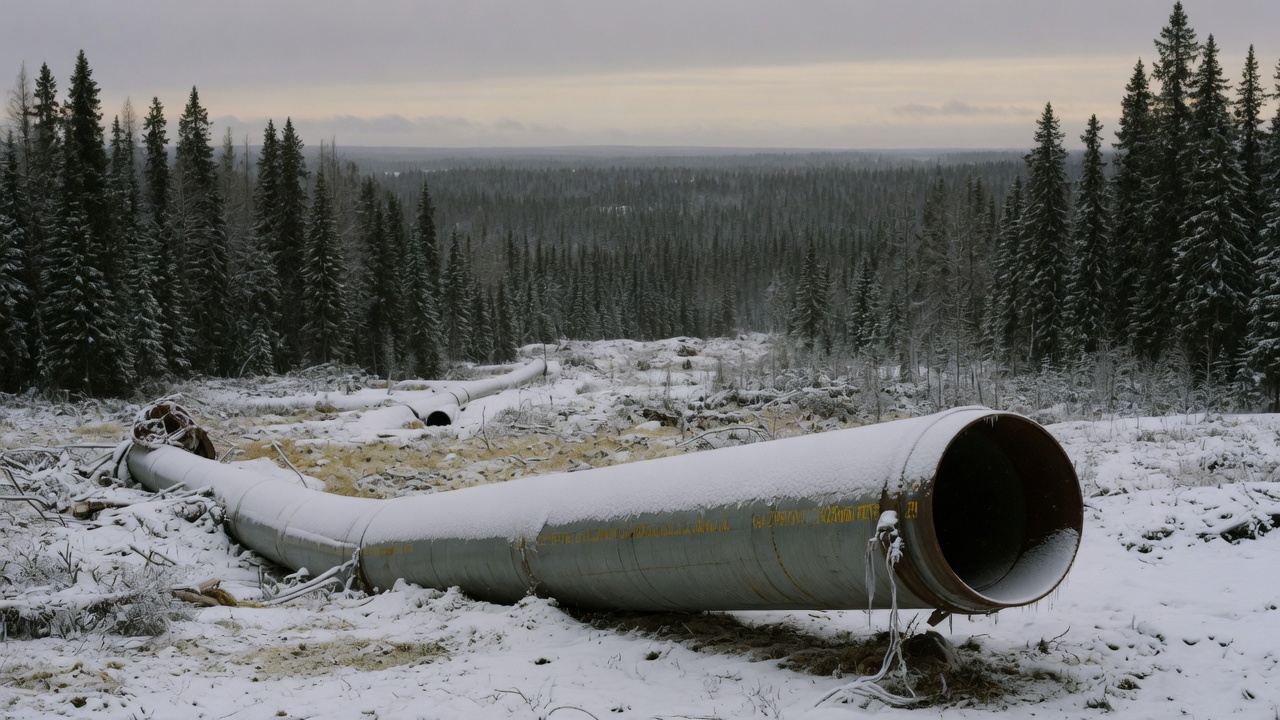
Now look at Putin’s visit, six days later. He came to Beijing for one specific prize: the Power of Siberia 2 natural gas pipeline. That was his headline ask, and it was reported by every serious outlet — The Washington Post, CNBC, Time, The Kyiv Independent. Since 2022, Russia has lost its European gas market. A new pipeline into China was, for the Kremlin, an issue of economic survival.
Putin left without it. Xi did not sign. Kremlin spokesman Dmitry Peskov was reduced to talking publicly about a “basic understanding” on the pipeline with “nuances still to be worked out” — diplomatic language that means, in plain English, that Moscow was shown the door. The same outlets that gave Trump a measured grade gave Putin headlines that did not require translation:
That second quote is the one that matters. CNBC was not describing the U.S.–China relationship. It was describing Russia and China — the partnership that, in Moscow’s official rhetoric, has “no limits.” Six days after Trump came and went, Putin discovered exactly where the limits were.
TWO TABLES, NOT ONE
The fundamental asymmetry the cameras did not show
Here is the point that the matching imagery flattened. Trump arrived in Beijing from a position in which China needs him at least as much as he needs China. The United States holds the technology stack, the consumer market, the reserve currency, the alliance system, and the global military reach. Beijing understands, in private, that without the American consumer its export model breaks, and that without American semiconductors its technological sector falls years behind. Xi therefore receives Trump as an equal — because Trump is an equal, and, by any honest measure of aggregate national power, still the senior partner in the conversation.
Putin arrived from the position of a country whose economy survives because China buys its oil and replaced the Western consumer goods it lost. Xi received him on the same red carpet, with the same flag-waving children, with the same protocol. But once the cameras switched off and the conversations moved into the working rooms, the two encounters were not the same conversation. One man left with framework commitments worth billions to American farmers and to Boeing. The other left with a press release about “continuing to deepen relations” — and no pipeline.
This is the difference television erased. Not because journalists are uniformly malicious — though there is, among some segments of the Western press, a settled habit of minimizing any Trump success, and that is a fact difficult to ignore — but because television is, by its nature, a medium of pictures. And the pictures were set by Chinese protocol officers, who had every reason to make the two visits look the same. Xi’s visual strategy worked. In the mass audience’s mind, the two trips fused into one storyline: world leaders making the pilgrimage to a great China.
PROPORTIONS, RESTORED
I think it is worth saying this out loud. Not to deny the difficulty — the United States and China are in a long and serious competition, and Trump did not score a decisive victory in Beijing. But to restore the proportions. America remains stronger than China on the fundamental measures that count: military power, the alliance network, technological leadership in AI and semiconductors, the global reserve currency, cultural reach, and the demonstrated capacity to conduct operations of the kind we saw in Venezuela. China possesses enormous manufacturing capacity and an impressive growth record — but it also confronts a demographic crisis, a property-debt time bomb, capital and talent flight, and a structural dependence on outside markets and outside technologies.
When an American president flies into Beijing, the picture is not a supplicant arriving at the capital of a new global hegemon. It is a meeting between two superpowers, in which one of them — the United States — still holds the stronger hand. The picture with the children and the flags does not show this. The texts of serious analysts do — but they are read by tens of thousands, while the picture is seen by hundreds of millions.
That is why I am writing this. So that, at least among those who read it, the distinction between how the visit looked and what the visit was survives the broadcast. Trump did not go to Beijing to bow. He went to work — and the work was difficult, thankless, and free of headline triumphs, but necessary. And against the contrast of Putin, who six days later arrived at the same red carpet with his hand out and left with nothing, the asymmetry between the two visits was overwhelming.
- Time — “Putin, Following Trump, Visits the World’s Center Stage,” May 20, 2026
- The Washington Post — “Putin Fails to Secure Xi’s Approval for Power of Siberia 2 Pipeline,” May 20, 2026
- CNBC — “Three Key Takeaways from Putin’s Beijing Trip,” May 21, 2026
- The Kyiv Independent — “After Trump, Putin Goes to Beijing — and Leaves Empty-Handed,” May 22, 2026
- CNN — Live Coverage of the Trump–Xi Summit, May 14–15, 2026
- CNN — “Xi’s Double Act: Putin Arrives in China Days After Trump’s Departure,” May 19, 2026
- Center for Strategic and International Studies (CSIS) — “Trump–Xi Summit in Beijing: Managing the World’s Most Important Relationship”
- The Brookings Institution — “What Will Happen When Trump Meets Xi?”
- Foreign Policy — “Trump’s Panama Canal Deal Is a Win for China,” October 17, 2025
- CNBC — “Panama Canal Ruling Ups the Ante in U.S.–China Power Struggle,” January 30, 2026
- CNN — “Trump’s New Imperialism Recalls a Dark Period of US-Led Regime Change,” January 6, 2026
- The Brookings Institution — “Just One Head of the Hydra? Regime Change in Venezuela”
- Wikipedia — 2026 State Visit by Donald Trump to China
- Wikipedia — 2026 Visit by Vladimir Putin to China
© 2026 DAY · All rights reserved · daysolis.com
If this investigation was useful to you — support independent journalism
☕ Buy me a coffee