
HOME
TAX
How Home Insurance Became America’s Most Expensive Invisible Tax — and Why the Bill Keeps Rising
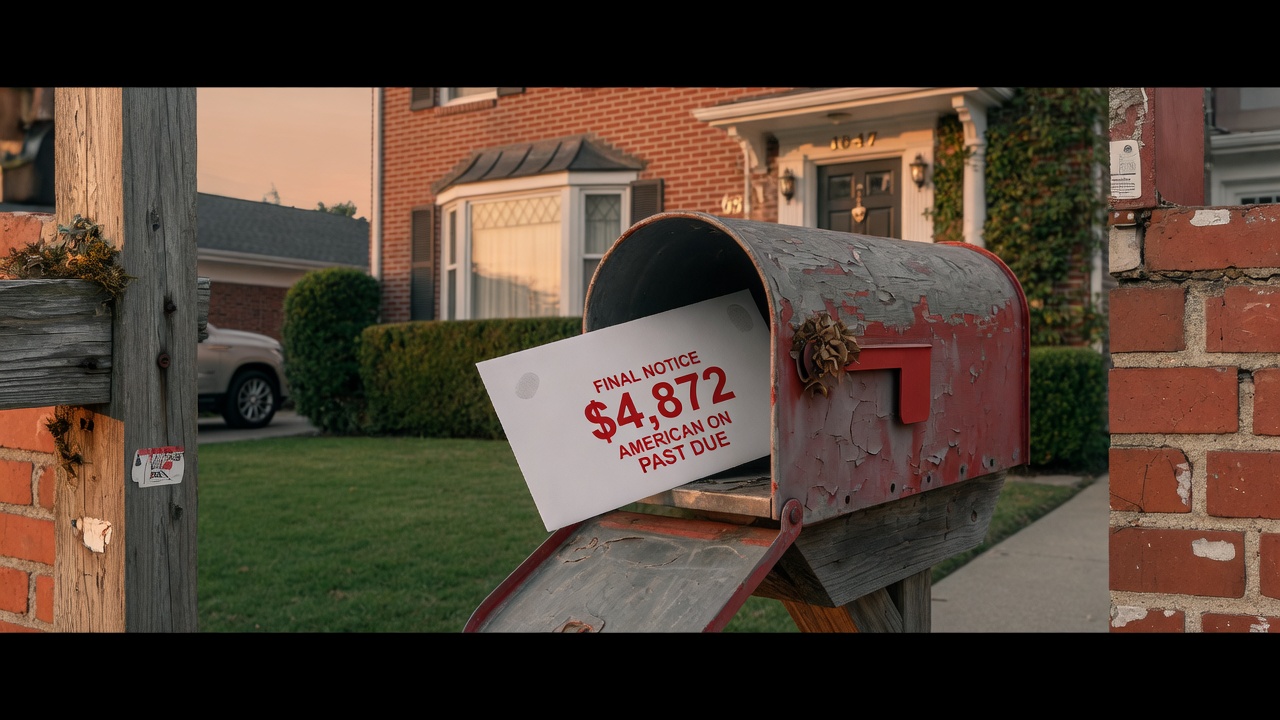
You open the envelope. Same house. Same neighborhood. Same life. But the number on the page is different — again. Up 18%. Up 24%. In some states, doubled. You didn’t file a single claim. You didn’t move to a flood zone. You just stayed.
Welcome to the Home Tax — the bill nobody voted for, nobody controls, and almost nobody fully understands.
This is not a conspiracy. This is not a corporate plot. This is a cascade — a chain of real forces that connects climate science, Wall Street reinsurance markets, courtroom abuse, and your mailbox. Understanding the chain doesn’t lower your bill immediately. But it changes what you can do about it.
The bill nobody voted for. The number that keeps going up. The chain that explains why.
THE NUMBERS FIRST
According to Insurify and Bankrate, the average home insurance premium in the United States runs between $2,500 and $3,057 per year in 2026 — after a 12% jump in 2025 alone. Since 2021, premiums have risen 46%. That is three times faster than general inflation. From 2019 to 2024, major insurers raised rates by an average of 53%.
In Florida, the average policy now costs between $7,000 and $8,292 per year. In Miami, individual premiums exceed $10,000. In Nebraska, Louisiana, Oklahoma, and Kansas, the average crosses $4,400. These are not luxury homes. These are ordinary American houses.
Home insurance now represents 9% of a typical homeowner’s monthly mortgage payment — a historic high. In high-risk states like Florida and California, that share can reach 15 to 20%. A Consumer Federation of America study released in April 2025 found that premiums rose in 95% of U.S. ZIP codes between 2021 and 2024. One-third of those ZIP codes saw increases above 30%.
THE CHAIN — HOW IT GETS TO YOUR DOOR
There is no single villain in this story — but every link is real
There is no single villain in this story. There is a chain — and every link is real.
-
Climate
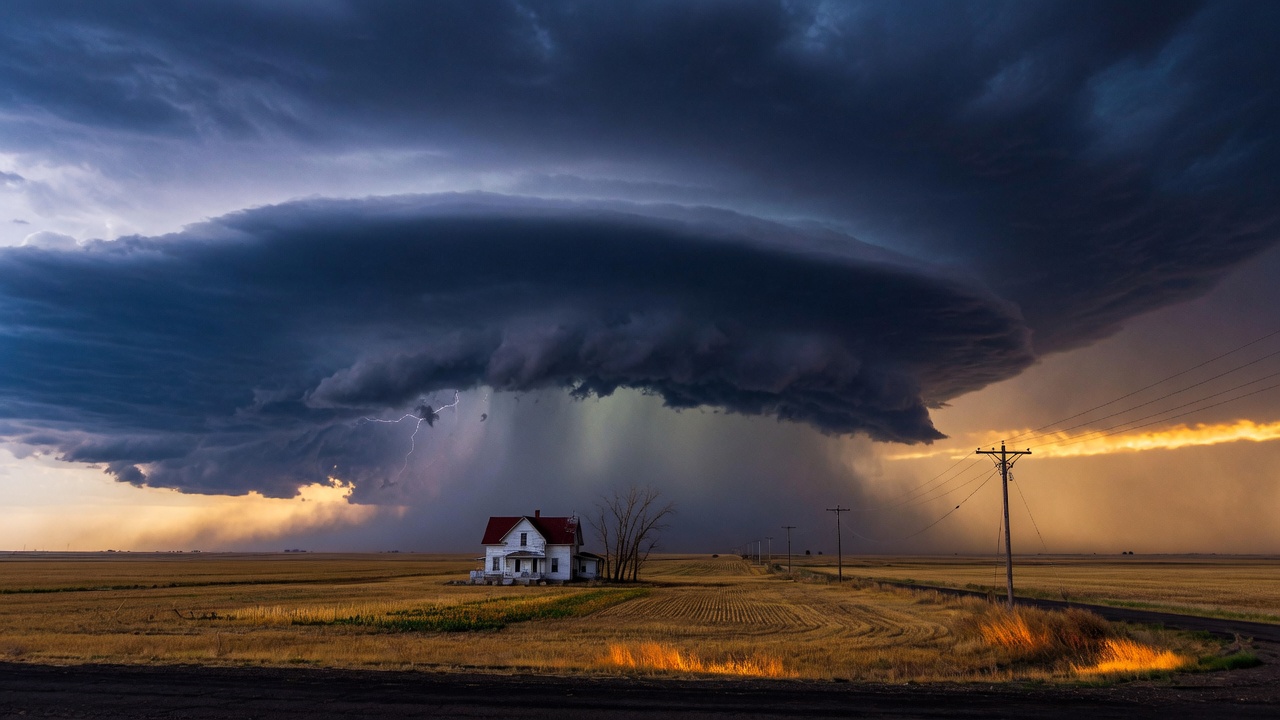
Insured losses from convective storms — tornadoes, hail, hurricane-force winds — have exceeded $42 billion three years in a row. The January 2025 Los Angeles wildfires destroyed 16,251 structures and generated approximately $40 billion in insured losses — the largest wildfire insurance event in U.S. history. In 2023, for every $1.00 in premiums collected, insurers paid out $1.11. They were not making money. They were losing it.
-
Reinsurance
This is the hidden mechanism almost no one talks about publicly. Reinsurance is insurance for insurance companies — the backstop that activates when catastrophic losses exceed what a single carrier can absorb. The global reinsurance market absorbed massive losses in 2022–2023, then sharply raised its own prices. Those costs flow directly downstream to homeowners. Reinsurance expenses nearly doubled from 2017 to 2024, with a 35% spike in 2023 alone. Research shows reinsurance pricing explains nearly two-thirds of the rise in catastrophe-risk impact on consumer premiums.
-
Construction Costs
The cost to replace a home has risen nearly 30% over five years. Lumber prices climbed almost 20% in six months. Cement rose close to 9%. Aluminum — much of it imported from Canada and China — is up 10% year-over-year, with tariff pressure adding further uncertainty. Insurers price policies based on replacement cost. When that cost rises, premiums follow.
-
Migration Into Risk Zones
12% of U.S. residential property — $4.3 trillion in potential replacement costs — sits in high-risk zones for wildfire, winter storms, or hail. One in six Americans lives in a high wildfire-risk area, according to the FEMA National Risk Index. Florida and Georgia saw significant population growth over the past two decades. More people in high-risk zones means more exposure for the entire system.
-
The Courtroom Factor
Florida alone once accounted for more than 72% of all homeowner claim litigation in the United States — while representing only 10% of U.S. homeowners. Predatory law firms exploited legal loopholes to file excessive suits against insurers, inflating legal costs passed to every policyholder across the country. This is now changing — but the damage compounded for years.
HOME TAX VS. THE HOUSING CRISIS
The most underestimated link in the entire system
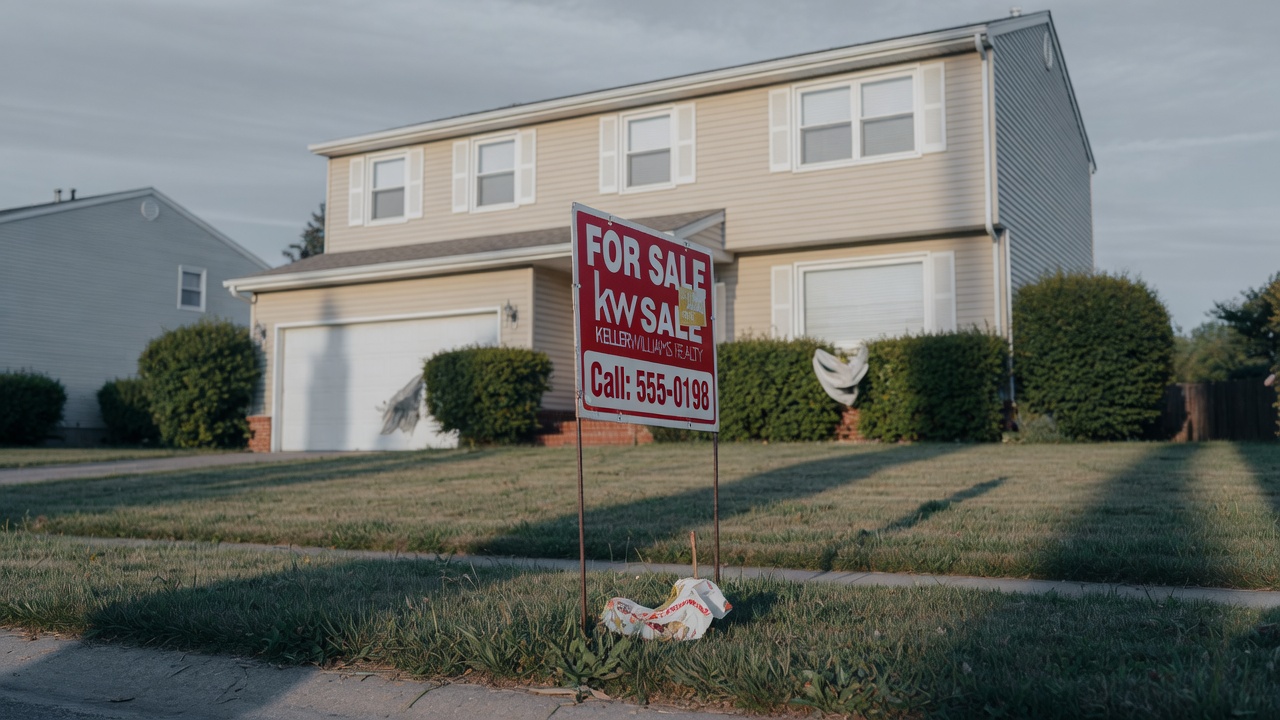
This is the link most analysts still underestimate. The insurance crisis is no longer a standalone problem — it has become one of the primary engines of housing unaffordability in America.
47% of Americans who bought or sold a home in the past two years encountered problems because of insurance. 21% of transactions fell through or were cancelled specifically because of insurance cost. A buyer arrives with approved financing, selects a home — and discovers the policy in that ZIP code costs twice what they budgeted. The bank denies the loan because the combined payment exceeds the allowable debt-to-income ratio.
In the highest-risk zones, the insurance crisis is now directly collapsing property values. Since 2018, homes in the top 10% most hurricane- and wildfire-exposed areas have lost an average of $43,900 in value. In the Cape Coral–Fort Myers region of Florida, median home prices fell 9% year-over-year in the first quarter of 2026 alone.
This creates a trap: the homeowner cannot find affordable insurance, cannot sell at a fair price, and cannot relocate without locking in a loss. Meanwhile, the insurance share of the monthly payment grows while real incomes do not. According to the Atlanta Fed, owning a median-priced home now consumes 47.7% of median household income. Home sales have dropped to a 30-year low. That is not only mortgage rates. The insurance component is finally being counted.
NFIP — THE FEDERAL INSURER WITH $22.5 BILLION IN DEBT
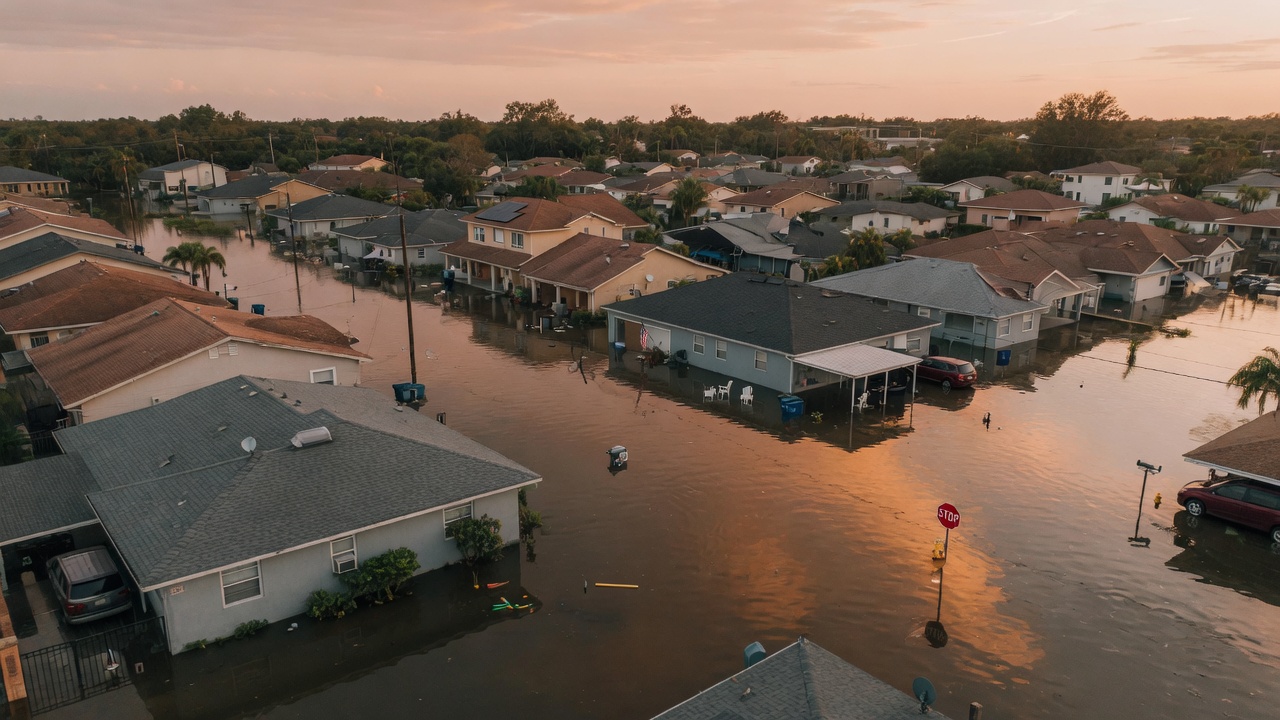
Most Americans do not know that their flood insurance is not a private market product. It is a federal program. And it is chronically insolvent.
The National Flood Insurance Program was created by Congress in 1968 and is managed by FEMA. Today it covers more than 4.5 million policies, providing over $1.3 trillion in coverage. Private insurers will not take on this risk at market rates — particularly in Florida, along the Gulf Coast, and on the Pacific shoreline. So the government subsidizes the program, charging policyholders below-market premiums.
In February 2025, the NFIP was forced to borrow another $2 billion from the U.S. Treasury to pay claims. The program’s cumulative debt now stands at $22.525 billion. The borrowing limit is $30.425 billion. Remaining credit: $7.9 billion. The program accrues $1.7 million in interest daily. Since 2005, it has paid $6.17 billion in interest alone.
In 2017, Congress cancelled $16 billion of NFIP debt to allow payment of claims after Hurricanes Harvey, Irma, and Maria. The Government Accountability Office has flagged the program as “High Risk” — warning that without congressional action, debt will continue to grow.
The key point: the NFIP loses money virtually every year because it charges below-actuarial-risk rates. The deficit is effectively covered by taxpayers — including those who live far from flood zones and will never use this program. More striking: 78% of subsidized properties are located in counties with the highest home values. The program disproportionately benefits owners of expensive real estate.
The NFIP’s authorization expires September 30, 2026. Without reauthorization, the program loses the legal authority to issue new flood insurance contracts. Congress has enacted 35 short-term extensions since 2017. This is another slow-moving bomb in the foundation of the American real estate market.
WHO CONTROLS THIS — AND WHO DOESN’T
There is no federal regulator for home insurance pricing. Unlike banking or aviation, insurance is governed at the state level — 50 different regulators, 50 different rules, 50 different outcomes.
In 35 states, plus Washington D.C. and Puerto Rico, insurance companies are not required to obtain regulatory approval before raising rates. They file, they raise, and the review happens afterward — if at all.
In 11 states, insurance commissioners are elected directly by voters. In the rest, they are appointed by governors. The result is a system that is deeply political, regionally fragmented, and structurally slow to respond to a market moving at the speed of climate change. This is not a conspiracy. It is a design problem — and several states are starting to fix it.
THE RISKS AHEAD
Climate projections, industrial accidents, nuclear renaissance
Research from the University of Chicago estimates a greater than 90% probability that cumulative U.S. climate disaster losses between 2026 and 2030 will exceed $500 billion. The probability of crossing $1 trillion is estimated at 54%. These are not activist projections. These are actuarial calculations. Analysts project premium increases of 8% in 2026 and another 8% in 2027.
Meteorologists are tracking the formation of a new El Niño cycle — potentially the strongest in a decade. If it fully develops, 2026 or 2027 is almost certain to set a new global temperature record. NOAA already forecasts anomalously high wildfire danger for April through June 2026 across the Great Plains, Southwest, much of California, and Florida.
Industrial risk — the less-discussed factor. Trains carrying hazardous materials derail with a spill of at least 1,000 gallons roughly once every two months in the United States. Nearly half result in evacuation; more than a quarter involve fire or explosion. The U.S. moves approximately one billion tons of hazardous materials per year across 140,000 miles of railroad. The relative accident rate has improved significantly — 2024 was the second-safest year on record. But absolute volume is growing, and with it grows absolute risk.
Nuclear energy — a new variable. The United States operates the oldest nuclear fleet in the world, with an average reactor age of 41 years. Simultaneously, the AI-driven surge in electricity demand from data centers is triggering a nuclear renaissance. In March 2026, an insurer provided the first-ever comprehensive construction insurance for a new-generation commercial nuclear plant in the U.S. — TerraPower’s Natrium reactor in Kemmerer, Wyoming. The long-term liability question for aging reactors remains governed by the Price-Anderson Act, which caps private company responsibility and places catastrophic risk backstop on taxpayers.
THE GOOD NEWS — AND IT IS REAL
What most coverage skips
This is the part most coverage skips. The honest picture includes genuine, measurable progress.
Florida — proof that reform works. Florida was the worst-case scenario. One state. One-fifth of the country’s entire homeowner claim litigation. Insurance companies exiting the market one after another. And then — reform.
Lawsuits against insurers fell 25% in the first half of 2025. Legal defense costs dropped from $1.6 billion in 2022 to $537 million in 2025. Florida’s residential property insurers recorded over $2 billion in underwriting gains — the market’s best performance in more than a decade. 17 new insurance companies entered the Florida market. Citizens Insurance reduced its policy count by 50% in one year, reaching a 14-year low.
The lesson is not specific to Florida. The lesson is that the legal system was a significant, removable cost driver — and removing it produced immediate, measurable relief. Other states are watching. Some are already moving.

AI — the most powerful long-term factor. Google DeepMind’s GenCast model now delivers high-resolution weather forecasts up to 15 days ahead, outperforming traditional meteorological systems on the vast majority of test parameters. It is already integrated into Google Search and Maps. The predecessor model, GraphCast, outperformed traditional medium-range forecasting on 90% of measured variables. The head of Earth system modeling at the European Centre for Medium-Range Weather Forecasts called its arrival a moment when AI models became “too good to ignore.”
AI flood forecasting delivers reliable warnings with up to five days of lead time — even in ungauged watersheds with no historical data. Google’s Flood Hub provides real-time river forecasts across more than 80 countries. Early warning systems of this quality reduce flood-related fatalities by up to 43% and economic losses by 35 to 50%. AI wildfire spread models have reached 96% prediction accuracy, enabling surgical evacuation decisions rather than blanket shutdowns.
AI does not stop disasters. But it extends the warning window — from hours to days. That window is where lives are saved, property is protected, and insurance claims never get filed. Fewer claims mean lower losses. Lower losses, over time, mean lower premiums. The AI insurance market exceeded $10 billion in 2025 and is projected to reach $88 billion by 2030.
WHAT EVERY HOMEOWNER CAN DO RIGHT NOW
Specific measures with documented savings
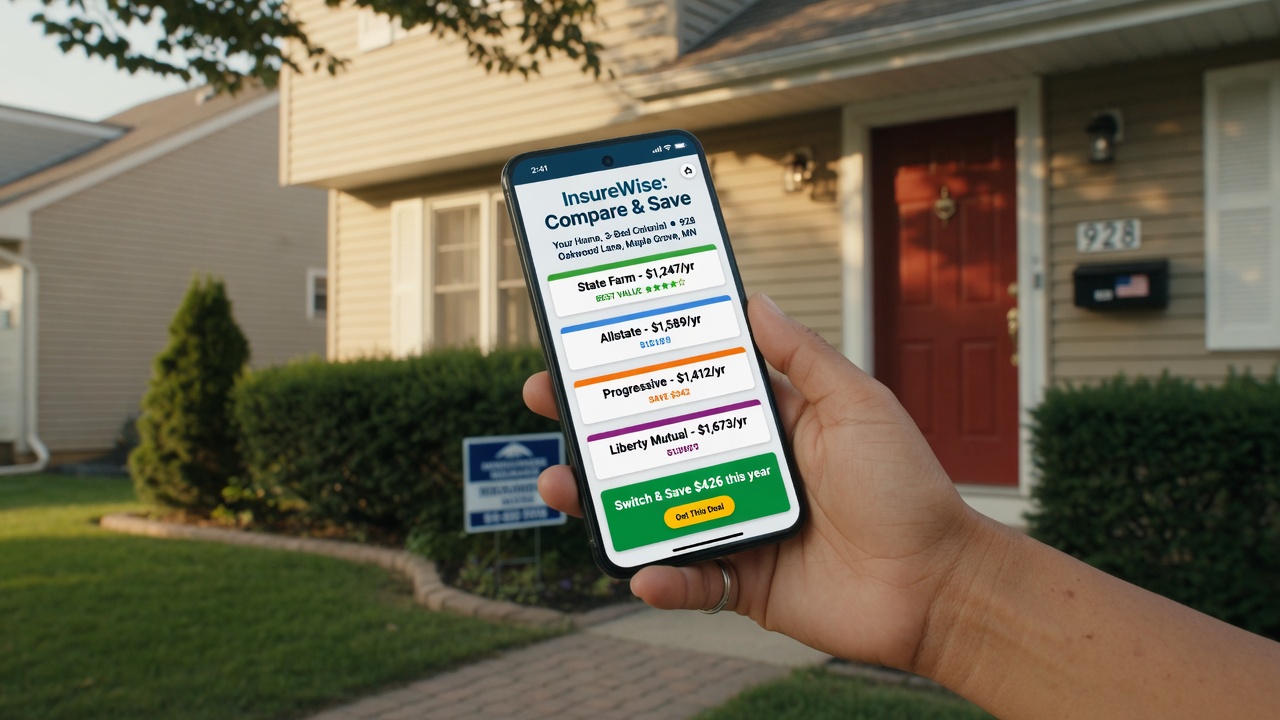
Understanding the system is the first step. Acting on it is the second. Here are specific measures with real, documented savings.
| Action | Potential Saving | Notes |
|---|---|---|
| Compare quotes on Insurify / Policygenius | Up to 47% | Get at least 3–5 quotes. Your current insurer is not automatically cheapest. |
| Impact-resistant roof | 15–30% | Largest single discount trigger in storm-exposed states. Savings compound annually. |
| Wind mitigation (hurricane straps, storm shutters) | 5–15% | Florida’s My Safe Florida Home program offers state grants up to $10,000 (2025–2026). |
| Leak detection sensor (Phyn, Moen Flo) | 5–12% | Installation $600–$1,100. Payback period: 1–2 years on premium savings alone. |
| Security system + cameras | 2–8% | Easy win. Most modern systems qualify automatically. |
| Bundle auto + home with one insurer | 5–25% | One of the fastest, lowest-effort savings available. |
| Raise deductible ($1,000 → $2,500) | 10–15% | Only if you can cover the deductible from savings. Do not do this without a financial cushion. |
Get actual insurance quotes for a specific property address before making an offer — not after. Many buyers discover too late that insurance in a particular ZIP code costs twice what they budgeted, and lose their mortgage approval at closing. In today’s market, asking for the seller’s current insurance policy and insurer is as standard as asking about the roof age.
If you are in Florida or another state with active reforms, watch your renewal notice closely. Many policyholders in those markets are now receiving rate decreases — a reversal that began in late 2025 and is accelerating into 2026.
If your state does not require regulatory approval before rate increases, contact your state insurance commissioner directly. Political pressure on elected and appointed commissioners is one of the few direct levers available to consumers — and it works.
UNDERSTANDING THE CHAIN IS NOT PESSIMISM
Home insurance is expensive, and it will stay expensive for the next two to three years at minimum. The forces driving that cost are real — climate change, reinsurance market dynamics, construction inflation, a chronically indebted federal flood program, and in some states, legal system abuse that went unchecked for years.
But this is not a permanent condition. Florida proved that legal reform produces measurable relief within two years. AI is demonstrating that disaster prediction accuracy improves exponentially with each generation of models. The smart home technology market is creating a direct feedback loop between individual homeowner behavior and insurance pricing.
The Home Tax is real. But unlike an actual tax, you have more tools to reduce it than you think — and the system has more capacity to fix itself than the headlines suggest.
For readers who want to verify every claim in this article — or to track the insurance crisis in real time — these are the primary public sources. All free, all open.
Some links below are affiliate links: if you click through and make a purchase, we may earn a small commission at no extra cost to you — it helps keep Economics Decoded coming.
-
📖 Michael Lewis — The Big ShortThe original cautionary tale about insurance-style products at systemic scale. If you want to understand reinsurance and federal backstops, start here — the mechanics are the same, only the asset class differs.
-
📖 Susan Crawford — Charleston: Race, Water, and the Coming StormA meticulous on-the-ground report from one of the most flood-exposed American cities. Everything in this Home Tax article — NFIP, climate, migration, property values — is visible in Crawford’s Charleston.
-
📖 Jesse Eisinger — The Chickenshit ClubWhy American regulators stopped going after powerful institutions — the structural answer to “Who controls this?” Eisinger’s Pulitzer-winning analysis explains the 50-regulator patchwork that lets insurance pricing drift.
-
📖 Naomi Klein — This Changes Everything: Capitalism vs. The ClimateThe most-cited synthesis of how climate cost flows through financial systems and ends up on household bills. The intellectual backdrop of why “+46% since 2021” was inevitable, not anomalous.
-
🎬 An Inconvenient Sequel: Truth to Power (2017)Al Gore’s follow-up — light on policy, but extraordinary on the connection between extreme weather, insurance markets, and the political pressure points that actually move state regulators.
- Insurify & Bankrate — 2026 state-by-state homeowner insurance averages
- Consumer Federation of America — “Overburdened” report on premium increases by ZIP code, April 2025
- Swiss Re Institute — sigma reports on global insured catastrophe losses
- CAL FIRE — January 2025 Los Angeles wildfires incident data
- FEMA — National Flood Insurance Program statistics and debt status
- Government Accountability Office — High-Risk List, NFIP entry
- University of Chicago · EPIC — climate disaster loss probability research
- Federal Reserve Bank of Atlanta — Home Ownership Affordability Monitor
- Google DeepMind — GenCast and GraphCast weather forecasting models
- Google Research — Flood Hub global early warning system
- FEMA National Risk Index — wildfire and storm exposure data
- TerraPower — Natrium reactor construction insurance, March 2026
- U.S. Nuclear Regulatory Commission — Price-Anderson Act fact sheet
- Personal Insurance Federation of Florida — Michael Carlson statement, March 2026
The Hidden Mechanics of Money, Markets, and Everyday Life · © 2026 DAY · All rights reserved · daysolis.com
If this investigation was useful to you — support independent journalism
☕ Buy me a coffee