
Fellow Earthlings · A Field Investigation
Poison in Your Kitchen
What kills dogs right in front of us — the everyday foods and medicines we hand over with love, never seeing the danger.
The Scene Where It All Begins
A Sunday evening. On the table: a bowl of grapes, a half-eaten bar of dark chocolate, the last of a raisin cake. The owner steps out for ten minutes. He comes back — the table is clean, and a happy dog wags its tail at his feet.
Most people smile at this: “He snagged a bite, no big deal.” Forty-eight hours later, that same dog may be on an IV drip with failing kidneys. And the cruelest part — the owner won’t know, until the last moment, exactly what he fed his friend.
I studied veterinary medicine and worked in a clinic in those years. And still — recently I realized, to my surprise, that there were things I didn’t know. That’s what made me sit down and write what you’re reading now: not a list of “don’ts,” but an investigation. Because behind every item on this list is a mechanism that science has, in some places, figured out completely — and in others, still cannot explain.
Part I · The Silent Killers on the Dinner Table
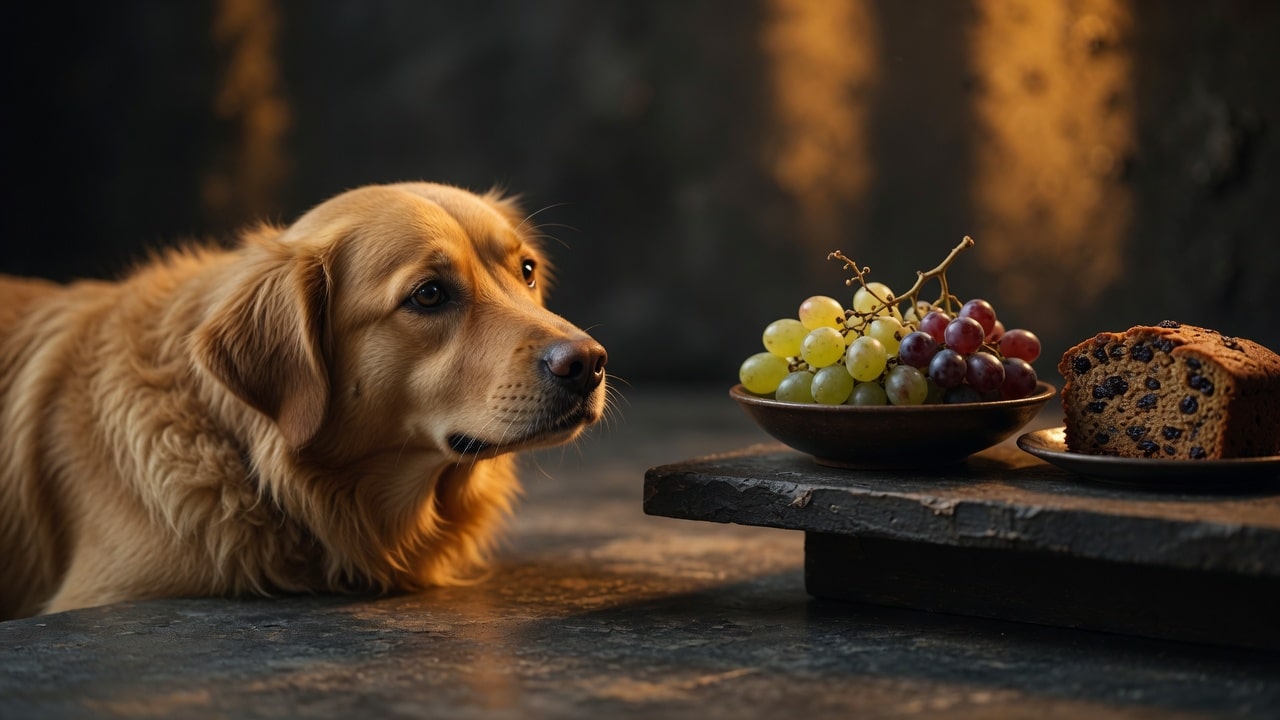
Grapes and Raisins: a mystery solved only just now
Let’s start with what stunned me most.
Grapes and raisins can cause acute kidney failure in a dog — a sudden shutdown of the kidneys, often fatal. Raisins are more dangerous than fresh grapes: they’re more concentrated. And here’s what made this story truly chilling for twenty years — nobody knew why.
One dog ate a whole bunch and was fine. Another died from a handful. There was no safe dose, no clear mechanism. In veterinary toxicology, it’s a rare case where the consequence is perfectly documented and the cause is not.
That held until 2021.
Dr. Colette Wegenast of the ASPCA Animal Poison Control Center was investigating what looked like a routine case: a dog poisoned by homemade salt play-dough. But the picture didn’t fit — the signs weren’t those of ordinary salt poisoning. Then came the insight: the dough contained cream of tartar — the potassium salt of tartaric acid. The same compound found, in high concentration, in grapes.
Tartaric acid and its salt, potassium bitartrate, turned out to be the poison that had eluded science for two decades. It also explains the unpredictability: the tartaric-acid content of grapes varies by variety, region, and ripeness — so one bunch kills and another doesn’t.
Today this is the leading, accepted hypothesis, published in a peer-reviewed journal. But let’s be honest with the reader: the final word isn’t in, and the Merck Veterinary Manual still calls the mechanism “not fully established.” All the more fascinating — we’re watching science solve a mystery in real time.
What else is dangerous, besides the berries: grape juice, wine, raisin bread, cookies and cakes with raisins, trail mix and granola bars — and also cream of tartar and tamarind. Heat doesn’t destroy the toxin: a raisin cake is as dangerous as the berry.
The cruelty: by the time symptoms appear, the kidneys may already be badly damaged. Waiting for signs is not an option.
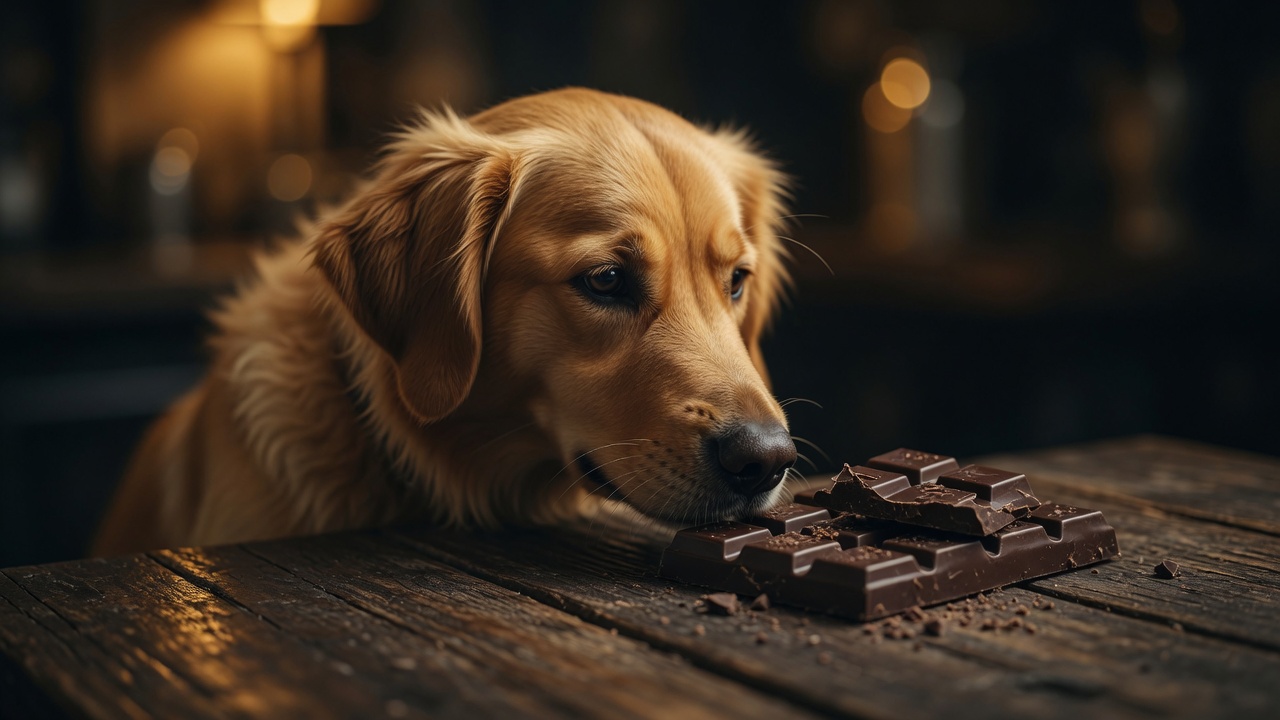
Chocolate: the dose decides everything
The most famous poison — and, unlike grapes, a predictable one. The culprit is theobromine (and some caffeine), an alkaloid of cocoa. People break it down quickly; dogs do it agonizingly slowly, so it builds up and strikes the heart and nervous system.
And this isn’t rare — it’s a mass affliction. A large study of UK clinics (the SAVSNET network, Veterinary Record, 2017) found that chocolate causes about a quarter of all acute poisonings in dogs, and the number of cases spikes sharply around Christmas and Easter, when boxes of chocolates and chocolate eggs appear in the house. Our holiday is their poisoning season.
The key is the type of chocolate, because the theobromine content differs:
| Type | Danger |
|---|---|
| White chocolate | Minimal (almost no theobromine) |
| Milk | Moderate — large portions are dangerous |
| Dark / bitter | High |
| Cocoa powder, baking chocolate | Extremely high |
The rule of thumb: the darker and more bitter, the deadlier, and the less it takes. A small dog needs a far smaller piece than a large one. A separate, little-known trap — garden mulch made from cocoa bean shells: there are documented fatal poisonings of dogs that ate such mulch from a flowerbed.
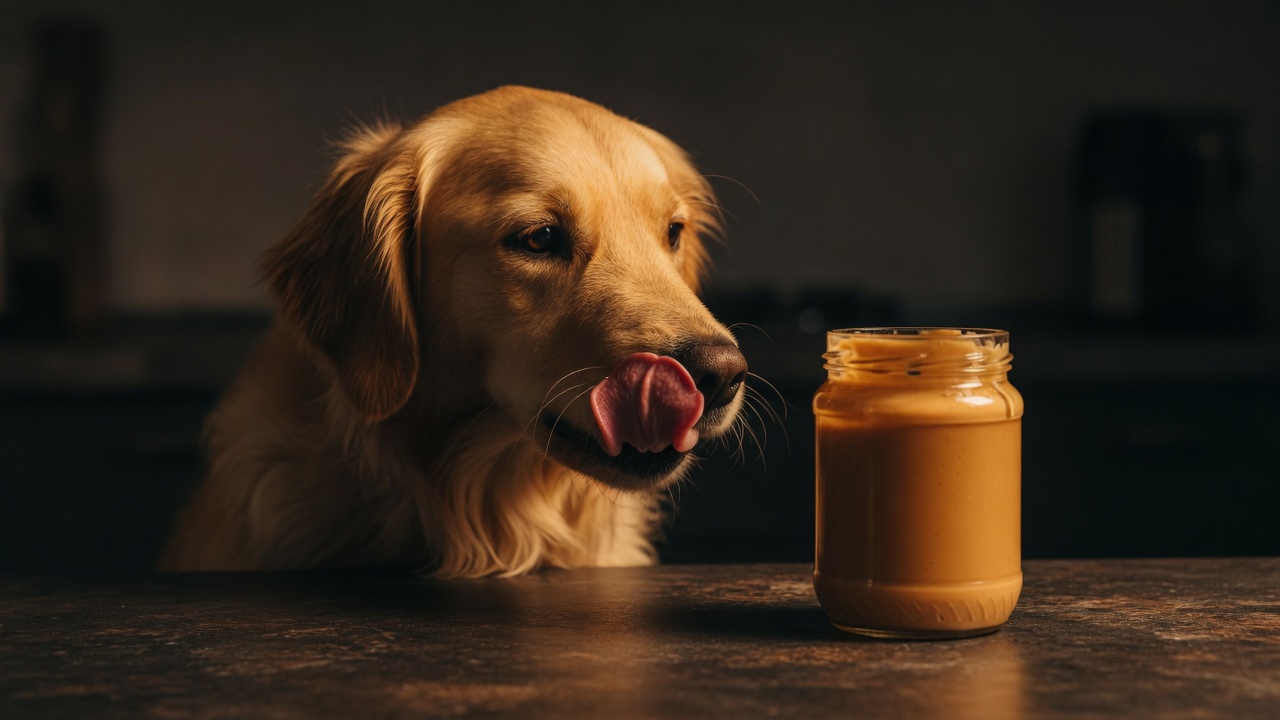
Xylitol: the most underestimated killer
If you asked me which poison on this list worries me most as a clinician, I’d name xylitol (also “birch sugar,” E967). Because it’s invisible: it hides where you don’t expect it.
In a dog, xylitol fools the pancreas into dumping a massive wave of insulin — and blood sugar crashes within minutes (sometimes in 10–30 minutes). At high doses, the liver fails next. The clock runs not in days but in hours.
And this isn’t theory. The U.S. Food and Drug Administration (FDA) issued a dedicated warning, “Paws Off Xylitol” — after a flood of poisoning reports, many tied to chewing gum and peanut butter. And according to the Pet Poison Helpline, between 2019 and 2024 xylitol consistently ranked among the top three poisonings in dogs — right behind chocolate and grapes.
Where it hides: sugar-free gum, mints, “diet” baked goods, some peanut butters (!), toothpastes, supplements, cough syrups. Peanut butter is especially treacherous — it’s often smeared into puzzle feeders or used to give a dog a pill.
Rule for home: before giving your dog peanut butter, read the label. If you see “xylitol” or “birch sugar” — throw it out.
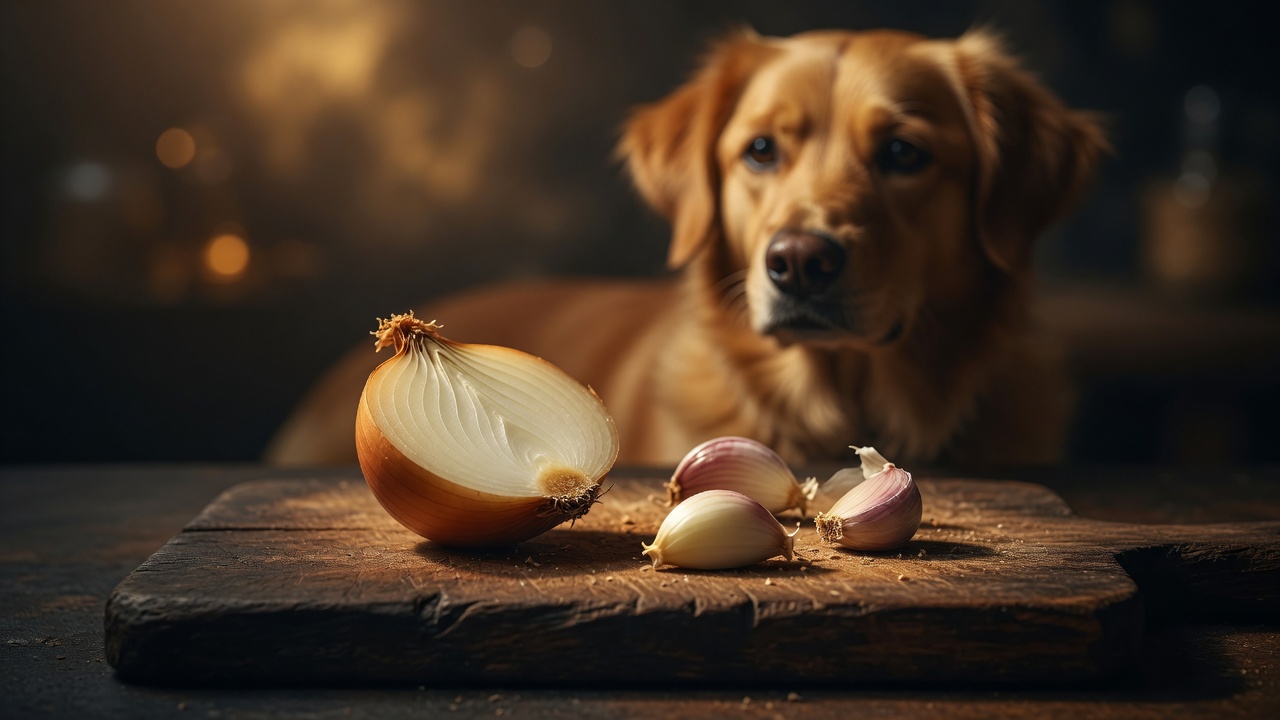
Onion, Garlic, Leeks, Shallots: a poison you cook and fry
The whole “onion family” (the genus Allium) is toxic to dogs — raw, boiled, fried, dried, and powdered. Garlic is about five times more concentrated than onion.
The mechanism is elegant and frightening: thiosulfates and organic sulfides attack the red blood cells, oxidizing hemoglobin. So-called Heinz bodies form on the red cells, the cells rupture — and hemolytic anemia develops. The blood literally loses its ability to carry oxygen. The cruelty is in the delay: a dog can look healthy for several days.
Where it hides: not just in salad. In broths, gravies, baby food, onion-flavored chips, leftover pizza and shawarma from the table.
Raw Egg: the internet tip that quietly ruins the coat
This one is about good intentions. Having read online or heard from friends how “good a raw egg is for a shiny coat,” an owner regularly cracks one into the dog’s bowl. And weeks and months later — the opposite: the coat dulls, thins, and falls out, the skin flakes, dermatitis appears. The baffled owner takes the dog to the vet: they look for an allergy, change the food, run tests — and the cause may be hiding in the egg itself.
More precisely — in the raw white. It contains avidin, which binds biotin (vitamin B7) tightly in the gut and reduces its absorption. Biotin is nicknamed the “skin and coat vitamin” for good reason: a shortage brings on dermatitis and hair loss — a long-documented phenomenon known since the early 20th century as “egg-white injury.”
But let’s be honest with the reader: this isn’t “one egg and it’s over.” In dogs this deficiency is rare and develops with regular feeding of the white specifically (or large amounts of raw egg) over weeks; on the coat it shows after 6–12 weeks, along the hair-growth cycle. The reason: the yolk itself is rich in biotin and, in a whole egg, largely offsets the white’s avidin. So the risk isn’t one treat — it’s the habit of feeding raw white. Add to that the risk of salmonella.
Getting it right. A raw egg has two separate problems, hiding in different places. Avidin is only in the white, so it’s the white that’s worth cooking. But salmonella can be in any part of the egg, including the yolk — you can’t “dodge” it by separating the yolk. So the safest option is to cook the whole egg: that removes both the avidin and the salmonella at once. If you do give the yolk raw (it’s the biotin source), use only fresh, clean eggs, and don’t give raw egg to puppies, senior or sick dogs, or in homes with small children.
Macadamia Nuts: mystery #2
Another case where science honestly says “we don’t fully understand.” Macadamias cause a characteristic syndrome in dogs — and the mechanism is unknown. The good news: deaths are rare; dogs usually recover.
Caffeine: coffee, tea, energy drinks
Same class as theobromine (the methylxanthines), but it hits even harder. The danger isn’t only drinks but coffee grounds, tea bags, caffeine pills, and energy drinks. A dog that gets into the trash with coffee grounds can take a serious dose.
Alcohol and Raw Yeast Dough: a double trap
Alcohol affects a dog the way it affects a person, only far more strongly per kilogram — up to respiratory depression and coma.
But the most insidious is raw yeast dough. In the warm stomach it keeps rising (risk of dangerous bloat and torsion), and the yeast ferments sugar into ethanol right inside the animal. The dog gets alcohol poisoning without drinking a drop.
Pits, Avocado, and “Mechanical” Dangers
- Fruit pits (cherry, apricot, peach, plum) contain cyanogenic glycosides and can also cause intestinal obstruction.
- Avocado contains persin; the danger to dogs is moderate (far more serious for birds and ruminants), but a large pit is a real obstruction risk.
- Corn cobs, large bones, fruit pits — classic reasons for emergency surgery to relieve a bowel obstruction.
Salt, Nutmeg, and the “Little Things” People Forget
- Salt in large amounts (salt play-dough, seawater, a bag of chips) causes hypernatremia — brain swelling, seizures.
- Nutmeg contains myristicin — in large doses hallucinogenic and toxic.
- Fatty food (cracklings, chicken skin, butter) is a frequent trigger of acute pancreatitis, especially after a holiday meal.
- Moldy food from the trash is a source of mycotoxins and tremorgens that cause uncontrollable shaking and seizures.
- Dairy is the mildest item on the list: most adult dogs don’t digest lactose, hence diarrhea and gas — but it’s not a poison.
Part II · The Danger Scale
| Substance | Speed | Main target | Mechanism known? |
|---|---|---|---|
| Grapes / raisins | Delayed (1–3 days) | Kidneys | Leading theory since 2021 (tartaric acid) |
| Xylitol | Very fast (min–hours) | Blood sugar → liver | Yes |
| Chocolate / caffeine | Hours | Heart, nervous system | Yes |
| Onion / garlic | Delayed (days) | Red blood cells | Yes |
| Alcohol / dough | Fast | CNS, breathing, gut | Yes |
| Macadamia | Up to 12 h | Neuromuscular | No |
| Raw egg white | Chronic (weeks–months) | Skin & coat (biotin) | Yes |
Part III · Medicines: poison from the home cabinet
The most common “accidental” poisonings I saw weren’t grapes or chocolate. They were medicines a loving owner gave the dog “as they would themselves.” And here’s a fact everyone should know: the same drug behaves differently in different breeds — and in different species.
The collie mystery, solved in 2001
In 1983, vets first documented something strange: some collies were dying from ivermectin — a new antiparasitic that other breeds tolerated without trouble. Why some died and others didn’t stayed a mystery for almost twenty years.
The answer came in 2001. Dr. Katrina Mealey at Washington State University found the cause — a tiny mutation (a deletion of just four “letters” of DNA) in the MDR1 (ABCB1) gene. This gene codes for a “bouncer” protein (P-glycoprotein) that normally keeps certain substances out of the brain. In dogs with the mutation, the bouncer doesn’t work — and drugs that are safe for other breeds slip into the brain and cause severe neurotoxicity.
The scale of the discovery is huge: the mutation is carried by about 70% of collies, roughly half of Australian shepherds, and more than fifteen other herding breeds (Shelties, Old English sheepdogs, long-haired whippets), plus up to 10% of mixed-breed dogs, even when nothing “herding” shows on the outside. In sensitive collies, ivermectin toxicity develops at a dose about 200 times lower than what it takes to harm an ordinary dog. Vets even coined a saying: “white feet, don’t treat.”
Two telling drugs
Ivermectin. The classic example. The dose safe for heartworm prevention isn’t dangerous even to MDR1 dogs — but the “treatment” doses for mange can kill. A curious detail: the same ivermectin is used in horses — and there, too, an overdose is dangerous. One drug, two very different stories of risk.
Acepromazine. A common sedative (part of pre-anesthetic medication). It, too, is on the “caution list” for MDR1 dogs — in them it acts stronger and longer. And in horses it’s used with great care because of the risk of a severe drop in blood pressure and complications in stallions. Again — one drug, different behavior across species.
And even the harmless-looking
The MDR1 “risk list” also includes: loperamide (Imodium — an ordinary anti-diarrheal!), butorphanol, vincristine, vinblastine, doxorubicin, erythromycin, and, at high doses, milbemycin and moxidectin. A case of severe poisoning of a collie by ordinary loperamide — the very thing in every home medicine cabinet — is documented.
Aspirin and other NSAIDs: the “human” painkiller
Someone on the site searched for “dog and aspirin.” Here’s the honest answer.
Aspirin is a non-steroidal anti-inflammatory drug (NSAID). Vets sometimes prescribe it to dogs in a carefully calculated dose, but you must not give it on your own: the gap between the “therapeutic” and “dangerous” dose is very narrow, and dogs are more sensitive than people, especially in the stomach.
Once in the body, aspirin turns into salicylic acid and blocks the COX enzymes — which, among other things, protect the stomach lining and maintain blood flow in the kidneys. Hence ulcers and GI bleeding, kidney damage, in severe cases the liver, and clotting problems. Symptoms can begin within 4–6 hours.
Even more dangerous are ibuprofen (Advil, Nurofen) and naproxen (Aleve): in dogs, GI signs begin at about 50–125 mg/kg, kidney damage above ~175 mg/kg, seizures and coma above ~400 mg/kg. These drugs must never be given to dogs.
Important: salicylates hide not only in pills — they’re in Pepto-Bismol, oil of wintergreen, some pain creams and care products.
Acetaminophen (paracetamol, Tylenol)
A separate danger. In dogs, large doses damage the liver; in cats it’s lethal even in small doses (more on that in a separate article). An antidote exists (N-acetylcysteine), but you have to act fast.
Part IV · If Your Dog Ate Something: the algorithm
This is the most important section. Save it or screenshot it.
Step 1. Don’t panic, but don’t wait. In most poisonings the first 1–2 hours decide everything, while the toxin hasn’t been absorbed yet. “Let’s wait and see” is the worst strategy — especially with grapes, xylitol, and onion, where symptoms lag behind.
Step 2. Gather the facts for the vet:
- WHAT was eaten (save the packaging!)
- HOW MUCH (at least roughly)
- WHEN (what time)
- Your dog’s WEIGHT
Step 3. Call. Don’t guess — call your vet clinic or an animal poison hotline. In the U.S.:
- ASPCA Animal Poison Control Center — (888) 426-4435
- Pet Poison Helpline — (855) 764-7661
Step 4. Do only what the specialist tells you.
- Don’t induce vomiting without a vet’s say-so. With some substances (corrosives, petroleum products) and states (seizures, depression, certain breeds), vomiting is more dangerous than the poison itself.
- Don’t give activated charcoal “by eye” — the dose and whether it’s appropriate are decided by a specialist.
- Don’t use human “home remedies” (milk, salt, hydrogen peroxide by mouth) without instruction.
- Don’t wait for symptoms. With grapes, xylitol, and onion, by the time signs appear it may already be too late.
Part V · Prevention: the kitchen through a dog’s eyes
- The trash can — lidded or behind a door (coffee grounds, bones, moldy food, chocolate wrappers).
- Guests’ bags and backpacks — out of reach (xylitol gum, medicines).
- All medicines — in a closed cabinet, not on the nightstand.
- A rule for the whole family, especially children and guests: no food from the table without permission. One “harmless” bite of raisin cake can cost a life.
- Read labels — especially on peanut butter and “diet” sweets.
Part VI · What to Feed: how to choose a truly high-quality food
Now that we’ve covered what not to feed, let’s answer the real question: what you should. And here, in the spirit of this publication — not “trust the pretty bag,” but clear criteria that separate real quality from marketing.
Some links below are affiliate links. If you choose to buy through them, you support this free publication at no extra cost to you — think of it as a thank-you for the read.
How to read dog food like a veterinarian
- The AAFCO “complete and balanced” statement — for your dog’s specific life stage and size (puppy / adult / large breed), not a “supplemental treat.”
- Science stands behind the brand (WSAVA principles): Does the company employ a board-certified veterinary nutritionist? Run feeding trials? Control quality? Price alone is no guarantee.
- Animal protein first — a high percentage of animal protein and a clear ingredient list.
- Right for your dog — age, size, activity, and health all matter; there’s no single food “for everyone.”
Why these brands: among veterinarians there’s a steady consensus that Purina Pro Plan, Hill’s Science Diet, and Royal Canin are recommended not because of advertising, but because these companies keep board-certified nutritionists on staff, run AAFCO feeding trials, and control quality transparently. That is the signal over the noise.
Dry Food
Wet Food
Premium fresh food (minimally processed, with nutritionists on staff) is worth a look too: Freshpet is the one you can find on Amazon; The Farmer’s Dog, Nom Nom, and JustFoodForDogs are subscription services rather than store products.
Treats (single-ingredient, freeze-dried)
Treats are about connection, not nutrition: no more than 10% of daily calories, and a label of one or two recognizable ingredients.
Bowls and Fountains — stainless steel or ceramic
Stainless steel and quality ceramic don’t harbor bacteria in micro-scratches or leach chemicals into food and water — unlike plastic. A slow-feeder helps fast eaters and lowers bloat risk; a raised stand suits large and senior dogs.
Instead of an Epilogue
I didn’t write this to make you afraid of your own kitchen. I wrote it because almost every case I saw could have been prevented — by one label read, one closed door, one phone call made in time.
Our dogs trust us without reservation. They’ll eat what’s on the table because we are their world, and in that world there should be no hidden catch. Making it truly safe is our responsibility.
— DAY
DAY has a background in veterinary medicine and writes the “Fellow Earthlings” series.
Some links in this article are affiliate links: if you buy through them, you support this free publication at no extra cost to you.
Sources
- ASPCA Animal Poison Control Center (APCC)
- Merck / MSD Veterinary Manual — Food Hazards; Toxicoses From Human Analgesics; Grape/Raisin; Xylitol; Chocolate
- FDA — “Paws Off Xylitol; It’s Dangerous for Dogs”
- Pet Poison Helpline — most common toxins ranking (2019–2024)
- Wegenast C. et al. — tartaric acid hypothesis, Journal of Veterinary Emergency and Critical Care / JAVMA letter, 2021
- Mealey K.L. et al. — “Ivermectin sensitivity in collies is associated with a deletion mutation of the MDR1 gene,” Pharmacogenetics, 2001; Washington State University VCPL (MDR1/ABCB1)
- Noble P-J.M. et al. — “Heightened risk of canine chocolate exposure at Christmas and Easter,” Veterinary Record (SAVSNET), 2017
- VCA Animal Hospitals; PetMD — Aspirin Poisoning in Dogs; Best Dog Food (vet-reviewed)
- AAFCO — nutrient profiles; WSAVA Global Nutrition Guidelines
If this investigation was useful to you — support independent journalism
☕ Buy me a coffee